 Add to Chrome
 Add to Firefox
 Add to Edge
Bridging the Information Gap: Semantic Densification and Hindsight Distillation for Cold-Start Prediction
Jul 19, 2026
New-user cold-start is a critical bottleneck for e-commerce platforms: predicting user lifetime value (LTV) and conversion rate (CVR) for users with sparse interaction history. Two prior directions -- LLM-based semantic augmentation and learning using privileged information (LUPI) -- each face a key limitation. First, LLM augmentation produces unstructured rationales that are noisy and hard to operationalize in production. Second, naive student-teacher distillation can be brittle due to an information gap between the privileged teacher and the sparse student; moreover, this gap is heterogeneous across users. We propose SemRaD, a Semantic Reasoning-aware Distillation framework addressing both limitations. First, a Structured Semantic Reasoning Pipeline replaces free-form rationales with a structured schema built via a discover-curate-audit workflow, producing per user a Densified Semantic Profile (consumed by the deployed student via a Semantic-Gated Encoder that focuses on the most informative dimensions) and a Hindsight Distillation Target reconciled from pre- and post-conversion reasoning (used only at training). Second, to bridge this gap and handle its heterogeneity, a Hindsight-Aware Distillation Network transfers privileged knowledge via the hindsight target, with Distillation Experts improving transfer under per-user variability. On a large-scale industrial dataset, SemRaD lifts +1.9% LTV (Gini) and +1.0% CVR (AUROC) over a production-grade base; a four-week online A/B at Keeta confirms +1.0% LTV / +0.43% CVR. SemRaD also matches the production system's LTV using only 9% of the training data while improving CVR by 0.8%.

Generating multi-type sequences of temporal events to improve fraud detection in game advertising
Apr 07, 2021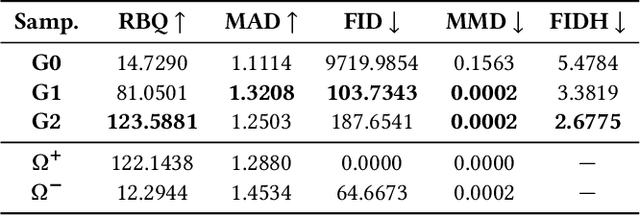
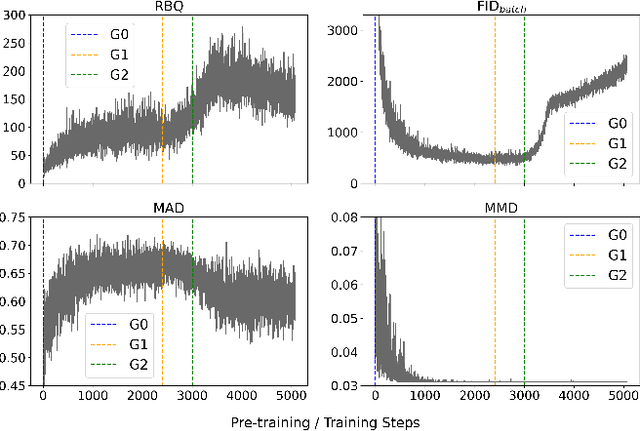
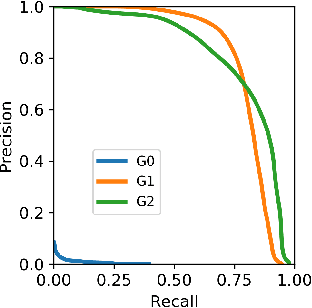
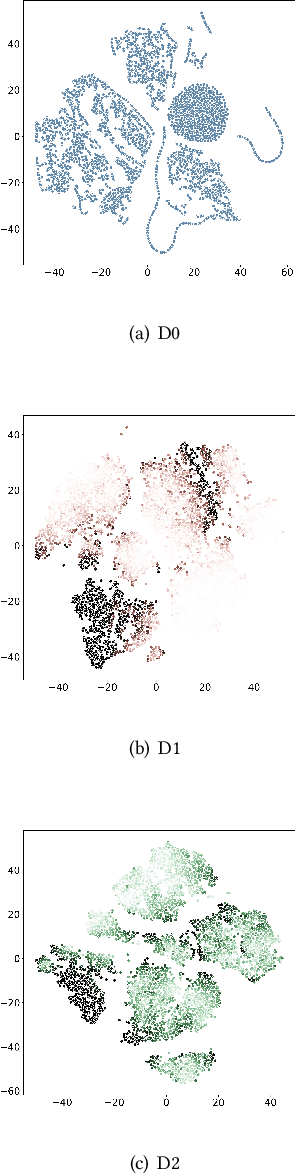
Fraudulent activities related to online advertising can potentially harm the trust advertisers put in advertising networks and sour the gaming experience for users. Pay-Per-Click/Install (PPC/I) advertising is one of the main revenue models in game monetization. Widespread use of the PPC/I model has led to a rise in click/install fraud events in games. The majority of traffic in ad networks is non-fraudulent, which imposes difficulties on machine learning based fraud detection systems to deal with highly skewed labels. From the ad network standpoint, user activities are multi-type sequences of temporal events consisting of event types and corresponding time intervals. Time Long Short-Term Memory (Time-LSTM) network cells have been proved effective in modeling intrinsic hidden patterns with non-uniform time intervals. In this study, we propose using a variant of Time-LSTM cells in combination with a modified version of Sequence Generative Adversarial Generative (SeqGAN)to generate artificial sequences to mimic the fraudulent user patterns in ad traffic. We also propose using a Critic network instead of Monte-Carlo (MC) roll-out in training SeqGAN to reduce computational costs. The GAN-generated sequences can be used to enhance the classification ability of event-based fraud detection classifiers. Our extensive experiments based on synthetic data have shown the trained generator has the capability to generate sequences with desired properties measured by multiple criteria.