 Add to Chrome
 Add to Firefox
 Add to Edge
Plan Right, Then Plan Tight: Symbolic RL for Efficient Embodied Reasoning
Jun 30, 2026
Embodied task planning asks an agent to turn a natural-language instruction into an executable sequence of actions in a physical scene, and is a building block for household, assistive, and service robots. Recent prompting-based and reinforcement-learning planners generate fluent action text but lack a cheap deterministic check that the produced plan is valid in the target world, while high-fidelity simulation is too slow to serve as an inner-loop training signal. The general problem is therefore how to obtain verifiable supervision and rewards for embodied planners without relying on string-level matching or full simulation. Here we show that a single BDDL specification, automatically constructed from open-world video evidence or curated tasks, can serve as a shared interface for data construction, plan verification, and reward design. A video-to-BDDL parser, an LLM verifier, and a lightweight symbolic engine together supply dense feedback at millisecond latency. We further introduce GroupAdapt, a difficulty-aware length schedule that uses the in-batch group pass rate as a zero-cost signal so that hard prompts get wider length tolerance and automatically tighten as their pass rate improves. Under the guidance of the proposed verifier and GroupAdapt schedule, the 8B planner attains a Strict-Pass score of 97.3 on BEHAVIOR-1000, yielding a 25.9 percent relative improvement over the Qwen3-8B baseline. This result exceeds the strongest large-model baseline by 3.5 percent, while simultaneously compressing the response length by 79 percent to 207 tokens, demonstrating both effectiveness and efficiency.

Adapting Physics-Informed Neural Networks for Bifurcation Detection in Ecological Migration Models
Sep 01, 2024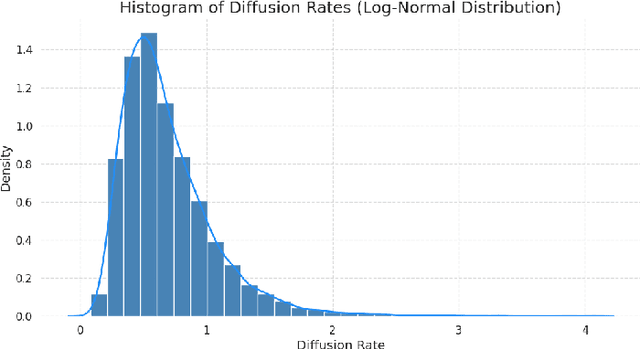
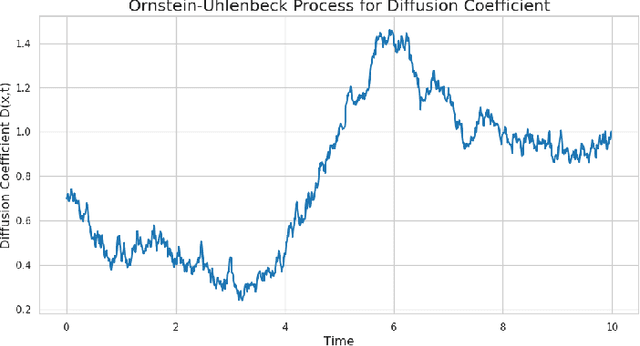

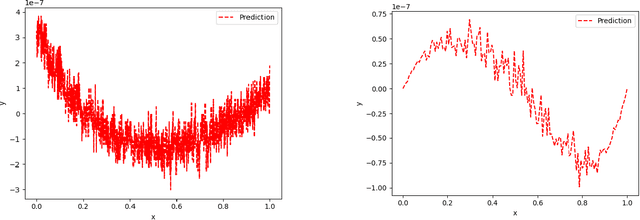
In this study, we explore the application of Physics-Informed Neural Networks (PINNs) to the analysis of bifurcation phenomena in ecological migration models. By integrating the fundamental principles of diffusion-advection-reaction equations with deep learning techniques, we address the complexities of species migration dynamics, particularly focusing on the detection and analysis of Hopf bifurcations. Traditional numerical methods for solving partial differential equations (PDEs) often involve intricate calculations and extensive computational resources, which can be restrictive in high-dimensional problems. In contrast, PINNs offer a more flexible and efficient alternative, bypassing the need for grid discretization and allowing for mesh-free solutions. Our approach leverages the DeepXDE framework, which enhances the computational efficiency and applicability of PINNs in solving high-dimensional PDEs. We validate our results against conventional methods and demonstrate that PINNs not only provide accurate bifurcation predictions but also offer deeper insights into the underlying dynamics of diffusion processes. Despite these advantages, the study also identifies challenges such as the high computational costs and the sensitivity of PINN performance to network architecture and hyperparameter settings. Future work will focus on optimizing these algorithms and expanding their application to other complex systems involving bifurcations. The findings from this research have significant implications for the modeling and analysis of ecological systems, providing a powerful tool for predicting and understanding complex dynamical behaviors.