 Add to Chrome
 Add to Firefox
 Add to Edge
Large-scale Codec Avatars: The Unreasonable Effectiveness of Large-scale Avatar Pretraining
Apr 02, 2026
High-quality 3D avatar modeling faces a critical trade-off between fidelity and generalization. On the one hand, multi-view studio data enables high-fidelity modeling of humans with precise control over expressions and poses, but it struggles to generalize to real-world data due to limited scale and the domain gap between the studio environment and the real world. On the other hand, recent large-scale avatar models trained on millions of in-the-wild samples show promise for generalization across a wide range of identities, yet the resulting avatars are often of low-quality due to inherent 3D ambiguities. To address this, we present Large-Scale Codec Avatars (LCA), a high-fidelity, full-body 3D avatar model that generalizes to world-scale populations in a feedforward manner, enabling efficient inference. Inspired by the success of large language models and vision foundation models, we present, for the first time, a pre/post-training paradigm for 3D avatar modeling at scale: we pretrain on 1M in-the-wild videos to learn broad priors over appearance and geometry, then post-train on high-quality curated data to enhance expressivity and fidelity. LCA generalizes across hair styles, clothing, and demographics while providing precise, fine-grained facial expressions and finger-level articulation control, with strong identity preservation. Notably, we observe emergent generalization to relightability and loose garment support to unconstrained inputs, and zero-shot robustness to stylized imagery, despite the absence of direct supervision.

Amanuensis: The Programmer's Apprentice
Jun 29, 2018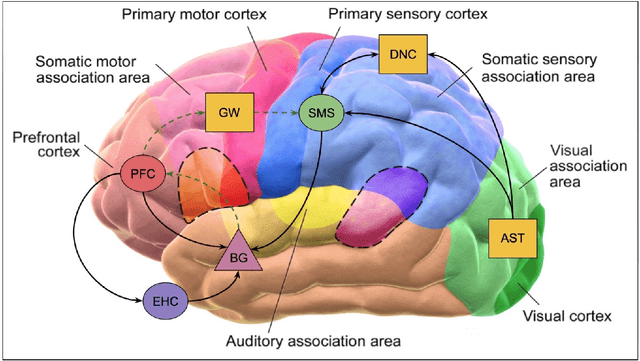
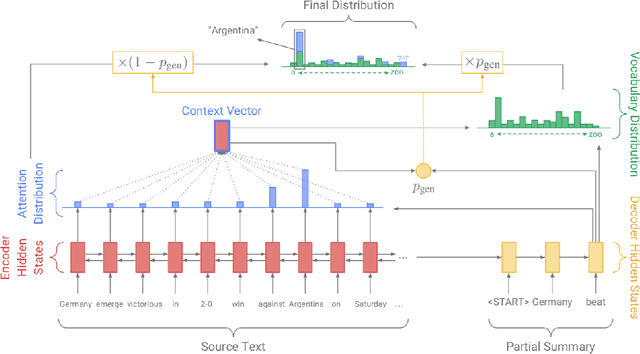
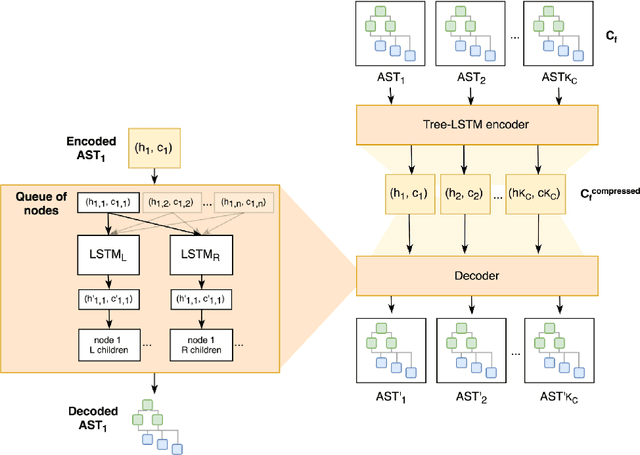
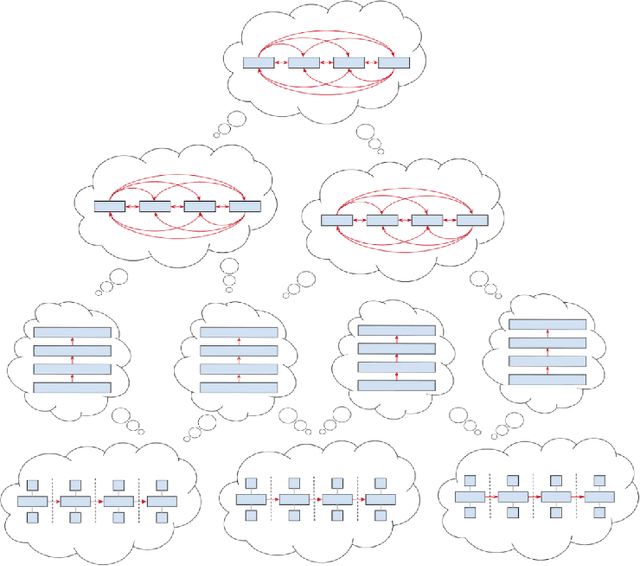
This document provides an overview of the material covered in a course taught at Stanford in the spring quarter of 2018. The course draws upon insight from cognitive and systems neuroscience to implement hybrid connectionist and symbolic reasoning systems that leverage and extend the state of the art in machine learning by integrating human and machine intelligence. As a concrete example we focus on digital assistants that learn from continuous dialog with an expert software engineer while providing initial value as powerful analytical, computational and mathematical savants. Over time these savants learn cognitive strategies (domain-relevant problem solving skills) and develop intuitions (heuristics and the experience necessary for applying them) by learning from their expert associates. By doing so these savants elevate their innate analytical skills allowing them to partner on an equal footing as versatile collaborators - effectively serving as cognitive extensions and digital prostheses, thereby amplifying and emulating their human partner's conceptually-flexible thinking patterns and enabling improved access to and control over powerful computing resources.