 Add to Chrome
 Add to Firefox
 Add to Edge
On Transfer in Classification: How Well do Subsets of Classes Generalize?
Mar 06, 2024
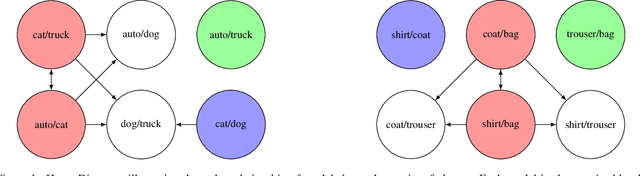

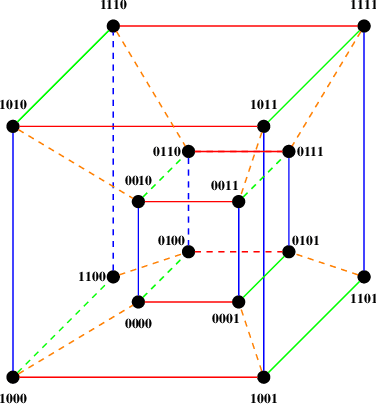
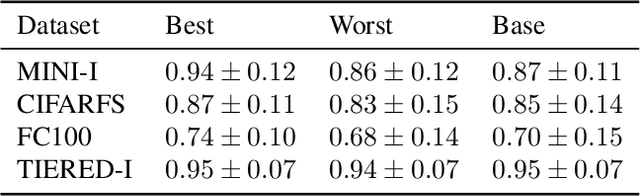
In classification, it is usual to observe that models trained on a given set of classes can generalize to previously unseen ones, suggesting the ability to learn beyond the initial task. This ability is often leveraged in the context of transfer learning where a pretrained model can be used to process new classes, with or without fine tuning. Surprisingly, there are a few papers looking at the theoretical roots beyond this phenomenon. In this work, we are interested in laying the foundations of such a theoretical framework for transferability between sets of classes. Namely, we establish a partially ordered set of subsets of classes. This tool allows to represent which subset of classes can generalize to others. In a more practical setting, we explore the ability of our framework to predict which subset of classes can lead to the best performance when testing on all of them. We also explore few-shot learning, where transfer is the golden standard. Our work contributes to better understanding of transfer mechanics and model generalization.

Physics Informed and Data Driven Simulation of Underwater Images via Residual Learning
Feb 07, 2024In general, underwater images suffer from color distortion and low contrast, because light is attenuated and backscattered as it propagates through water (differently depending on wavelength and on the properties of the water body). An existing simple degradation model (similar to atmospheric image "hazing" effects), though helpful, is not sufficient to properly represent the underwater image degradation because there are unaccounted for and non-measurable factors e.g. scattering of light due to turbidity of water, reflective characteristics of turbid medium etc. We propose a deep learning-based architecture to automatically simulate the underwater effects where only a dehazing-like image formation equation is known to the network, and the additional degradation due to the other unknown factors if inferred in a data-driven way. We only use RGB images (because in real-time scenario depth image is not available) to estimate the depth image. For testing, we have proposed (due to the lack of real underwater image datasets) a complex image formation model/equation to manually generate images that resemble real underwater images (used as ground truth). However, only the classical image formation equation (the one used for image dehazing) is informed to the network. This mimics the fact that in a real scenario, the physics are never completely known and only simplified models are known. Thanks to the ground truth, generated by a complex image formation equation, we could successfully perform a qualitative and quantitative evaluation of proposed technique, compared to other purely data driven approaches
Time-changed normalizing flows for accurate SDE modeling
Jan 15, 2024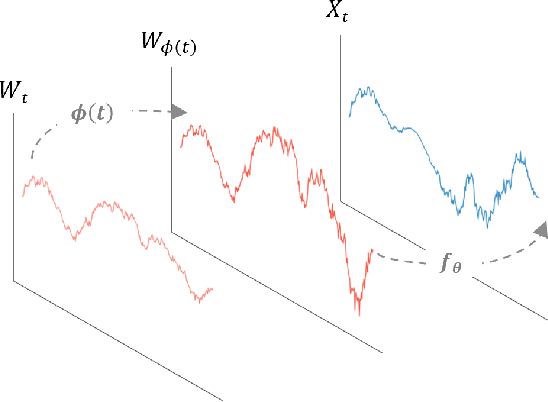
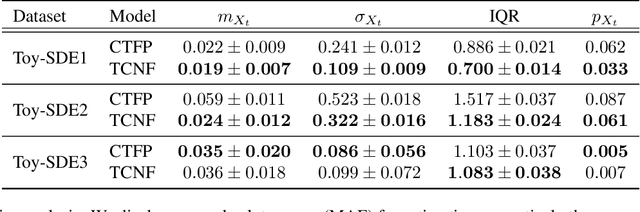
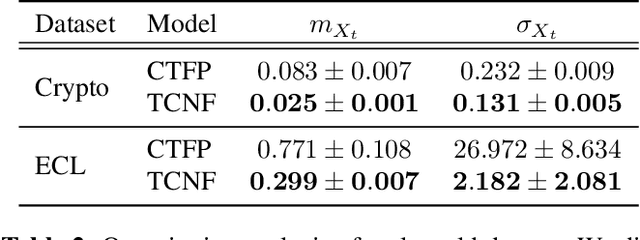
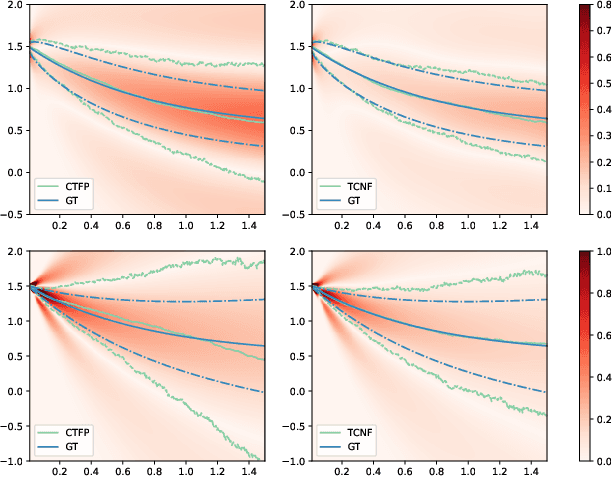
The generative paradigm has become increasingly important in machine learning and deep learning models. Among popular generative models are normalizing flows, which enable exact likelihood estimation by transforming a base distribution through diffeomorphic transformations. Extending the normalizing flow framework to handle time-indexed flows gave dynamic normalizing flows, a powerful tool to model time series, stochastic processes, and neural stochastic differential equations (SDEs). In this work, we propose a novel variant of dynamic normalizing flows, a Time Changed Normalizing Flow (TCNF), based on time deformation of a Brownian motion which constitutes a versatile and extensive family of Gaussian processes. This approach enables us to effectively model some SDEs, that cannot be modeled otherwise, including standard ones such as the well-known Ornstein-Uhlenbeck process, and generalizes prior methodologies, leading to improved results and better inference and prediction capability.
MultiHU-TD: Multifeature Hyperspectral Unmixing Based on Tensor Decomposition
Oct 05, 2023Hyperspectral unmixing allows representing mixed pixels as a set of pure materials weighted by their abundances. Spectral features alone are often insufficient, so it is common to rely on other features of the scene. Matrix models become insufficient when the hyperspectral image (HSI) is represented as a high-order tensor with additional features in a multimodal, multifeature framework. Tensor models such as canonical polyadic decomposition allow for this kind of unmixing but lack a general framework and interpretability of the results. In this article, we propose an interpretable methodological framework for low-rank multifeature hyperspectral unmixing based on tensor decomposition (MultiHU-TD) that incorporates the abundance sum-to-one constraint in the alternating optimization alternating direction method of multipliers (ADMM) algorithm and provide in-depth mathematical, physical, and graphical interpretation and connections with the extended linear mixing model. As additional features, we propose to incorporate mathematical morphology and reframe a previous work on neighborhood patches within MultiHU-TD. Experiments on real HSIs showcase the interpretability of the model and the analysis of the results. Python and MATLAB implementations are made available on GitHub.
Neural Koopman prior for data assimilation
Sep 11, 2023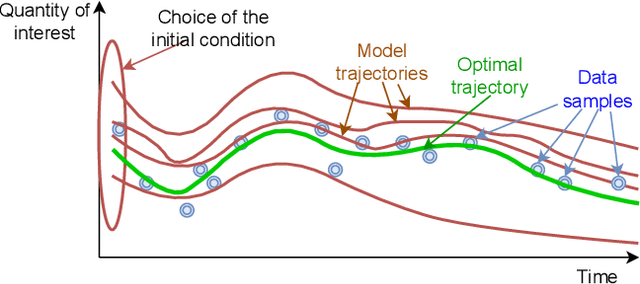
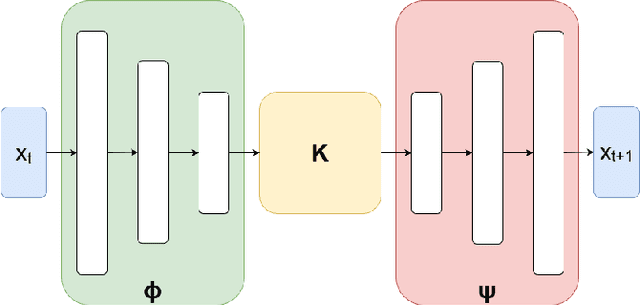
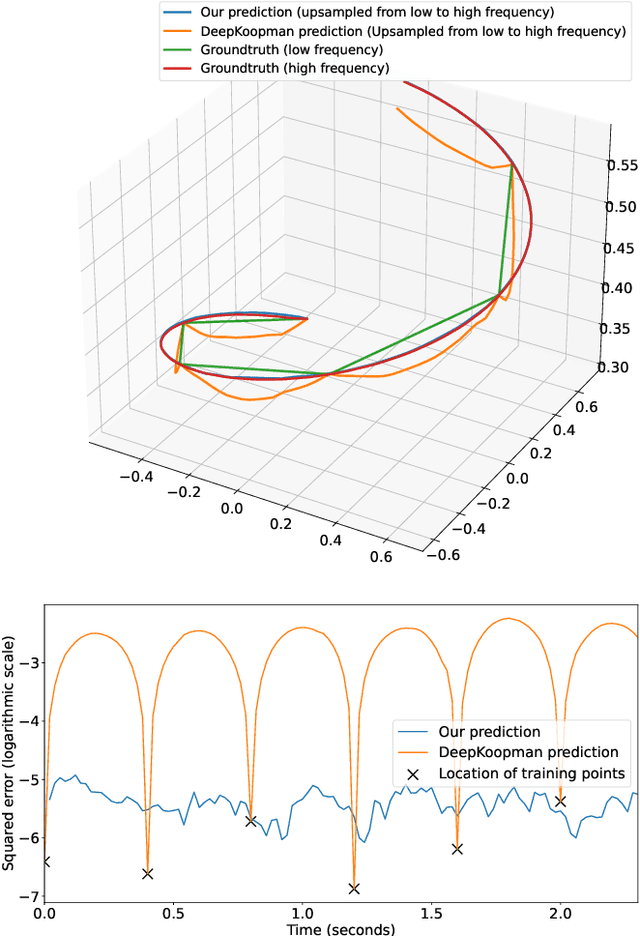
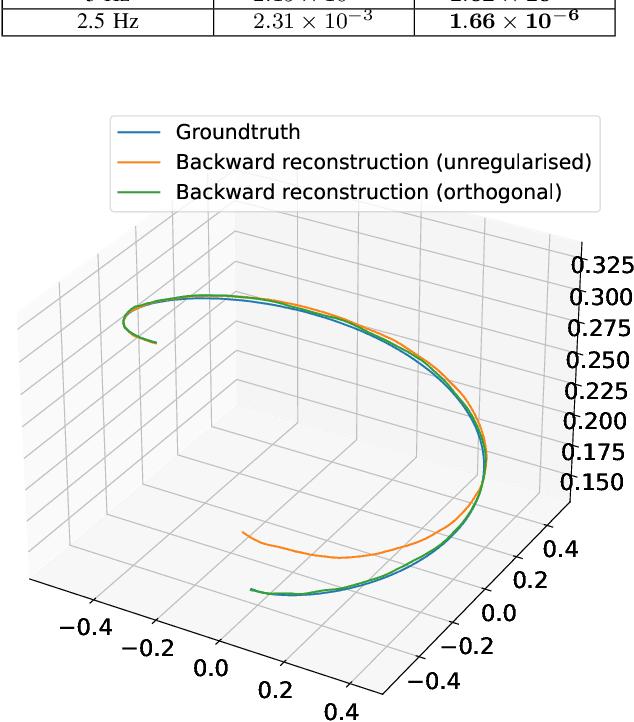
With the increasing availability of large scale datasets, computational power and tools like automatic differentiation and expressive neural network architectures, sequential data are now often treated in a data-driven way, with a dynamical model trained from the observation data. While neural networks are often seen as uninterpretable black-box architectures, they can still benefit from physical priors on the data and from mathematical knowledge. In this paper, we use a neural network architecture which leverages the long-known Koopman operator theory to embed dynamical systems in latent spaces where their dynamics can be described linearly, enabling a number of appealing features. We introduce methods that enable to train such a model for long-term continuous reconstruction, even in difficult contexts where the data comes in irregularly-sampled time series. The potential for self-supervised learning is also demonstrated, as we show the promising use of trained dynamical models as priors for variational data assimilation techniques, with applications to e.g. time series interpolation and forecasting.
Learning Sentinel-2 reflectance dynamics for data-driven assimilation and forecasting
May 05, 2023Over the last few years, massive amounts of satellite multispectral and hyperspectral images covering the Earth's surface have been made publicly available for scientific purpose, for example through the European Copernicus project. Simultaneously, the development of self-supervised learning (SSL) methods has sparked great interest in the remote sensing community, enabling to learn latent representations from unlabeled data to help treating downstream tasks for which there is few annotated examples, such as interpolation, forecasting or unmixing. Following this line, we train a deep learning model inspired from the Koopman operator theory to model long-term reflectance dynamics in an unsupervised way. We show that this trained model, being differentiable, can be used as a prior for data assimilation in a straightforward way. Our datasets, which are composed of Sentinel-2 multispectral image time series, are publicly released with several levels of treatment.
Leveraging Neural Koopman Operators to Learn Continuous Representations of Dynamical Systems from Scarce Data
Mar 13, 2023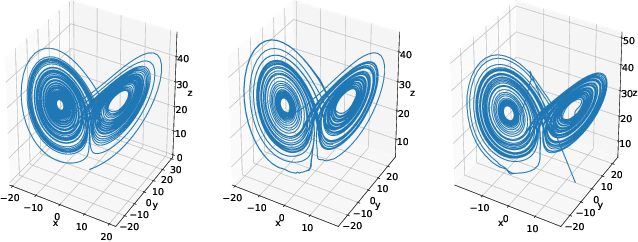


Over the last few years, several works have proposed deep learning architectures to learn dynamical systems from observation data with no or little knowledge of the underlying physics. A line of work relies on learning representations where the dynamics of the underlying phenomenon can be described by a linear operator, based on the Koopman operator theory. However, despite being able to provide reliable long-term predictions for some dynamical systems in ideal situations, the methods proposed so far have limitations, such as requiring to discretize intrinsically continuous dynamical systems, leading to data loss, especially when handling incomplete or sparsely sampled data. Here, we propose a new deep Koopman framework that represents dynamics in an intrinsically continuous way, leading to better performance on limited training data, as exemplified on several datasets arising from dynamical systems.
Sliced-Wasserstein on Symmetric Positive Definite Matrices for M/EEG Signals
Mar 10, 2023When dealing with electro or magnetoencephalography records, many supervised prediction tasks are solved by working with covariance matrices to summarize the signals. Learning with these matrices requires using Riemanian geometry to account for their structure. In this paper, we propose a new method to deal with distributions of covariance matrices and demonstrate its computational efficiency on M/EEG multivariate time series. More specifically, we define a Sliced-Wasserstein distance between measures of symmetric positive definite matrices that comes with strong theoretical guarantees. Then, we take advantage of its properties and kernel methods to apply this distance to brain-age prediction from MEG data and compare it to state-of-the-art algorithms based on Riemannian geometry. Finally, we show that it is an efficient surrogate to the Wasserstein distance in domain adaptation for Brain Computer Interface applications.
Disambiguation of One-Shot Visual Classification Tasks: A Simplex-Based Approach
Jan 16, 2023
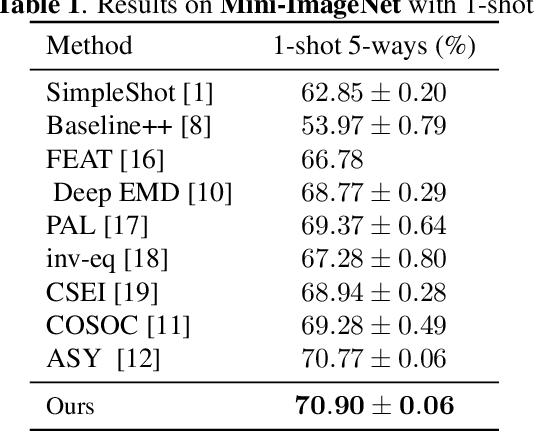
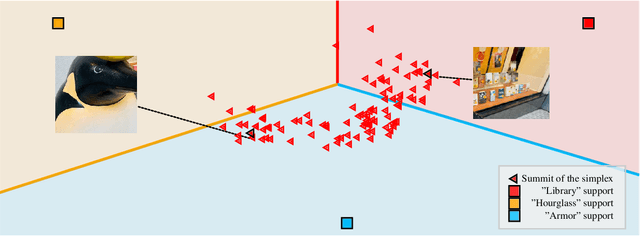
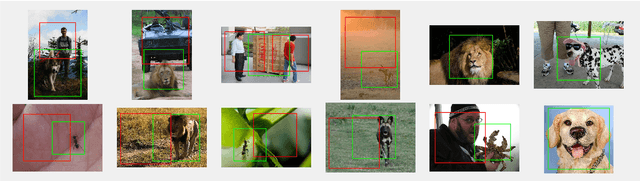
The field of visual few-shot classification aims at transferring the state-of-the-art performance of deep learning visual systems onto tasks where only a very limited number of training samples are available. The main solution consists in training a feature extractor using a large and diverse dataset to be applied to the considered few-shot task. Thanks to the encoded priors in the feature extractors, classification tasks with as little as one example (or "shot'') for each class can be solved with high accuracy, even when the shots display individual features not representative of their classes. Yet, the problem becomes more complicated when some of the given shots display multiple objects. In this paper, we present a strategy which aims at detecting the presence of multiple and previously unseen objects in a given shot. This methodology is based on identifying the corners of a simplex in a high dimensional space. We introduce an optimization routine and showcase its ability to successfully detect multiple (previously unseen) objects in raw images. Then, we introduce a downstream classifier meant to exploit the presence of multiple objects to improve the performance of few-shot classification, in the case of extreme settings where only one shot is given for its class. Using standard benchmarks of the field, we show the ability of the proposed method to slightly, yet statistically significantly, improve accuracy in these settings.
Hyperbolic Sliced-Wasserstein via Geodesic and Horospherical Projections
Nov 18, 2022
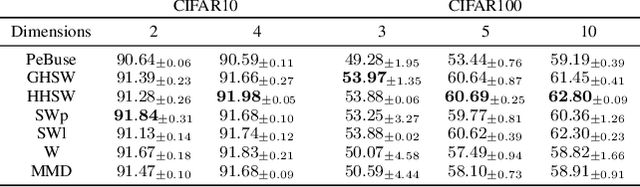
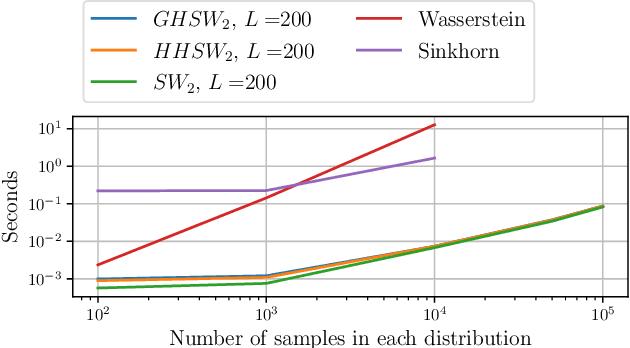
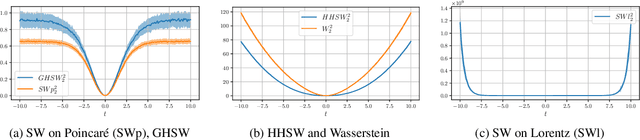
It has been shown beneficial for many types of data which present an underlying hierarchical structure to be embedded in hyperbolic spaces. Consequently, many tools of machine learning were extended to such spaces, but only few discrepancies to compare probability distributions defined over those spaces exist. Among the possible candidates, optimal transport distances are well defined on such Riemannian manifolds and enjoy strong theoretical properties, but suffer from high computational cost. On Euclidean spaces, sliced-Wasserstein distances, which leverage a closed-form of the Wasserstein distance in one dimension, are more computationally efficient, but are not readily available on hyperbolic spaces. In this work, we propose to derive novel hyperbolic sliced-Wasserstein discrepancies. These constructions use projections on the underlying geodesics either along horospheres or geodesics. We study and compare them on different tasks where hyperbolic representations are relevant, such as sampling or image classification.