 Add to Chrome
 Add to Firefox
 Add to Edge
Visual Information Extraction from Documents via Classification-Guided Large Vision-Language Models
Jul 22, 2026
Visual information extraction (VIE) from visually rich documents remains challenging due to high layout variability and real-world impairments. Existing methods typically rely on sequential OCR pipelines or end-to-end models requiring extensive labeled data and layout-specific training, limiting their scalability.We propose a classification-guided large vision-language model (LVLM) framework for multi-type VIE that achieves high accuracy with minimal supervision. The approach decouples document-type classification from content extraction and employs in-context learning (ICL)-based dynamic prompt engineering to inject task-specific knowledge, enabling robust zero-shot inference across diverse layouts. From a theoretical perspective, the proposed method can be viewed as a form of conditional computation that reduces task uncertainty and improves information efficiency during prompt-based inference. Evaluated on a real-world bidding dataset with 16 certificate types, our zero-shot method (based on Qwen2.5-VL-7B) outperforms a strong supervised baseline by 18.35 percentage points in F1-score (86.43\% vs. 68.08\%) and 0.23 in normalized edit distance (0.90 vs. 0.67). Optional domain-specific fine-tuning further improves performance to 93.65\% F1 and 0.93 NED, demonstrating superior robustness against seals, watermarks, and low contrast. The framework offers an efficient, scalable solution for complex document understanding in office automation. Code is available at https://github.com/FairmeHIT/Multi-VIE, and fine-tuned models at https://huggingface.co/fairme/Qwen2.5-VL-7B-SFT.
* 14 pages, 3 figures

Glioma Multimodal MRI Analysis System for Tumor Layered Diagnosis via Multi-task Semi-supervised Learning
Jan 29, 2025


Gliomas are the most common primary tumors of the central nervous system. Multimodal MRI is widely used for the preliminary screening of gliomas and plays a crucial role in auxiliary diagnosis, therapeutic efficacy, and prognostic evaluation. Currently, the computer-aided diagnostic studies of gliomas using MRI have focused on independent analysis events such as tumor segmentation, grading, and radiogenomic classification, without studying inter-dependencies among these events. In this study, we propose a Glioma Multimodal MRI Analysis System (GMMAS) that utilizes a deep learning network for processing multiple events simultaneously, leveraging their inter-dependencies through an uncertainty-based multi-task learning architecture and synchronously outputting tumor region segmentation, glioma histological subtype, IDH mutation genotype, and 1p/19q chromosome disorder status. Compared with the reported single-task analysis models, GMMAS improves the precision across tumor layered diagnostic tasks. Additionally, we have employed a two-stage semi-supervised learning method, enhancing model performance by fully exploiting both labeled and unlabeled MRI samples. Further, by utilizing an adaptation module based on knowledge self-distillation and contrastive learning for cross-modal feature extraction, GMMAS exhibited robustness in situations of modality absence and revealed the differing significance of each MRI modal. Finally, based on the analysis outputs of the GMMAS, we created a visual and user-friendly platform for doctors and patients, introducing GMMAS-GPT to generate personalized prognosis evaluations and suggestions.
Sub-Rayleigh ghost imaging via structured illumination
Jan 08, 2024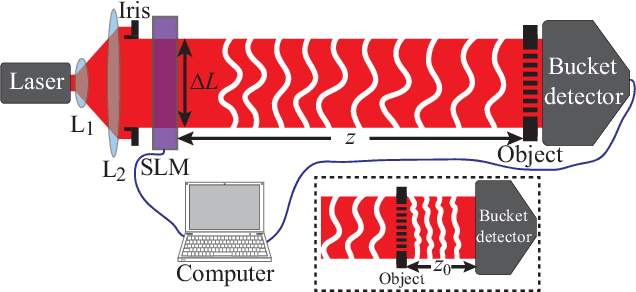
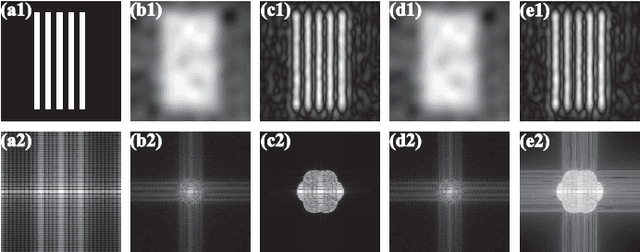
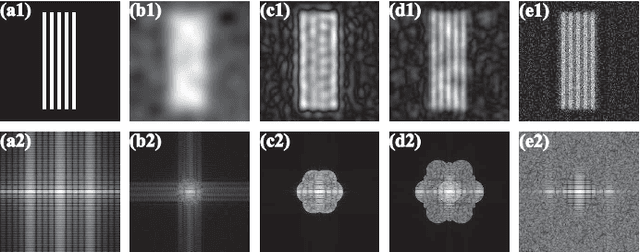
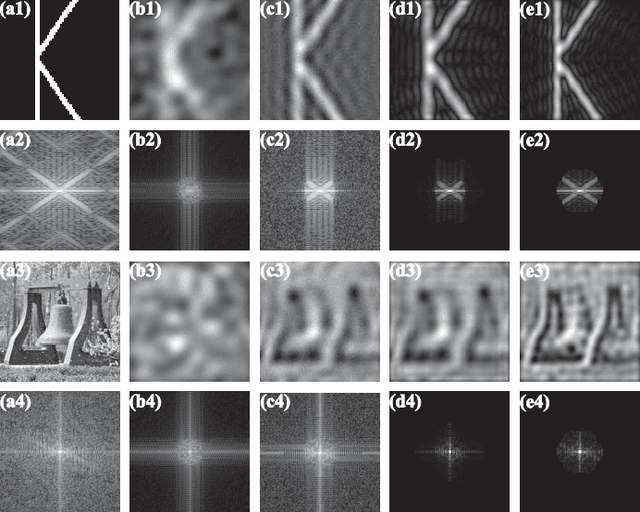
The structured illumination adopted widely in super-resolution microscopy imaging works for the ghost imaging scheme also. Here, we studied the ghost imaging scheme with sinusoidal-structured speckle illumination, whose spatial resolution can surpass the Rayleigh resolution limit by a factor of 2. In addition, even if the bucket intensity signal originated from the diffraction of the object plane with a certain distance, the improvement of spatial resolution is still effective. Our research shows that the structural illumination method, an independent super-resolution technology, is expected to be grafted with a variety of super-resolution ghost imaging schemes to further improve the resolution of imaging systems, such as the pseudo-inverse ghost imaging.
Low Peak-to-Average Power Ratio FBMC-OQAM System based on Data Mapping and DFT Precoding
Sep 11, 2023

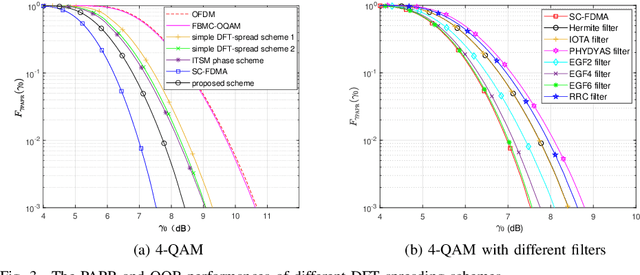

Filter bank multicarrier with offset quadrature amplitude modulation (FBMC-OQAM) is an alternative to OFDM for enhanced spectrum flexible usage. To reduce the peak-to-average power ratio (PAPR), DFT spreading is usually adopted in OFDM systems. However, in FBMC-OQAM systems, because the OQAM pre-processing splits the spread data into the real and imaginary parts, the DFT spreading can result in only marginal PAPR reduction. This letter proposes a novel map-DFT-spread FBMC-OQAM scheme. In this scheme, the transmitting data symbols are first mapped with a conjugate symmetry rule and then coded by the DFT. According to this method, the OQAM pre-processing can be avoided. Compared with the simple DFT-spread scheme, the proposed scheme achieves a better PAPR reduction. In addition, the effect of the prototype filter on the PAPR is studied via numerical simulation and a trade-off exists between the PAPR and out-of-band performances.