 Add to Chrome
 Add to Firefox
 Add to Edge
CUA-Skill: Develop Skills for Computer Using Agent
Jan 28, 2026
Computer-Using Agents (CUAs) aim to autonomously operate computer systems to complete real-world tasks. However, existing agentic systems remain difficult to scale and lag behind human performance. A key limitation is the absence of reusable and structured skill abstractions that capture how humans interact with graphical user interfaces and how to leverage these skills. We introduce CUA-Skill, a computer-using agentic skill base that encodes human computer-use knowledge as skills coupled with parameterized execution and composition graphs. CUA-Skill is a large-scale library of carefully engineered skills spanning common Windows applications, serving as a practical infrastructure and tool substrate for scalable, reliable agent development. Built upon this skill base, we construct CUA-Skill Agent, an end-to-end computer-using agent that supports dynamic skill retrieval, argument instantiation, and memory-aware failure recovery. Our results demonstrate that CUA-Skill substantially improves execution success rates and robustness on challenging end-to-end agent benchmarks, establishing a strong foundation for future computer-using agent development. On WindowsAgentArena, CUA-Skill Agent achieves state-of-the-art 57.5% (best of three) successful rate while being significantly more efficient than prior and concurrent approaches. The project page is available at https://microsoft.github.io/cua_skill/.

ABO: Dataset and Benchmarks for Real-World 3D Object Understanding
Oct 12, 2021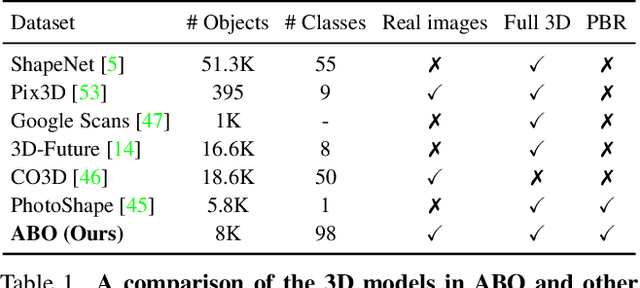
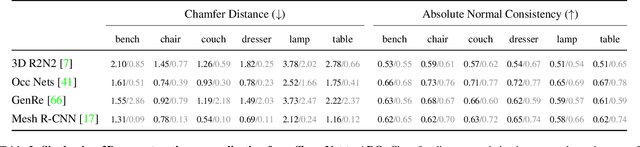
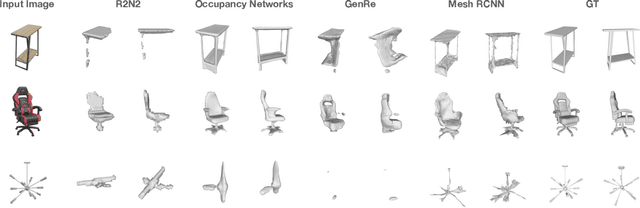
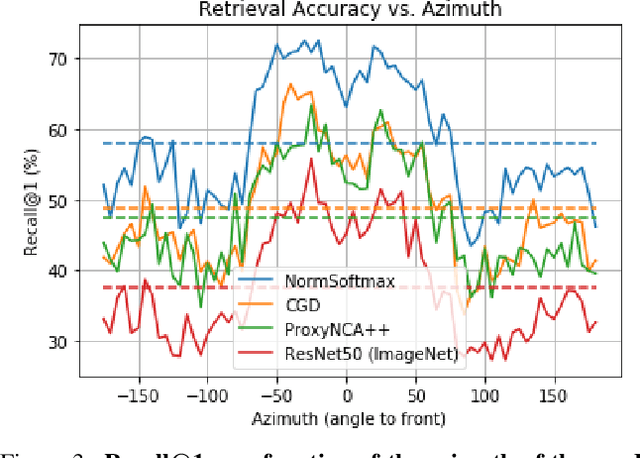
We introduce Amazon-Berkeley Objects (ABO), a new large-scale dataset of product images and 3D models corresponding to real household objects. We use this realistic, object-centric 3D dataset to measure the domain gap for single-view 3D reconstruction networks trained on synthetic objects. We also use multi-view images from ABO to measure the robustness of state-of-the-art metric learning approaches to different camera viewpoints. Finally, leveraging the physically-based rendering materials in ABO, we perform single- and multi-view material estimation for a variety of complex, real-world geometries. The full dataset is available for download at https://amazon-berkeley-objects.s3.amazonaws.com/index.html.