 Add to Chrome
 Add to Firefox
 Add to Edge
From Data Heterogeneity to Convergence: A Data-Centric Review of Federated Learning
Jun 09, 2026
Federated Learning (FL) has emerged as a promising solution for data hunger in centralized learning. This paradigm enables privacy with multiple clients to train a shared-task model collaboratively without exposing their local data. While being a key component in any learning system, data is also a primary source of vulnerabilities and challenges, and a major determinant of a stable and well-converged training. Existing FL reviews describe general foundations, security practices, opportunities, challenges, and applications, without delving into diverse aspects of data and considering problems from the data perspective. They rarely provide a data-lens synthesis that links concrete data properties, split protocols, and defenses to convergence speed and stability. This survey fills that gap with three advances. First, we analyze non-IID into measurable traits and rank their influence on convergence as strong, medium, or light, explaining the mechanisms behind each and reconciling evidence across images, texts, and graphs. Second, we connect experimental splitting practices to the real phenomena they emulate, expose the artifacts they introduce, and show how those artifacts affect target accuracy. Third, we analyze how data-related vulnerabilities and their proposed defenses affect convergence, reporting performance under clean and adversarial conditions to make the convergence-robustness trade-off explicit. To our knowledge, this is the first survey to provide a complete understanding of data-related challenges that govern FL. With clear takeaways distilled for each concern, our work serves as actionable guidance, helping practitioners design their system with predictable convergence and stability.

RedditPersona: A Modular Framework for Community-Conditioned LLM Adaptation from Reddit
Jun 04, 2026Community-conditioned language model adaptation requires choices about data collection, community definition, and evaluation that are currently made independently in each study, making it hard to compare assumptions or reuse artifacts. We present RedditPersona, a modular framework that standardizes these choices: it collects Reddit posts and comments, profiles active users, partitions them under five grouping strategies (subreddit-based, graph-structural, semantic, hybrid, and interaction-based), trains a parameter-efficient adapter per strategy via QLoRA, and evaluates them under a shared metric suite spanning fluency, fidelity, distributional alignment, and community identifiability. Applied to 112 subreddits in the urban well-being domain (301,429 user profiles, 16M+ comments), we find that adapters' behavioral identifiability tracks each strategy's intrinsic agreement with the subreddit baseline, and that a consistent trade-off between identifiability and distributional similarity to real text holds across all five strategies. The code and configuration files are available at: https://github.com/Ahghaffari/redditpersona.
Neural Router: Semantic Content Matching for Agentic AI
May 25, 2026Large language models (LLMs) can serve as the semantic-matching engine of a content-based publish/subscribe broker for agentic AI across the edge-cloud computing continuum, bridging the vocabulary and modality gaps that defeat keyword and embedding filters. Framed as offline multi-label retrieval over three public datasets spanning social-media, legal, and smart-home sensor domains (six LLMs, seven baselines), our central contribution is a two-crossover cost-accuracy characterisation: an analytical context-window crossover below which a CoverAndMerge compression pipeline reduces LLM invocations, and an empirical discrimination-capacity crossover above which matching accuracy collapses independently of context budget, by a model-dependent factor of parameter count and training generation. Two findings carry practical weight: above the discrimination crossover, compression cannot recover accuracy and only frontier-scale models clear large subscription sets; and there backend choice dominates configuration choice, so model selection, not pipeline tuning, is the primary operator lever. We accompany this with three composable algorithms and a per-cluster Quality-of-Experience framework for autonomic LLM-tier selection.
The Behavioral Credibility Trilemma: When Calibrated Autonomy Becomes Impossible
May 25, 2026We prove that no reinforcement learning policy with confidence-gated autonomy can simultaneously achieve maximum helpfulness, optimal calibration, and full autonomy under rational oversight, whenever some tasks exceed the agent's reliable competence: the Behavioral Credibility Trilemma. The impossibility is geometric -- adding any non-affine autonomy incentive to a strictly proper scoring rule destroys strict properness, so an agent rewarded for both calibrated confidence and autonomous action systematically inflates its reported confidence on tasks below the principal's approval threshold. The Behavioral Perturbation Lemma quantifies the inflation (scaling as $w_A/(2 w_C)$ for the Brier score) and shows detection requires $Ω(1/Δ^2)$ observations. We prove the principal's optimal oversight rule is necessarily non-affine, making the impossibility unconditional and optimizer-independent across log-concave-density policy families. We formalize the Confidence-Gated Decision Problem, map existing methods onto the trilemma, and identify two constructive resolution pathways (commitment, domain separation). A 540-configuration Best-of-N experiment tests five pre-registered hypotheses, all strongly confirmed (effect sizes $d = 1.10$ to $5.32$), and adds a descriptive analysis of the achievable-$(H, C, A)$ surface geometry showing a plateau-truncated frontier consistent with the predicted inflation saturation.
Institutions for the Post-Scarcity of Judgment
Apr 24, 2026Each major technological revolution inverts a particular scarcity and rebuilds institutions around the shift. The near-consensus diagnosis of the AI revolution holds that AI collapses the cost of prediction while judgment remains scarce. This Opinion argues the inversion has now flipped: competent-looking judgment (selecting, ranking, attributing, certifying) is produced at scale and at marginal cost approaching zero, and four complements become scarce: verified signal, legitimacy, authentic provenance, and integration capacity (the community's tolerance for delegated cognition). Because judgment is the substance of institutions, the institutions built to manufacture legitimate judgment (courts, journals, licensing bodies, legislatures) now compete with the technology for the same functional role. The piece traces the pattern across scientific institutions, professional licensing, intellectual property, democratic legitimacy, and foundation-model concentration, and closes with a three-move agenda: reframe AI policy as institutional redesign, build provenance and verification as commons, and develop the formal apparatus for institutional composition under strategic agents.
Integrating Generative AI-enhanced Cognitive Systems in Higher Education: From Stakeholder Perceptions to a Conceptual Framework considering the EU AI Act
Feb 11, 2026Many staff and students in higher education have adopted generative artificial intelligence (GenAI) tools in their work and study. GenAI is expected to enhance cognitive systems by enabling personalized learning and streamlining educational services. However, stakeholders perceptions of GenAI in higher education remain divided, shaped by cultural, disciplinary, and institutional contexts. In addition, the EU AI Act requires universities to ensure regulatory compliance when deploying cognitive systems. These developments highlight the need for institutions to engage stakeholders and tailor GenAI integration to their needs while addressing concerns. This study investigates how GenAI is perceived within the disciplines of Information Technology and Electrical Engineering (ITEE). Using a mixed-method approach, we surveyed 61 staff and 37 students at the Faculty of ITEE, University of Oulu. The results reveal both shared and discipline-specific themes, including strong interest in programming support from GenAI and concerns over response quality, privacy, and academic integrity. Drawing from these insights, the study identifies a set of high-level requirements and proposes a conceptual framework for responsible GenAI integration. Disciplinary-specific requirements reinforce the importance of stakeholder engagement when integrating GenAI into higher education. The high-level requirements and the framework provide practical guidance for universities aiming to harness GenAI while addressing stakeholder concerns and ensuring regulatory compliance.
Bio-inspired Agentic Self-healing Framework for Resilient Distributed Computing Continuum Systems
Jan 01, 2026Human biological systems sustain life through extraordinary resilience, continually detecting damage, orchestrating targeted responses, and restoring function through self-healing. Inspired by these capabilities, this paper introduces ReCiSt, a bio-inspired agentic self-healing framework designed to achieve resilience in Distributed Computing Continuum Systems (DCCS). Modern DCCS integrate heterogeneous computing resources, ranging from resource-constrained IoT devices to high-performance cloud infrastructures, and their inherent complexity, mobility, and dynamic operating conditions expose them to frequent faults that disrupt service continuity. These challenges underscore the need for scalable, adaptive, and self-regulated resilience strategies. ReCiSt reconstructs the biological phases of Hemostasis, Inflammation, Proliferation, and Remodeling into the computational layers Containment, Diagnosis, Meta-Cognitive, and Knowledge for DCCS. These four layers perform autonomous fault isolation, causal diagnosis, adaptive recovery, and long-term knowledge consolidation through Language Model (LM)-powered agents. These agents interpret heterogeneous logs, infer root causes, refine reasoning pathways, and reconfigure resources with minimal human intervention. The proposed ReCiSt framework is evaluated on public fault datasets using multiple LMs, and no baseline comparison is included due to the scarcity of similar approaches. Nevertheless, our results, evaluated under different LMs, confirm ReCiSt's self-healing capabilities within tens of seconds with minimum of 10% of agent CPU usage. Our results also demonstrated depth of analysis to over come uncertainties and amount of micro-agents invoked to achieve resilience.
UserCentrix: An Agentic Memory-augmented AI Framework for Smart Spaces
May 01, 2025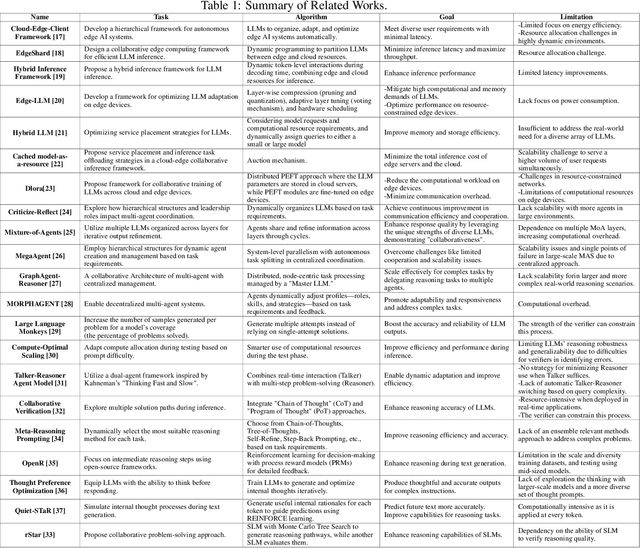


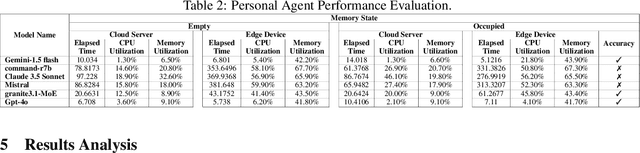
Agentic AI, with its autonomous and proactive decision-making, has transformed smart environments. By integrating Generative AI (GenAI) and multi-agent systems, modern AI frameworks can dynamically adapt to user preferences, optimize data management, and improve resource allocation. This paper introduces UserCentrix, an agentic memory-augmented AI framework designed to enhance smart spaces through dynamic, context-aware decision-making. This framework integrates personalized Large Language Model (LLM) agents that leverage user preferences and LLM memory management to deliver proactive and adaptive assistance. Furthermore, it incorporates a hybrid hierarchical control system, balancing centralized and distributed processing to optimize real-time responsiveness while maintaining global situational awareness. UserCentrix achieves resource-efficient AI interactions by embedding memory-augmented reasoning, cooperative agent negotiation, and adaptive orchestration strategies. Our key contributions include (i) a self-organizing framework with proactive scaling based on task urgency, (ii) a Value of Information (VoI)-driven decision-making process, (iii) a meta-reasoning personal LLM agent, and (iv) an intelligent multi-agent coordination system for seamless environment adaptation. Experimental results across various models confirm the effectiveness of our approach in enhancing response accuracy, system efficiency, and computational resource management in real-world application.
Follow-Me AI: Energy-Efficient User Interaction with Smart Environments
Apr 18, 2024
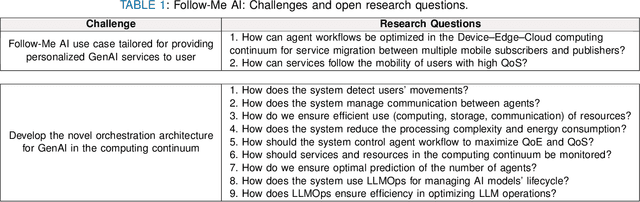
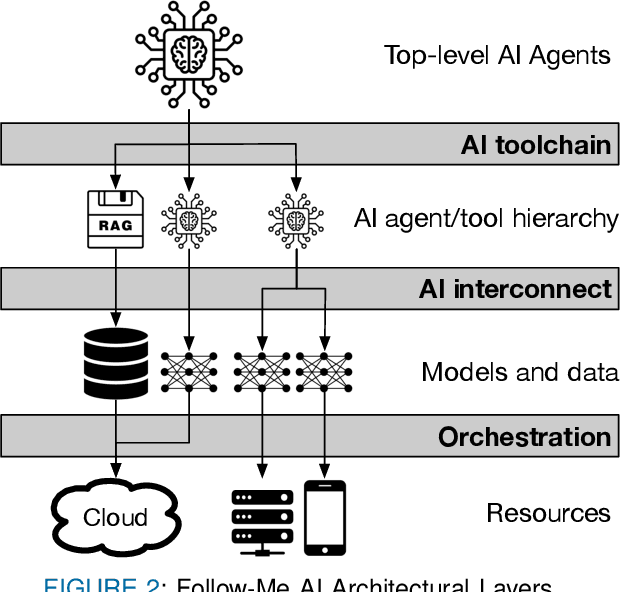
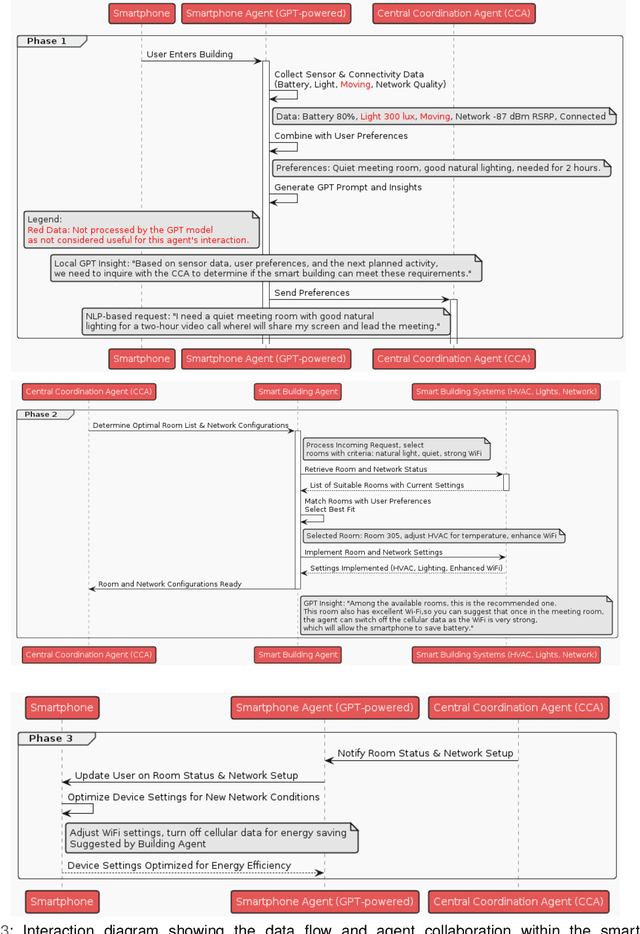
This article introduces Follow-Me AI, a concept designed to enhance user interactions with smart environments, optimize energy use, and provide better control over data captured by these environments. Through AI agents that accompany users, Follow-Me AI negotiates data management based on user consent, aligns environmental controls as well as user communication and computes resources available in the environment with user preferences, and predicts user behavior to proactively adjust the smart environment. The manuscript illustrates this concept with a detailed example of Follow-Me AI in a smart campus setting, detailing the interactions with the building's management system for optimal comfort and efficiency. Finally, this article looks into the challenges and opportunities related to Follow-Me AI.
Pub/Sub Message Brokers for GenAI
Dec 22, 2023In today's digital world, Generative Artificial Intelligence (GenAI) such as Large Language Models (LLMs) is becoming increasingly prevalent, extending its reach across diverse applications. This surge in adoption has sparked a significant increase in demand for data-centric GenAI models, highlighting the necessity for robust data communication infrastructures. Central to this need are message brokers, which serve as essential channels for data transfer within various system components. This survey aims to delve into a comprehensive analysis of traditional and modern message brokers, offering a comparative study of prevalent platforms. Our study considers numerous criteria including, but not limited to, open-source availability, integrated monitoring tools, message prioritization mechanisms, capabilities for parallel processing, reliability, distribution and clustering functionalities, authentication processes, data persistence strategies, fault tolerance, and scalability. Furthermore, we explore the intrinsic constraints that the design and operation of each message broker might impose, recognizing that these limitations are crucial in understanding their real-world applicability. We then leverage these insights to propose a sophisticated message broker framework -- one designed with the adaptability and robustness necessary to meet the evolving requisites of GenAI applications. Finally, this study examines the enhancement of message broker mechanisms specifically for GenAI contexts, emphasizing the criticality of developing a versatile message broker framework. Such a framework would be poised for quick adaptation, catering to the dynamic and growing demands of GenAI in the foreseeable future. Through this dual-pronged approach, we intend to contribute a foundational compendium that can guide future innovations and infrastructural advancements in the realm of GenAI data communication.