 Add to Chrome
 Add to Firefox
 Add to Edge
Integrating Generative AI-enhanced Cognitive Systems in Higher Education: From Stakeholder Perceptions to a Conceptual Framework considering the EU AI Act
Feb 11, 2026
Many staff and students in higher education have adopted generative artificial intelligence (GenAI) tools in their work and study. GenAI is expected to enhance cognitive systems by enabling personalized learning and streamlining educational services. However, stakeholders perceptions of GenAI in higher education remain divided, shaped by cultural, disciplinary, and institutional contexts. In addition, the EU AI Act requires universities to ensure regulatory compliance when deploying cognitive systems. These developments highlight the need for institutions to engage stakeholders and tailor GenAI integration to their needs while addressing concerns. This study investigates how GenAI is perceived within the disciplines of Information Technology and Electrical Engineering (ITEE). Using a mixed-method approach, we surveyed 61 staff and 37 students at the Faculty of ITEE, University of Oulu. The results reveal both shared and discipline-specific themes, including strong interest in programming support from GenAI and concerns over response quality, privacy, and academic integrity. Drawing from these insights, the study identifies a set of high-level requirements and proposes a conceptual framework for responsible GenAI integration. Disciplinary-specific requirements reinforce the importance of stakeholder engagement when integrating GenAI into higher education. The high-level requirements and the framework provide practical guidance for universities aiming to harness GenAI while addressing stakeholder concerns and ensuring regulatory compliance.

AI-native Interconnect Framework for Integration of Large Language Model Technologies in 6G Systems
Nov 10, 2023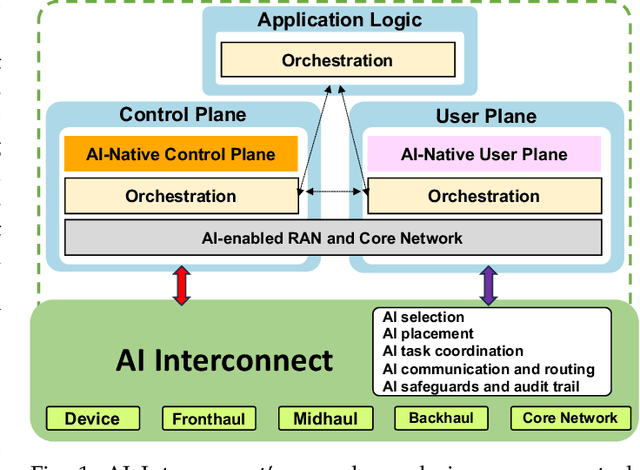
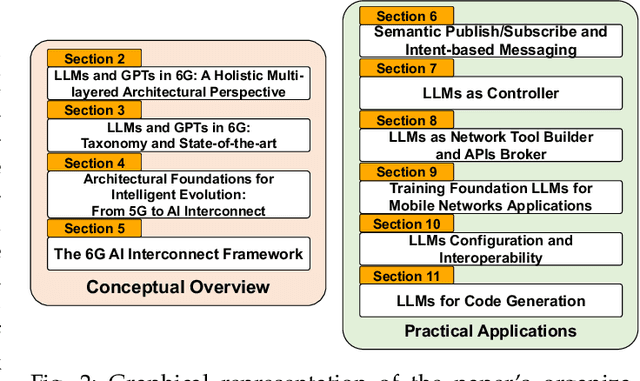
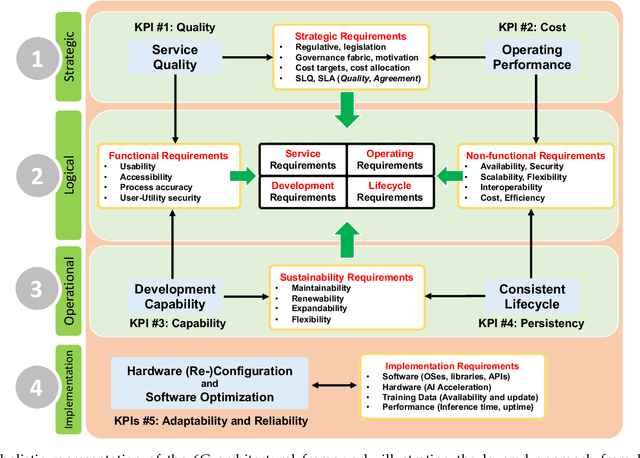
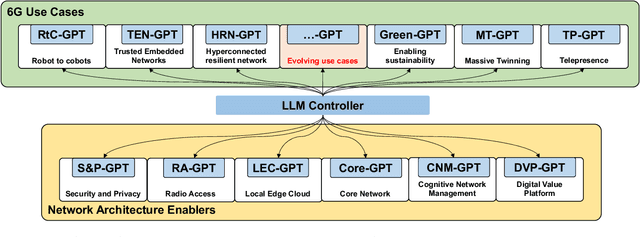
The evolution towards 6G architecture promises a transformative shift in communication networks, with artificial intelligence (AI) playing a pivotal role. This paper delves deep into the seamless integration of Large Language Models (LLMs) and Generalized Pretrained Transformers (GPT) within 6G systems. Their ability to grasp intent, strategize, and execute intricate commands will be pivotal in redefining network functionalities and interactions. Central to this is the AI Interconnect framework, intricately woven to facilitate AI-centric operations within the network. Building on the continuously evolving current state-of-the-art, we present a new architectural perspective for the upcoming generation of mobile networks. Here, LLMs and GPTs will collaboratively take center stage alongside traditional pre-generative AI and machine learning (ML) algorithms. This union promises a novel confluence of the old and new, melding tried-and-tested methods with transformative AI technologies. Along with providing a conceptual overview of this evolution, we delve into the nuances of practical applications arising from such an integration. Through this paper, we envisage a symbiotic integration where AI becomes the cornerstone of the next-generation communication paradigm, offering insights into the structural and functional facets of an AI-native 6G network.