 Add to Chrome
 Add to Firefox
 Add to Edge
A Scalable Embodied Intelligence Platform for Seamless Real-to-Sim-to-Real Transfer of Household Mobile Manipulation Tasks
Jun 17, 2026
Mobile manipulation is a fundamental capability in embodied intelligence robotics. The growing demand for robust and generalizable manipulation in unstructured household environments has driven rapid progress in embodied intelligence platforms. However, achieving a seamless transfer across the real-to-sim-to-real cycle faces three key challenges, including costly high-fidelity simulation scenes reconstruction, the complexity of systematic strategy evaluation in simulation, and incompatible real-world deployments. To address these challenges, we develop BestMan, a scalable and seamless real-to-sim-to-real platform that bridges the gap between the simulation and the real world, enabling effective strategy development, integration, and deployment for household mobile manipulation. Specifically, we design a novel Automated Scene Generation (ASG) module to reconstruct realistic simulations from real observations. Then, we propose a simulation-guided task formalization and skill learning architecture that supports the flexible integration and large-scale evaluations of hybrid skill strategies in simulation. Finally, to enhance the real-world scalability, we develop a Hardware-agnostic and Unified Middleware (HUM) to ensure seamless and compatible sim-to-real transfer across heterogeneous mobile manipulators for real deployments. Experimental results demonstrate the superior performance of our proposed platform in establishing standardized benchmarks and facilitating promising research in the field of mobile manipulation.

BestMan: A Modular Mobile Manipulator Platform for Embodied AI with Unified Simulation-Hardware APIs
Oct 17, 2024
Embodied Artificial Intelligence (Embodied AI) emphasizes agents' ability to perceive, understand, and act in physical environments. Simulation platforms play a crucial role in advancing this field by enabling the validation and optimization of algorithms. However, existing platforms face challenges such as multilevel technical integration complexity, insufficient modularity, interface heterogeneity, and adaptation to diverse hardware. We present BestMan, a simulation platform based on PyBullet, designed to address these issues. BestMan introduces an integrated multilevel skill chain for seamless coordination across perception, planning, and control; a highly modular architecture for flexible algorithm integration; unified interfaces for smooth simulation-to-reality transfer; and a hardware-agnostic approach for adapting to various mobile manipulator configurations. These features collectively simplify development and enhance platform expandability, making BestMan a valuable tool for Embodied AI research.
Utilizing Import Vector Machines to Identify Dangerous Pro-active Traffic Conditions
Jan 19, 2021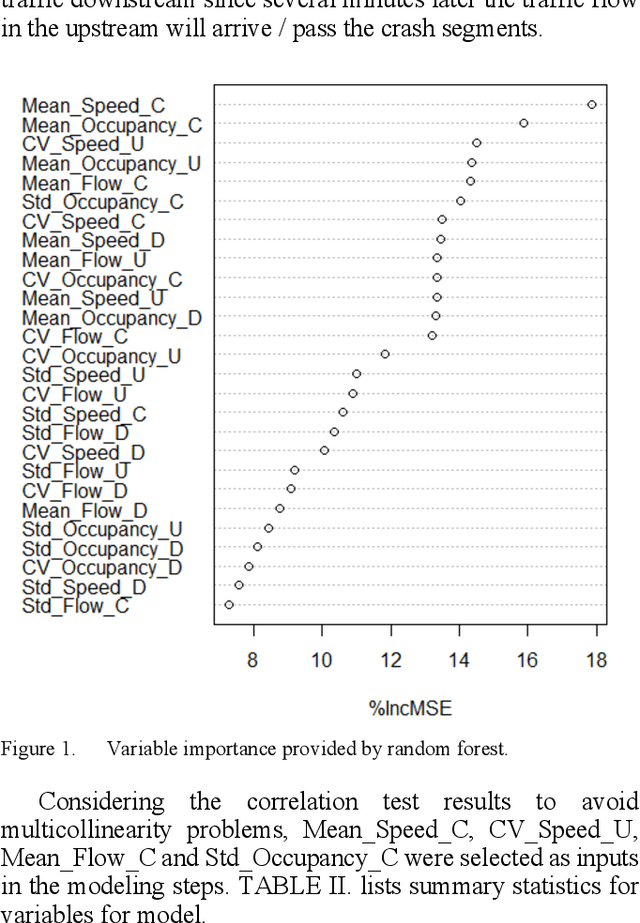
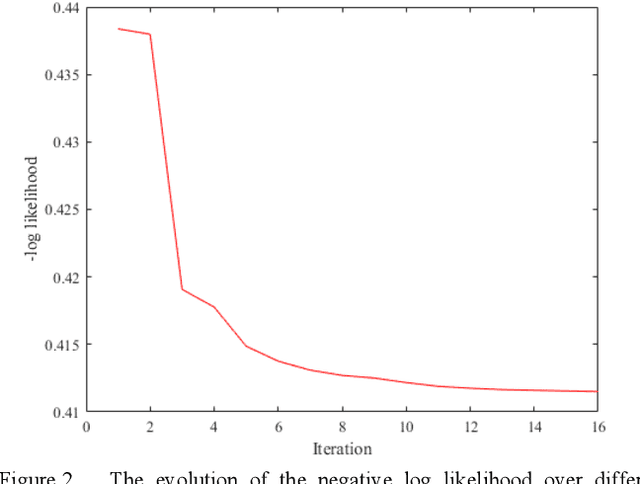
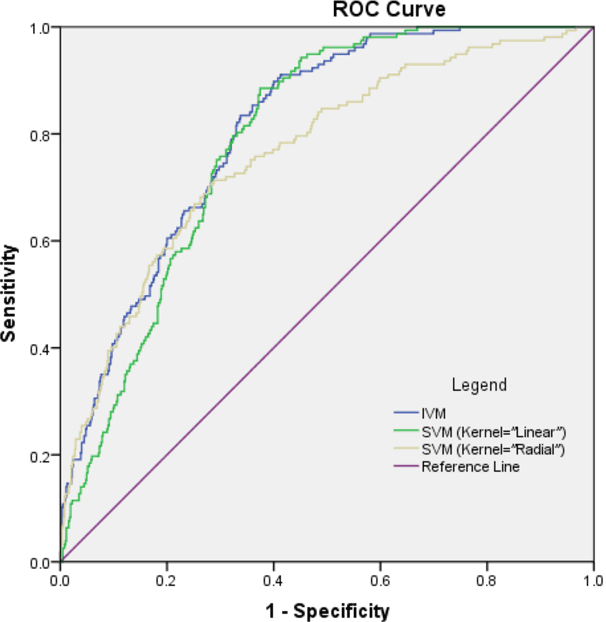
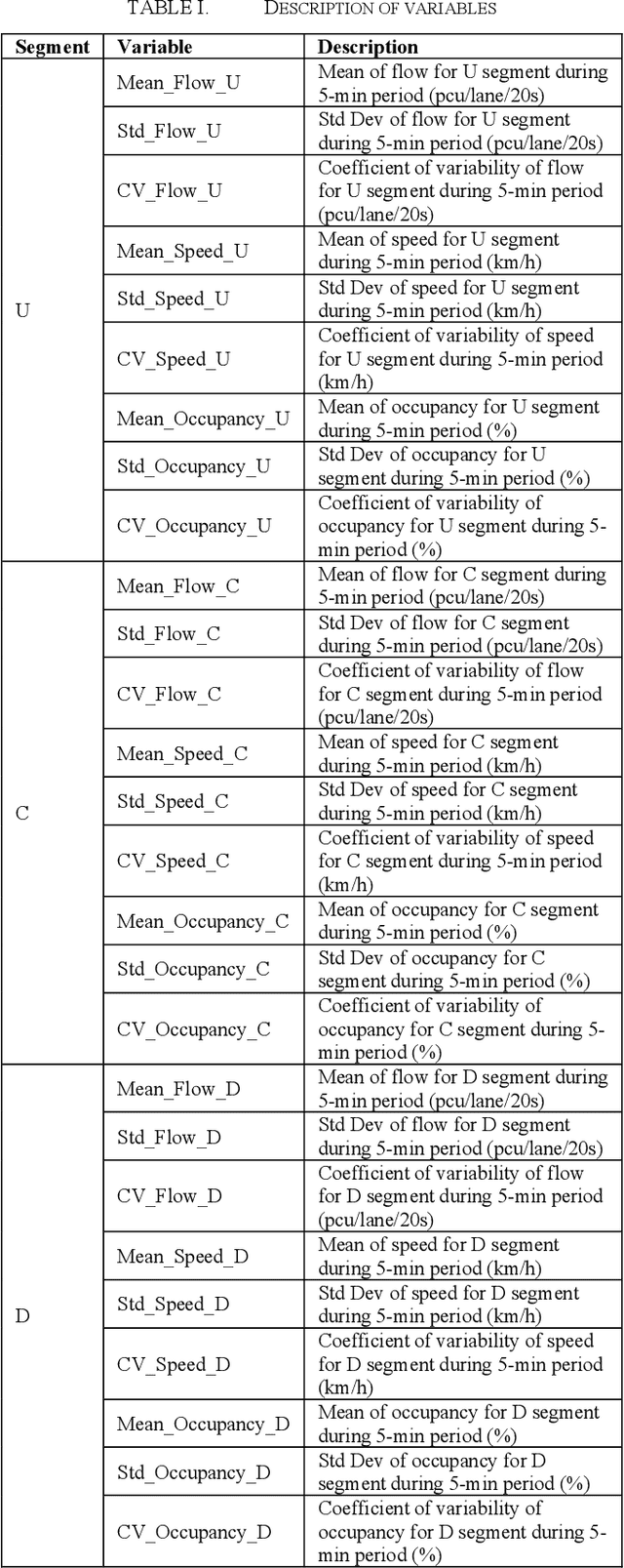
Traffic accidents have been a severe issue in metropolises with the development of traffic flow. This paper explores the theory and application of a recently developed machine learning technique, namely Import Vector Machines (IVMs), in real-time crash risk analysis, which is a hot topic to reduce traffic accidents. Historical crash data and corresponding traffic data from Shanghai Urban Expressway System were employed and matched. Traffic conditions are labelled as dangerous (i.e. probably leading to a crash) and safe (i.e. a normal traffic condition) based on 5-minute measurements of average speed, volume and occupancy. The IVM algorithm is trained to build the classifier and its performance is compared to the popular and successfully applied technique of Support Vector Machines (SVMs). The main findings indicate that IVMs could successfully be employed in real-time identification of dangerous pro-active traffic conditions. Furthermore, similar to the "support points" of the SVM, the IVM model uses only a fraction of the training data to index kernel basis functions, typically a much smaller fraction than the SVM, and its classification rates are similar to those of SVMs. This gives the IVM a computational advantage over the SVM, especially when the size of the training data set is large.
* 6 pages, 3 figures, 2020 IEEE 23rd International Conference on Intelligent Transportation Systems (ITSC)