 Add to Chrome
 Add to Firefox
 Add to Edge
OfficeQA Pro: An Enterprise Benchmark for End-to-End Grounded Reasoning
Mar 09, 2026
We introduce OfficeQA Pro, a benchmark for evaluating AI agents on grounded, multi-document reasoning over a large and heterogeneous document corpus. The corpus consists of U.S. Treasury Bulletins spanning nearly 100 years, comprising 89,000 pages and over 26 million numerical values. OfficeQA Pro consists of 133 questions that require precise document parsing, retrieval, and analytical reasoning across both unstructured text and tabular data. Frontier LLMs including Claude Opus 4.6, GPT-5.4, and Gemini 3.1 Pro Preview achieve less than 5% accuracy on OfficeQA Pro when relying on parametric knowledge, and less than 12% with additional access to the web. When provided directly with the document corpus, frontier agents still struggle on over half of questions, scoring 34.1% on average. We find that providing agents with a structured document representation produced by Databricks' ai_parse_document yields a 16.1% average relative performance gain across agents. We conduct additional ablations to study the effects of model selection, table representation, retrieval strategy, and test-time scaling on performance. Despite these improvements, significant headroom remains before agents can be considered reliable at enterprise-grade grounded reasoning.

KARL: Knowledge Agents via Reinforcement Learning
Mar 05, 2026We present a system for training enterprise search agents via reinforcement learning that achieves state-of-the-art performance across a diverse suite of hard-to-verify agentic search tasks. Our work makes four core contributions. First, we introduce KARLBench, a multi-capability evaluation suite spanning six distinct search regimes, including constraint-driven entity search, cross-document report synthesis, tabular numerical reasoning, exhaustive entity retrieval, procedural reasoning over technical documentation, and fact aggregation over internal enterprise notes. Second, we show that models trained across heterogeneous search behaviors generalize substantially better than those optimized for any single benchmark. Third, we develop an agentic synthesis pipeline that employs long-horizon reasoning and tool use to generate diverse, grounded, and high-quality training data, with iterative bootstrapping from increasingly capable models. Fourth, we propose a new post-training paradigm based on iterative large-batch off-policy RL that is sample efficient, robust to train-inference engine discrepancies, and naturally extends to multi-task training with out-of-distribution generalization. Compared to Claude 4.6 and GPT 5.2, KARL is Pareto-optimal on KARLBench across cost-quality and latency-quality trade-offs, including tasks that were out-of-distribution during training. With sufficient test-time compute, it surpasses the strongest closed models. These results show that tailored synthetic data in combination with multi-task reinforcement learning enables cost-efficient and high-performing knowledge agents for grounded reasoning.
Optimizing Instructions and Demonstrations for Multi-Stage Language Model Programs
Jun 17, 2024Language Model Programs, i.e. sophisticated pipelines of modular language model (LM) calls, are increasingly advancing NLP tasks, but they require crafting prompts that are jointly effective for all modules. We study prompt optimization for LM programs, i.e. how to update these prompts to maximize a downstream metric without access to module-level labels or gradients. To make this tractable, we factorize our problem into optimizing the free-form instructions and few-shot demonstrations of every module and introduce several strategies to craft task-grounded instructions and navigate credit assignment across modules. Our strategies include (i) program- and data-aware techniques for proposing effective instructions, (ii) a stochastic mini-batch evaluation function for learning a surrogate model of our objective, and (iii) a meta-optimization procedure in which we refine how LMs construct proposals over time. Using these insights we develop MIPRO, a novel optimizer that outperforms baselines on five of six diverse LM programs using a best-in-class open-source model (Llama-3-8B), by as high as 12.9% accuracy. We will release our new optimizers and benchmark in DSPy at https://github.com/stanfordnlp/dspy
Automating the Enterprise with Foundation Models
May 03, 2024


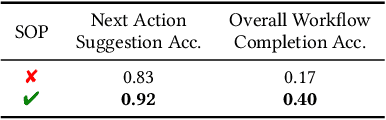
Automating enterprise workflows could unlock $4 trillion/year in productivity gains. Despite being of interest to the data management community for decades, the ultimate vision of end-to-end workflow automation has remained elusive. Current solutions rely on process mining and robotic process automation (RPA), in which a bot is hard-coded to follow a set of predefined rules for completing a workflow. Through case studies of a hospital and large B2B enterprise, we find that the adoption of RPA has been inhibited by high set-up costs (12-18 months), unreliable execution (60% initial accuracy), and burdensome maintenance (requiring multiple FTEs). Multimodal foundation models (FMs) such as GPT-4 offer a promising new approach for end-to-end workflow automation given their generalized reasoning and planning abilities. To study these capabilities we propose ECLAIR, a system to automate enterprise workflows with minimal human supervision. We conduct initial experiments showing that multimodal FMs can address the limitations of traditional RPA with (1) near-human-level understanding of workflows (93% accuracy on a workflow understanding task) and (2) instant set-up with minimal technical barrier (based solely on a natural language description of a workflow, ECLAIR achieves end-to-end completion rates of 40%). We identify human-AI collaboration, validation, and self-improvement as open challenges, and suggest ways they can be solved with data management techniques. Code is available at: https://github.com/HazyResearch/eclair-agents
Maintaining fairness across distribution shift: do we have viable solutions for real-world applications?
Feb 02, 2022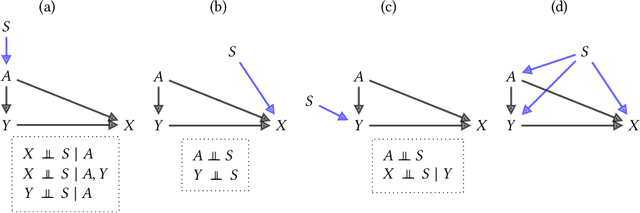
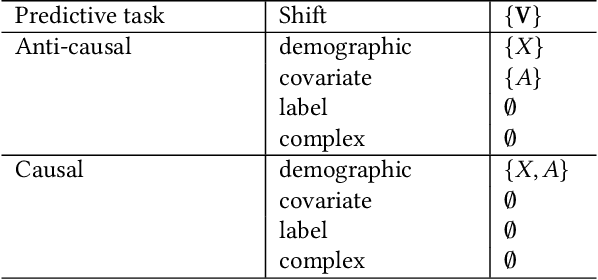
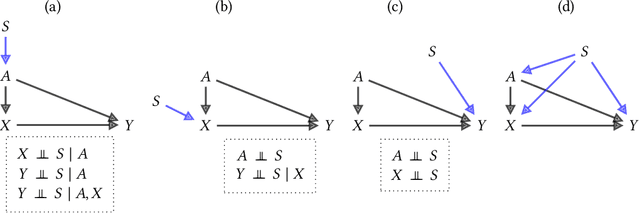
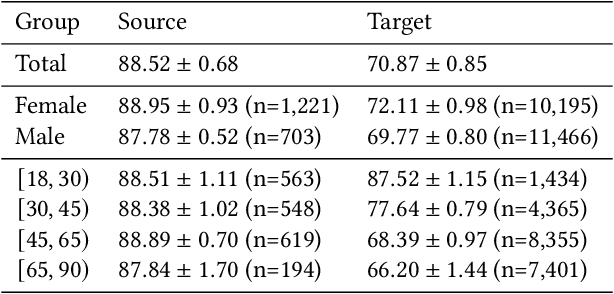
Fairness and robustness are often considered as orthogonal dimensions when evaluating machine learning models. However, recent work has revealed interactions between fairness and robustness, showing that fairness properties are not necessarily maintained under distribution shift. In healthcare settings, this can result in e.g. a model that performs fairly according to a selected metric in "hospital A" showing unfairness when deployed in "hospital B". While a nascent field has emerged to develop provable fair and robust models, it typically relies on strong assumptions about the shift, limiting its impact for real-world applications. In this work, we explore the settings in which recently proposed mitigation strategies are applicable by referring to a causal framing. Using examples of predictive models in dermatology and electronic health records, we show that real-world applications are complex and often invalidate the assumptions of such methods. Our work hence highlights technical, practical, and engineering gaps that prevent the development of robustly fair machine learning models for real-world applications. Finally, we discuss potential remedies at each step of the machine learning pipeline.