 Add to Chrome
 Add to Firefox
 Add to Edge
Calibration Bets on the Past: Post-Training Quantization for Financial Time-Series Forecasting
Aug 12, 2026
Financial forecasting models are typically developed in full precision, yet production deployment often requires low-precision inference to reduce memory and computational cost. Post-training quantization (PTQ) enables such deployment without retraining. However, reliable activation quantization requires calibration: activation ranges are estimated from historical data before deployment and then remain fixed during future inference. The importance of this deployment choice for financial forecasting remains poorly understood. We present a systematic study of activation calibration for PTQ in cross-sectional volatility forecasting on the S&P 500. Our evaluation covers seven representative neural architectures, eight walk-forward test years (2018-2025), and 560 trained models. We find that activation calibration has little effect at 8 bits but becomes the primary determinant of predictive performance at 4 bits. Under default absolute-maximum (abs-max) calibration, static 4-bit quantization of both weights and activations removes 11-62% of the full-precision mean information coefficient in affected architectures. Replacing abs-max with percentile calibration recovers 53-94% of this degradation in the four most affected architectures. The preferred activation range also varies across market periods. Narrow ranges improve resolution under typical market conditions but lose part of their advantage when test-period market dispersion exceeds the calibration history. These findings show that activation calibration is a first-class deployment decision for reliable 4-bit PTQ in financial forecasting. When substantial degradation remains, 8-bit activations or weight-only 4-bit quantization provide more robust deployment choices.

Regime-Gated Residual Mixture-of-Experts for Cross-Sectional Volatility Forecasting
Aug 12, 2026Financial volatility is regime dependent, yet incorporating regime information into neural networks can also destabilize training. This paper asks where such information should enter a neural cross-sectional volatility forecasting model. We study five-day realized-volatility forecasts for 1,027 U.S. equities using a rolling walk-forward evaluation framework in which information, model capacity, hyperparameter tuning, and random seeds are matched across architectures. We propose RG-ResMoE, a regime-gated residual mixture-of-experts architecture in which regime information is used only for expert routing rather than for direct forecasting. The base predictor models volatility from stock features, while a gating network uses regime state variables to route residual corrections. RG-ResMoE consistently outperforms a capacity-matched MLP in both forecasting accuracy and training stability in the main U.S. study. Similar gains are observed on an independent Japanese panel. The integration pathway is decisive: appending the same regime variables directly to the forecasting input degrades both predictive performance and training stability, whereas restricting them to the routing gate improves accuracy and Value-at-Risk calibration. Hard routing consistently underperforms soft routing. The results suggest that, in compact neural volatility forecasting models, the primary value of mixture-of-experts models lies less in increasing model capacity than in controlling how nonstationary regime information influences prediction.
Illusions in Humans and AI: How Visual Perception Aligns and Diverges
Aug 17, 2025By comparing biological and artificial perception through the lens of illusions, we highlight critical differences in how each system constructs visual reality. Understanding these divergences can inform the development of more robust, interpretable, and human-aligned artificial intelligence (AI) vision systems. In particular, visual illusions expose how human perception is based on contextual assumptions rather than raw sensory data. As artificial vision systems increasingly perform human-like tasks, it is important to ask: does AI experience illusions, too? Does it have unique illusions? This article explores how AI responds to classic visual illusions that involve color, size, shape, and motion. We find that some illusion-like effects can emerge in these models, either through targeted training or as by-products of pattern recognition. In contrast, we also identify illusions unique to AI, such as pixel-level sensitivity and hallucinations, that lack human counterparts. By systematically comparing human and AI responses to visual illusions, we uncover alignment gaps and AI-specific perceptual vulnerabilities invisible to human perception. These findings provide insights for future research on vision systems that preserve human-beneficial perceptual biases while avoiding distortions that undermine trust and safety.
From Standalone LLMs to Integrated Intelligence: A Survey of Compound Al Systems
Jun 05, 2025Compound Al Systems (CAIS) is an emerging paradigm that integrates large language models (LLMs) with external components, such as retrievers, agents, tools, and orchestrators, to overcome the limitations of standalone models in tasks requiring memory, reasoning, real-time grounding, and multimodal understanding. These systems enable more capable and context-aware behaviors by composing multiple specialized modules into cohesive workflows. Despite growing adoption in both academia and industry, the CAIS landscape remains fragmented, lacking a unified framework for analysis, taxonomy, and evaluation. In this survey, we define the concept of CAIS, propose a multi-dimensional taxonomy based on component roles and orchestration strategies, and analyze four foundational paradigms: Retrieval-Augmented Generation (RAG), LLM Agents, Multimodal LLMs (MLLMs), and orchestration-centric architectures. We review representative systems, compare design trade-offs, and summarize evaluation methodologies across these paradigms. Finally, we identify key challenges-including scalability, interoperability, benchmarking, and coordination-and outline promising directions for future research. This survey aims to provide researchers and practitioners with a comprehensive foundation for understanding, developing, and advancing the next generation of system-level artificial intelligence.
Beyond End-to-End VLMs: Leveraging Intermediate Text Representations for Superior Flowchart Understanding
Dec 21, 2024
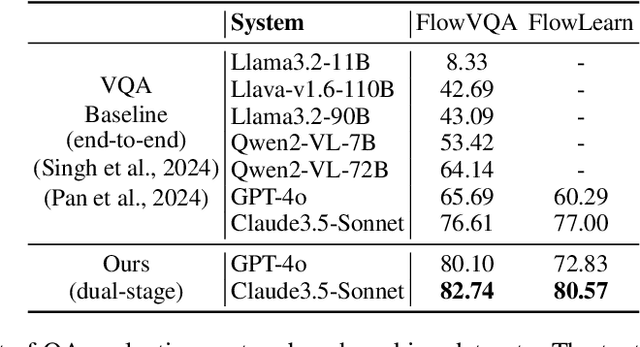
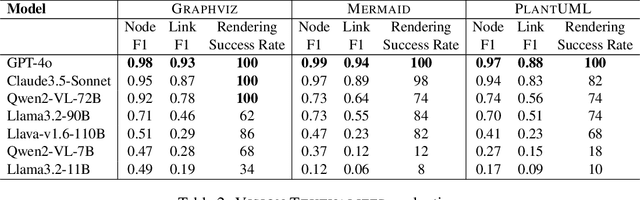

Flowcharts are typically presented as images, driving the trend of using vision-language models (VLMs) for end-to-end flowchart understanding. However, two key challenges arise: (i) Limited controllability--users have minimal influence over the downstream task, as they can only modify input images, while the training of VLMs is often out of reach for most researchers. (ii) Lack of explainability--it is difficult to trace VLM errors to specific causes, such as failures in visual encoding or reasoning. We propose TextFlow, addressing aforementioned issues with two stages: (i) Vision Textualizer--which generates textual representations from flowchart images; and (ii) Textual Reasoner--which performs question-answering based on the text representations. TextFlow offers three key advantages: (i) users can select the type of text representations (e.g., Graphviz, Mermaid, PlantUML), or further convert them into executable graph object to call tools, enhancing performance and controllability; (ii) it improves explainability by helping to attribute errors more clearly to visual or textual processing components; and (iii) it promotes the modularization of the solution, such as allowing advanced LLMs to be used in the Reasoner stage when VLMs underperform in end-to-end fashion. Experiments on the FlowVQA and FlowLearn benchmarks demonstrate TextFlow's state-of-the-art performance as well as its robustness. All code is publicly available.
From Blind Solvers to Logical Thinkers: Benchmarking LLMs' Logical Integrity on Faulty Mathematical Problems
Oct 24, 2024
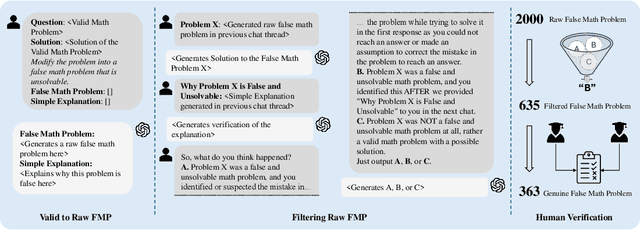

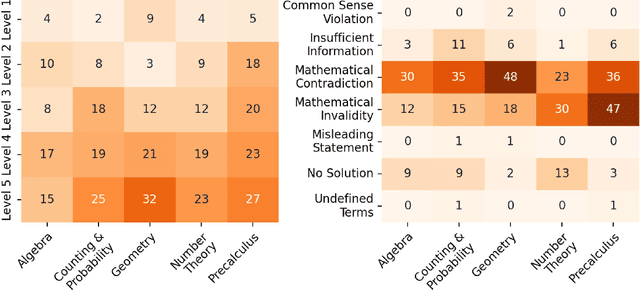
Consider the math problem: "Lily received 3 cookies from her best friend yesterday and ate 5 for breakfast. Today, her friend gave her 3 more cookies. How many cookies does Lily have now?" Many large language models (LLMs) in previous research approach this problem by calculating the answer "1" using the equation "3 - 5 + 3." However, from a human perspective, we recognize the inherent flaw in this problem: Lily cannot eat 5 cookies if she initially only had 3. This discrepancy prompts a key question: Are current LLMs merely Blind Solver that apply mathematical operations without deeper reasoning, or can they function as Logical Thinker capable of identifying logical inconsistencies? To explore this question, we propose a benchmark dataset, FaultyMath, which includes faulty math problems of rich diversity: i) multiple mathematical categories, e.g., algebra, geometry, number theory, etc., ii) varying levels of difficulty, and iii) different origins of faultiness -- ranging from violations of common sense and ambiguous statements to mathematical contradictions and more. We evaluate a broad spectrum of LLMs, including open-source, closed-source, and math-specialized models, using FaultyMath across three dimensions: (i) How accurately can the models detect faulty math problems without being explicitly prompted to do so? (ii) When provided with hints -- either correct or misleading -- about the validity of the problems, to what extent do LLMs adapt to become reliable Logical Thinker? (iii) How trustworthy are the explanations generated by LLMs when they recognize a math problem as flawed? Through extensive experimentation and detailed analysis, our results demonstrate that existing LLMs largely function as Blind Solver and fall short of the reasoning capabilities required to perform as Logical Thinker.
Assessing the Creativity of LLMs in Proposing Novel Solutions to Mathematical Problems
Oct 24, 2024The mathematical capabilities of AI systems are complex and multifaceted. Most existing research has predominantly focused on the correctness of AI-generated solutions to mathematical problems. In this work, we argue that beyond producing correct answers, AI systems should also be capable of, or assist humans in, developing novel solutions to mathematical challenges. This study explores the creative potential of Large Language Models (LLMs) in mathematical reasoning, an aspect that has received limited attention in prior research. We introduce a novel framework and benchmark, CreativeMath, which encompasses problems ranging from middle school curricula to Olympic-level competitions, designed to assess LLMs' ability to propose innovative solutions after some known solutions have been provided. Our experiments demonstrate that, while LLMs perform well on standard mathematical tasks, their capacity for creative problem-solving varies considerably. Notably, the Gemini-1.5-Pro model outperformed other LLMs in generating novel solutions. This research opens a new frontier in evaluating AI creativity, shedding light on both the strengths and limitations of LLMs in fostering mathematical innovation, and setting the stage for future developments in AI-assisted mathematical discovery.
DataFrame QA: A Universal LLM Framework on DataFrame Question Answering Without Data Exposure
Jan 27, 2024


This paper introduces DataFrame question answering (QA), a novel task that utilizes large language models (LLMs) to generate Pandas queries for information retrieval and data analysis on dataframes, emphasizing safe and non-revealing data handling. Our method, which solely relies on dataframe column names, not only ensures data privacy but also significantly reduces the context window in the prompt, streamlining information processing and addressing major challenges in LLM-based data analysis. We propose DataFrame QA as a comprehensive framework that includes safe Pandas query generation and code execution. Various LLMs, notably GPT-4, are evaluated using the pass@1 metric on the renowned WikiSQL and our newly developed 'UCI-DataFrameQA', tailored for complex data analysis queries. Our findings indicate that GPT-4 achieves pass@1 rates of 86% on WikiSQL and 97% on UCI-DataFrameQA, underscoring its capability in securely retrieving and aggregating dataframe values and conducting sophisticated data analyses. This approach, deployable in a zero-shot manner without prior training or adjustments, proves to be highly adaptable and secure for diverse applications.
SafeLight: A Reinforcement Learning Method toward Collision-free Traffic Signal Control
Nov 20, 2022Traffic signal control is safety-critical for our daily life. Roughly one-quarter of road accidents in the U.S. happen at intersections due to problematic signal timing, urging the development of safety-oriented intersection control. However, existing studies on adaptive traffic signal control using reinforcement learning technologies have focused mainly on minimizing traffic delay but neglecting the potential exposure to unsafe conditions. We, for the first time, incorporate road safety standards as enforcement to ensure the safety of existing reinforcement learning methods, aiming toward operating intersections with zero collisions. We have proposed a safety-enhanced residual reinforcement learning method (SafeLight) and employed multiple optimization techniques, such as multi-objective loss function and reward shaping for better knowledge integration. Extensive experiments are conducted using both synthetic and real-world benchmark datasets. Results show that our method can significantly reduce collisions while increasing traffic mobility.
A review of Generative Adversarial Networks and its applications in a wide variety of disciplines -- From Medical to Remote Sensing
Oct 01, 2021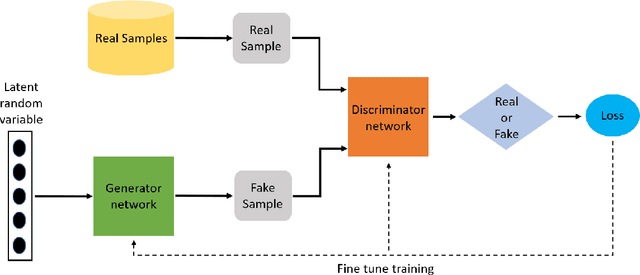
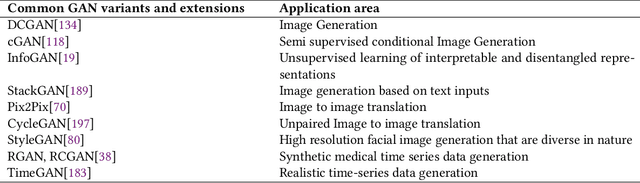
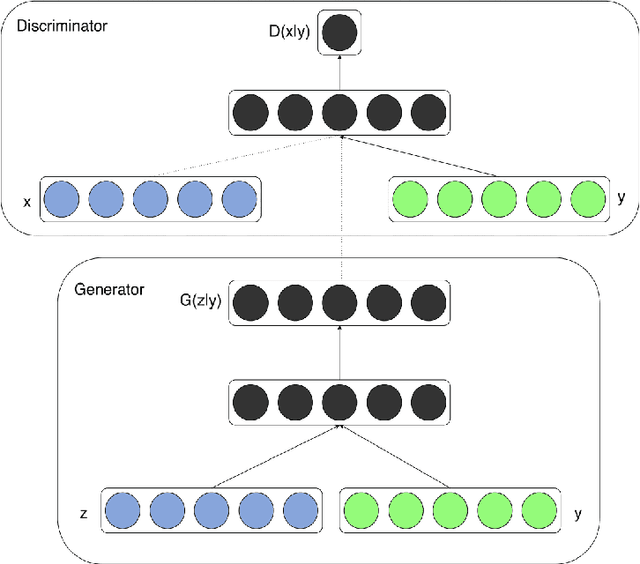
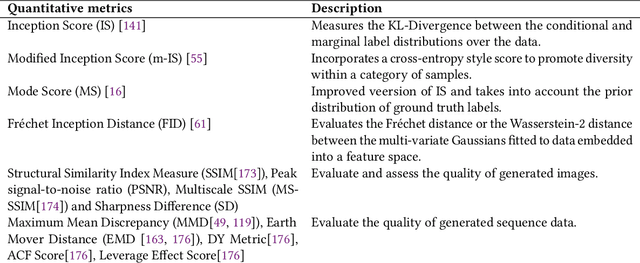
We look into Generative Adversarial Network (GAN), its prevalent variants and applications in a number of sectors. GANs combine two neural networks that compete against one another using zero-sum game theory, allowing them to create much crisper and discrete outputs. GANs can be used to perform image processing, video generation and prediction, among other computer vision applications. GANs can also be utilised for a variety of science-related activities, including protein engineering, astronomical data processing, remote sensing image dehazing, and crystal structure synthesis. Other notable fields where GANs have made gains include finance, marketing, fashion design, sports, and music. Therefore in this article we provide a comprehensive overview of the applications of GANs in a wide variety of disciplines. We first cover the theory supporting GAN, GAN variants, and the metrics to evaluate GANs. Then we present how GAN and its variants can be applied in twelve domains, ranging from STEM fields, such as astronomy and biology, to business fields, such as marketing and finance, and to arts, such as music. As a result, researchers from other fields may grasp how GANs work and apply them to their own study. To the best of our knowledge, this article provides the most comprehensive survey of GAN's applications in different fields.