 Add to Chrome
 Add to Firefox
 Add to Edge
From Shallow to Deep: Pinning Semantic Intent via Causal GRPO
Mar 03, 2026
Large Language Models remain vulnerable to adversarial prefix attacks (e.g., ``Sure, here is'') despite robust standard safety. We diagnose this vulnerability as Shallow Safety Alignment, stemming from a pathology we term semantic representation decay: as the model generates compliant prefixes, its internal malicious intent signal fades. To address this, we propose Two-Stage Causal-GRPO (TSC-GRPO), a framework designed to achieve intent pinning. First, grounded in causal identifiability theory, we train a causal intent probe to disentangle invariant intent from stylistic perturbations. Second, we internalize this causal awareness into the policy via Group Relative Policy Optimization. By employing a cumulative causal penalty within ``fork-in-the-road'' training scenarios, we force the model to learn that accumulating harmful tokens monotonically decreases reward, enabling robust late-stage refusals. Experiments show that TSC-GRPO significantly outperforms baselines in defending against jailbreak attacks while preserving general utility.

Hot-Swap MarkBoard: An Efficient Black-box Watermarking Approach for Large-scale Model Distribution
Jul 28, 2025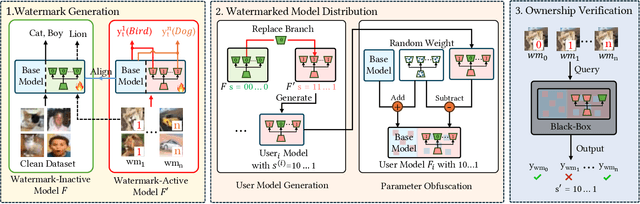
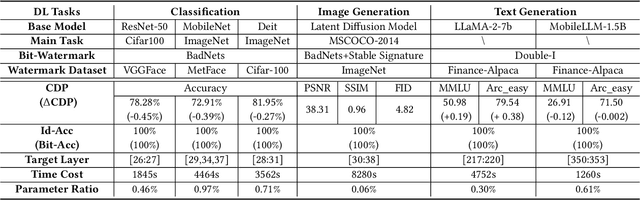
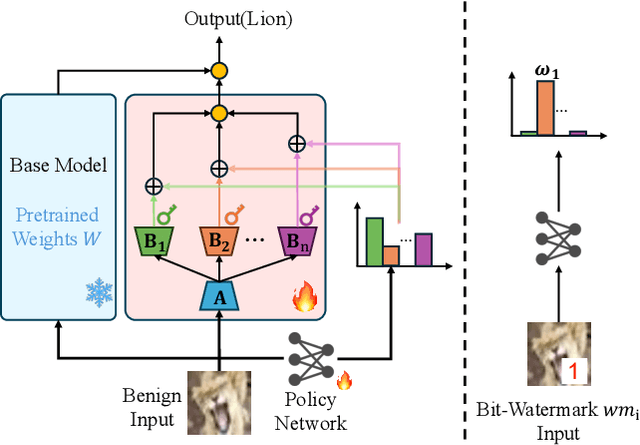
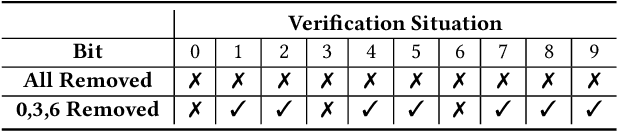
Recently, Deep Learning (DL) models have been increasingly deployed on end-user devices as On-Device AI, offering improved efficiency and privacy. However, this deployment trend poses more serious Intellectual Property (IP) risks, as models are distributed on numerous local devices, making them vulnerable to theft and redistribution. Most existing ownership protection solutions (e.g., backdoor-based watermarking) are designed for cloud-based AI-as-a-Service (AIaaS) and are not directly applicable to large-scale distribution scenarios, where each user-specific model instance must carry a unique watermark. These methods typically embed a fixed watermark, and modifying the embedded watermark requires retraining the model. To address these challenges, we propose Hot-Swap MarkBoard, an efficient watermarking method. It encodes user-specific $n$-bit binary signatures by independently embedding multiple watermarks into a multi-branch Low-Rank Adaptation (LoRA) module, enabling efficient watermark customization without retraining through branch swapping. A parameter obfuscation mechanism further entangles the watermark weights with those of the base model, preventing removal without degrading model performance. The method supports black-box verification and is compatible with various model architectures and DL tasks, including classification, image generation, and text generation. Extensive experiments across three types of tasks and six backbone models demonstrate our method's superior efficiency and adaptability compared to existing approaches, achieving 100\% verification accuracy.