 Add to Chrome
 Add to Firefox
 Add to Edge
LabVLA: Grounding Vision-Language-Action Models in Scientific Laboratories
Jun 11, 2026
Scientific laboratories increasingly rely on AI systems to reason about experiments, but the physical act of doing science remains largely outside their reach. AI can help read literature, generate hypotheses, and plan protocols, yet the execution of those protocols at the bench still requires a human operator. Vision-Language-Action (VLA) models provide one possible interface between written protocols and robot execution, but existing policies are trained mostly on household and tabletop demonstrations and rarely encounter the instruments, transparent liquids, or fixed protocol workflows found in scientific laboratories. Closing this gap requires both laboratory-specific supervision and a unified learning framework that can accommodate the diverse robot embodiments used to execute experimental protocols. We therefore identify data and embodiment as central bottlenecks alongside model design. To address the data side, we build RoboGenesis, a simulation-based workflow and data engine that composes configured laboratory workflows from atomic skills, validates and filters rollouts, and exports structured demonstrations across supported robot profiles. On the policy side, we present LabVLA, trained with a two-stage recipe: FAST action token pretraining first makes the Qwen3-VL-4B-Instruct backbone action aware before any continuous control is learned, and flow matching posttraining then attaches a DiT action expert under knowledge insulation. On the LabUtopia benchmark, LabVLA achieves the highest average success rate among all evaluated baselines under both in-distribution and out-of-distribution settings.

Downlink Power Minimization in Intelligent Reconfigurable Surface-Aided Security Classification Wireless Communications System
Jun 11, 2022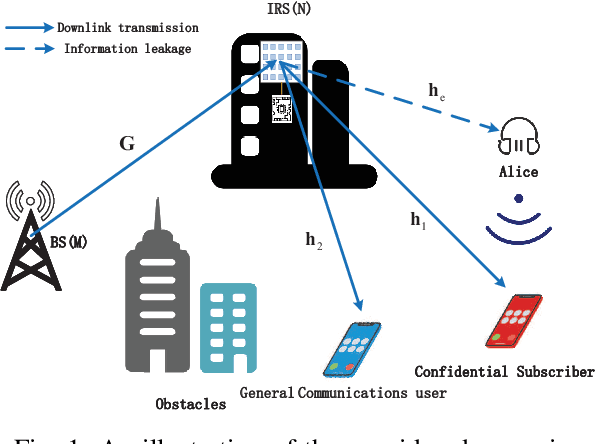
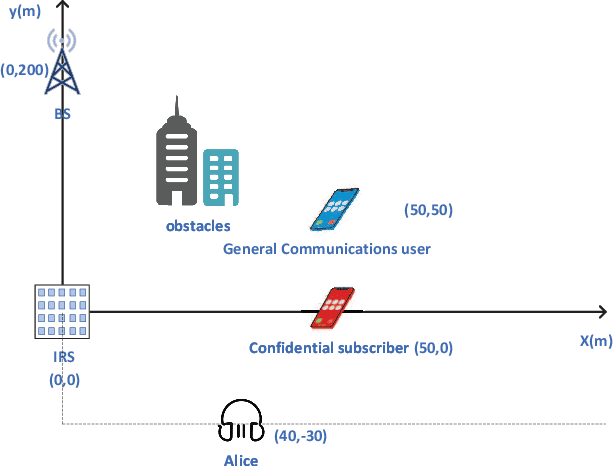
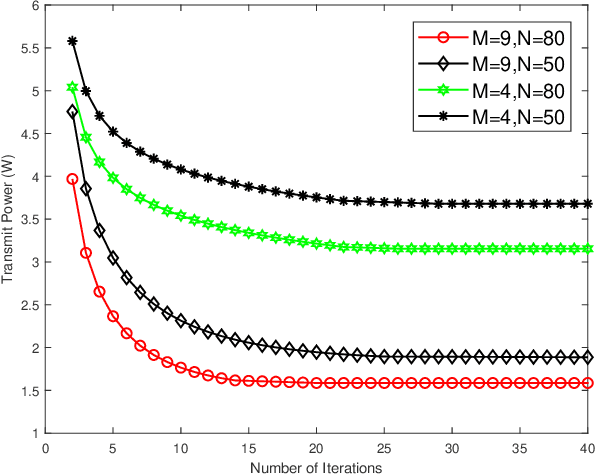
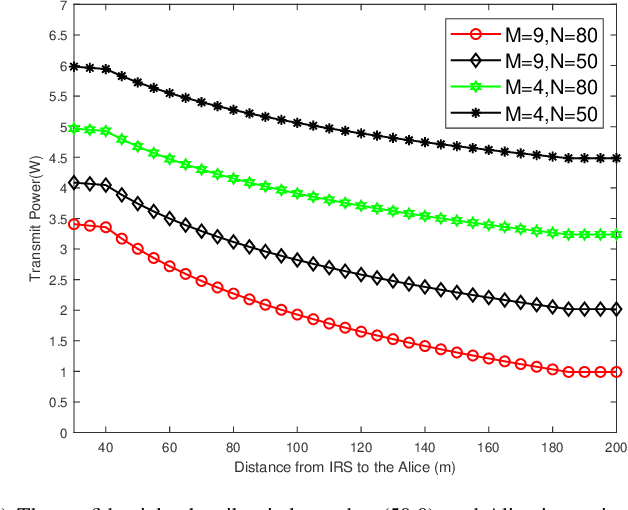
User privacy protection is considered a critical issue in wireless networks, which drives the demand for various secure information interaction techniques. In this paper, we introduce an intelligent reflecting surface (IRS)-aided security classification wireless communication system, which reduces the transmit power of the base station (BS) by classifying users with different security requirements. Specifically, we divide the users into confidential subscribers with secure communication requirements and general communication users with simple communication requirements. During the communication period, we guarantee the secure rate of the confidential subscribers while ensuring the service quality of the general communication users, thereby reducing the transmit power of the BS. To realize such a secure and green information transmission, the BS implements a beamforming design on the transmitted signal superimposed with artificial noise (AN) and then broadcasts it to users with the assistance of the IRS's reflection. We develop an alternating optimization framework to minimize the BS downlink power with respect to the active beamformers of the BS, the AN vector at the BS, and the reflection phase shifts of the IRS. A successive convex approximation (SCA) method is proposed so that the nonconvex beamforming problems can be converted to tractable convex forms. The simulation results demonstrate that the proposed algorithm is convergent and can reduce the transmit power by 20\% compared to the best benchmark scheme.