 Add to Chrome
 Add to Firefox
 Add to Edge
DOA Estimation for Low-Altitude Networks: HAD Architectures, Methods, and Challenges
Apr 01, 2026
With the rapid expansion of low-altitude economy (LAE) services and the growing demand for integrated sensing and communication (ISAC) in air-ground networks, reliable direction-of-arrival (DOA) estimation has become essential for both directional communication and sensing functions. DOA underpins beam alignment, spatial-reuse scheduling, and ISAC-critical tasks such as airspace situational awareness and multi-target monitoring. Hybrid analog-digital (HAD) architectures have emerged as a practical solution for large-aperture directional operation under stringent radio frequency (RF), analog-to-digital converter (ADC), and size, weight, and power (SWaP) constraints. However, HAD compresses antenna-domain observations through analog combining, fundamentally reshaping the measurement model and introducing new algorithmic and system-level challenges for DOA estimation. This article first reviews the principles and representative architectures of HAD, highlighting their advantages for scalable beam-centric and ISAC-oriented operation in LAE scenarios. We then provide a structured overview of HAD-enabled DOA estimation methodologies, including spatial covariance matrix (SCM) reconstruction, multi-combiner scan-based acquisition, and pilot-aided estimation, along with key design tradeoffs. Finally, we discuss open challenges and outline reliability-driven research directions toward robust, deployable HAD-enabled DOA solutions for practical ISAC-enabled low-altitude environments.

EmbodiedVSR: Dynamic Scene Graph-Guided Chain-of-Thought Reasoning for Visual Spatial Tasks
Mar 14, 2025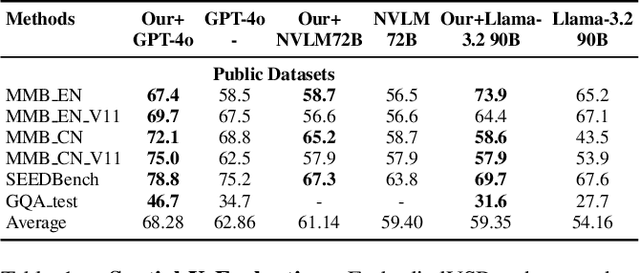
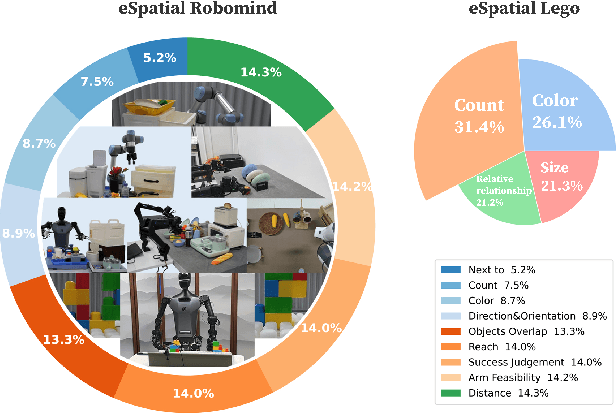
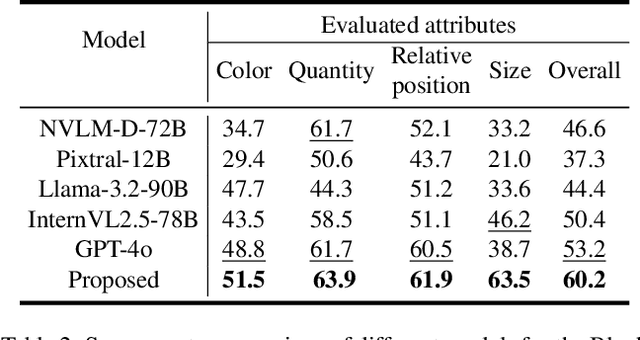
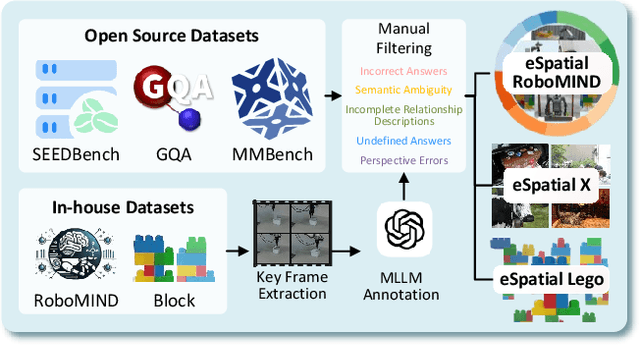
While multimodal large language models (MLLMs) have made groundbreaking progress in embodied intelligence, they still face significant challenges in spatial reasoning for complex long-horizon tasks. To address this gap, we propose EmbodiedVSR (Embodied Visual Spatial Reasoning), a novel framework that integrates dynamic scene graph-guided Chain-of-Thought (CoT) reasoning to enhance spatial understanding for embodied agents. By explicitly constructing structured knowledge representations through dynamic scene graphs, our method enables zero-shot spatial reasoning without task-specific fine-tuning. This approach not only disentangles intricate spatial relationships but also aligns reasoning steps with actionable environmental dynamics. To rigorously evaluate performance, we introduce the eSpatial-Benchmark, a comprehensive dataset including real-world embodied scenarios with fine-grained spatial annotations and adaptive task difficulty levels. Experiments demonstrate that our framework significantly outperforms existing MLLM-based methods in accuracy and reasoning coherence, particularly in long-horizon tasks requiring iterative environment interaction. The results reveal the untapped potential of MLLMs for embodied intelligence when equipped with structured, explainable reasoning mechanisms, paving the way for more reliable deployment in real-world spatial applications. The codes and datasets will be released soon.