 Add to Chrome
 Add to Firefox
 Add to Edge
Logics-Parsing-Omni Technical Report
Mar 12, 2026
Addressing the challenges of fragmented task definitions and the heterogeneity of unstructured data in multimodal parsing, this paper proposes the Omni Parsing framework. This framework establishes a Unified Taxonomy covering documents, images, and audio-visual streams, introducing a progressive parsing paradigm that bridges perception and cognition. Specifically, the framework integrates three hierarchical levels: 1) Holistic Detection, which achieves precise spatial-temporal grounding of objects or events to establish a geometric baseline for perception; 2) Fine-grained Recognition, which performs symbolization (e.g., OCR/ASR) and attribute extraction on localized objects to complete structured entity parsing; and 3) Multi-level Interpreting, which constructs a reasoning chain from local semantics to global logic. A pivotal advantage of this framework is its evidence anchoring mechanism, which enforces a strict alignment between high-level semantic descriptions and low-level facts. This enables ``evidence-based'' logical induction, transforming unstructured signals into standardized knowledge that is locatable, enumerable, and traceable. Building on this foundation, we constructed a standardized dataset and released the Logics-Parsing-Omni model, which successfully converts complex audio-visual signals into machine-readable structured knowledge. Experiments demonstrate that fine-grained perception and high-level cognition are synergistic, effectively enhancing model reliability. Furthermore, to quantitatively evaluate these capabilities, we introduce OmniParsingBench. Code, models and the benchmark are released at https://github.com/alibaba/Logics-Parsing/tree/master/Logics-Parsing-Omni.

Intelligence of Astronomical Optical Telescope: Present Status and Future Perspectives
Jun 29, 2023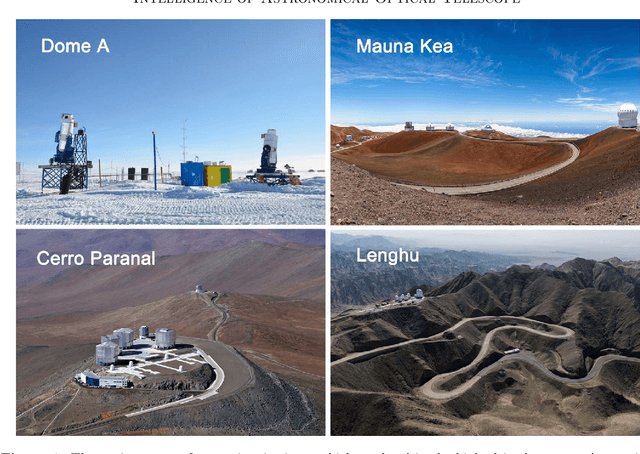
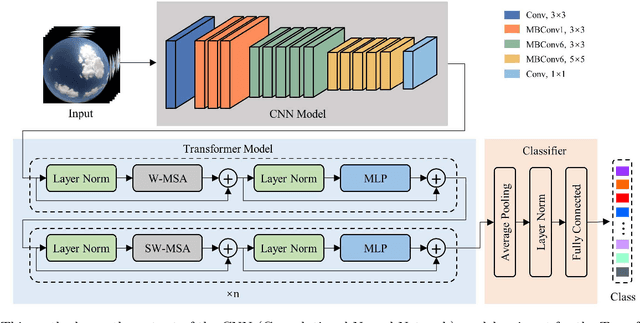

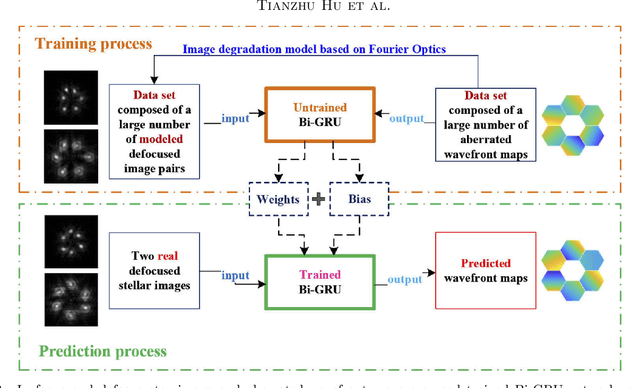
Artificial intelligence technology has been widely used in astronomy, and new artificial intelligence technologies and application scenarios are constantly emerging. There have been a large number of papers reviewing the application of artificial intelligence technology in astronomy. However, relevant articles seldom mention telescope intelligence separately, and it is difficult to understand the current development status and research hotspots of telescope intelligence from these papers. This paper combines the development history of artificial intelligence technology and the difficulties of critical technologies of telescopes, comprehensively introduces the development and research hotspots of telescope intelligence, then conducts statistical analysis on various research directions of telescope intelligence and defines the research directions' merits. All kinds of research directions are evaluated, and the research trend of each telescope's intelligence is pointed out. Finally, according to the advantages of artificial intelligence technology and the development trend of telescopes, future research hotspots of telescope intelligence are given.