 Add to Chrome
 Add to Firefox
 Add to Edge
Deep Learning for Semen Analysis in Male Infertility: Computer Vision, Multimodal Fusion, and Clinical Translation
Jul 06, 2026
Male infertility contributes substantially to the global infertility burden, and sperm analysis remains central to diagnosis, treatment planning, and assisted reproductive technology. Conventional semen evaluation, however, is labor-intensive, operator-dependent, and limited by inter- and intra-observer variability, motivating the development of objective and reproducible computational approaches. This review provides a comprehensive and perspective-oriented synthesis of artificial intelligence-driven sperm analysis, with a focus on computer vision, deep learning, multimodal fusion, robustness, and clinical translation. We first review task-specific methods for sperm detection and counting, tracking-based motility assessment, semantic and instance segmentation, morphology and defect classification, functional assessment, and genetic integrity evaluation. We then summarize public datasets, benchmarks, evaluation metrics, and emerging multimodal strategies that integrate microscopic images, time-lapse videos, CASA-derived parameters, DNA integrity assays, and clinical metadata. Beyond algorithmic performance, we discuss key barriers to real-world deployment, including data scarcity, cross-center domain shift, annotation inconsistency, interpretability, uncertainty calibration, privacy-preserving learning, and workflow integration. Finally, we outline a staged clinical translation roadmap spanning technical standardization, multicenter retrospective validation, silent prospective evaluation, human-in-the-loop clinical testing, ART outcome validation, regulatory approval, and post-market monitoring. By organizing the field from task-specific visual recognition to trustworthy multimodal reproductive intelligence, this review highlights both the progress and the unresolved challenges required to translate AI-driven sperm analysis into clinically meaningful decision support.

Imitate then Transcend: Multi-Agent Optimal Execution with Dual-Window Denoise PPO
Jun 21, 2022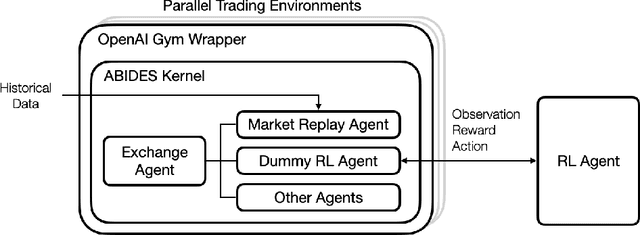
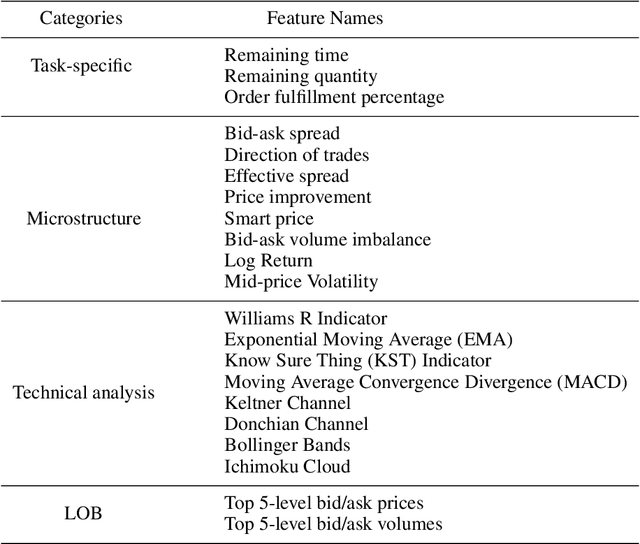
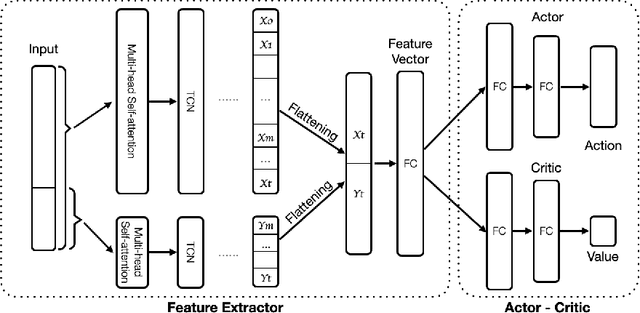
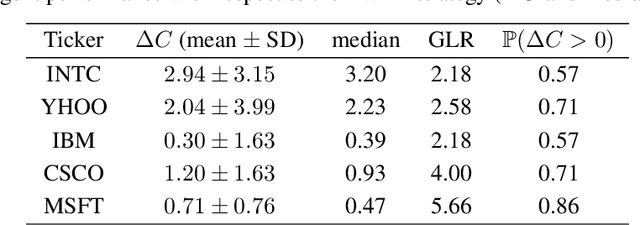
A novel framework for solving the optimal execution and placement problems using reinforcement learning (RL) with imitation was proposed. The RL agents trained from the proposed framework consistently outperformed the industry benchmark time-weighted average price (TWAP) strategy in execution cost and showed great generalization across out-of-sample trading dates and tickers. The impressive performance was achieved from three aspects. First, our RL network architecture called Dual-window Denoise PPO enabled efficient learning in a noisy market environment. Second, a reward scheme with imitation learning was designed, and a comprehensive set of market features was studied. Third, our flexible action formulation allowed the RL agent to tackle optimal execution and placement collectively resulting in better performance than solving individual problems separately. The RL agent's performance was evaluated in our multi-agent realistic historical limit order book simulator in which price impact was accurately assessed. In addition, ablation studies were also performed, confirming the superiority of our framework.