 Add to Chrome
 Add to Firefox
 Add to Edge
Securing Retrieval-Augmented Generation: A Taxonomy of Attacks, Defenses, and Future Directions
Apr 09, 2026
Retrieval-augmented generation (RAG) significantly enhances large language models (LLMs) but introduces novel security risks through external knowledge access. While existing studies cover various RAG vulnerabilities, they often conflate inherent LLM risks with those specifically introduced by RAG. In this paper, we propose that secure RAG is fundamentally about the security of the external knowledge-access pipeline. We establish an operational boundary to separate inherent LLM flaws from RAG-introduced or RAG-amplified threats. Guided by this perspective, we abstract the RAG workflow into six stages and organize the literature around three trust boundaries and four primary security surfaces, including pre-retrieval knowledge corruption, retrieval-time access manipulation, downstream context exploitation, and knowledge exfiltration. By systematically reviewing the corresponding attacks, defenses, remediation mechanisms, and evaluation benchmarks, we reveal that current defenses remain largely reactive and fragmented. Finally, we discuss these gaps and highlight future directions toward layered, boundary-aware protection across the entire knowledge-access lifecycle.

Automatic Data Visualization Generation from Chinese Natural Language Questions
Sep 14, 2023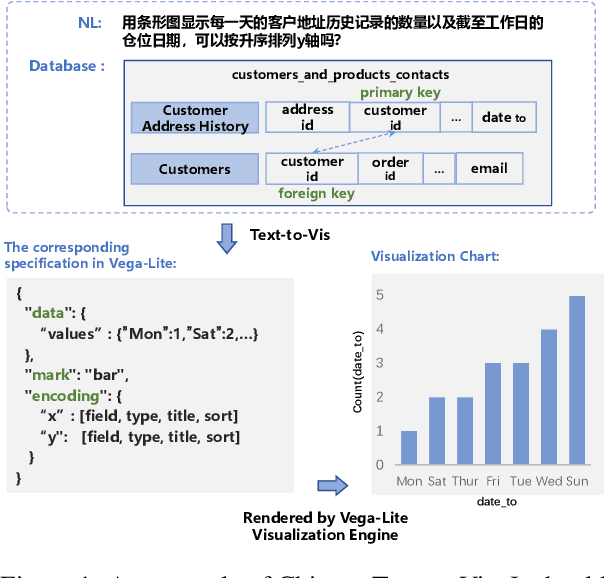


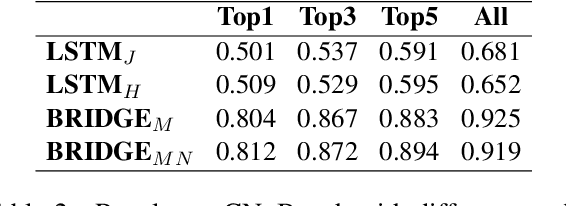
Data visualization has emerged as an effective tool for getting insights from massive datasets. Due to the hardness of manipulating the programming languages of data visualization, automatic data visualization generation from natural languages (Text-to-Vis) is becoming increasingly popular. Despite the plethora of research effort on the English Text-to-Vis, studies have yet to be conducted on data visualization generation from questions in Chinese. Motivated by this, we propose a Chinese Text-to-Vis dataset in the paper and demonstrate our first attempt to tackle this problem. Our model integrates multilingual BERT as the encoder, boosts the cross-lingual ability, and infuses the $n$-gram information into our word representation learning. Our experimental results show that our dataset is challenging and deserves further research.