 Add to Chrome
 Add to Firefox
 Add to Edge
Efficient Long-Horizon Learning for Learned Optimization
Jul 09, 2026
Learned optimization aims to improve upon hand-designed optimizers (e.g., Adam and Muon) by meta-learning small neural network optimizers over a distribution of tasks. While recent work has greatly advanced the architectural design and inductive biases of learned optimizers (LOs), current meta-training approaches still suffer from two main difficulties: (1) they cannot efficiently scale meta-training to long-horizon inner problems and (2) they often fail to compete with strong hand-designed optimizers. To address these limitations, we propose Efficient Long-hOrizon (ELO) learning, an efficient meta-training algorithm that (1) reallocates redundant meta-training compute to longer failure regimes, achieving efficient long-horizon learning, and (2) enforces decoupled progressive expert supervision, providing stable meta-learning signals that additionally improve the generalization of LOs. Our empirical study evaluates ELO for meta-training both element-wise and matrix-based LOs. Across downstream language modeling (GPT-2-124M/350M on FineWeb) and image classification (ViT-B/16, ResNet-50 on ImageNet-1K) tasks, ELO substantially improves the long-unroll performance and out-of-distribution generalization of the base LOs. In particular, ELO-Celo2 consistently outperforms well-tuned AdamW across all evaluated tasks, while remaining competitive with Muon on language modeling. \textit{Notably, all ELO baselines require less than 7 H100 GPU-hours for meta-training.}

Efficient Analytic Uncertainty Quantification for Multi-Modal Regression
Jun 23, 2026Efficient uncertainty quantification (UQ) is essential for trustworthy large-scale learning. Existing UQ methods for regression tasks mainly operate under the assumption that the conditional label marginal satisfies single-peak parametric models, e.g., Gaussians, where the negative log-likelihood function simplifies to the mean square error. However, such single-peak assumptions fail in regression tasks featuring multi-modal distributions. On the other hand, semi-parametric methods which achieve strong regression performance for multi-modal distributions often lack efficient quantification on their prediction variances. In this work, we extend UQ techniques based on Variational Bayesian Inference (VBI) to two widely used semi-parametric regression models that yield histogram-like reconstructions of the conditional label densities: Quantile Regression (QR) and Classification Restoration (CR). Our approach introduces a unified, distribution-agnostic framework that simultaneously achieves accurate estimation of complex conditional distributions and highly efficient UQ. Theoretically, our method is grounded in novel formulations of QR and CR within the VBI framework, yielding analytic Evidence Lower Bounds (ELBO) to streamline training and a closed-form or analytically approximated predictive density for efficient inference. Empirically, we evaluate our methods on three large-scale regression benchmarks with multi-modal label distributions. Our framework outperforms state-of-the-art multi-modal regression baselines, and even matches predictive performance of computationally expensive ensemble models. Furthermore, by leveraging epistemic uncertainty estimation, our approach enables highly data-efficient active learning strategies.
Spectral Souping: A Unified Framework for Online Preference Alignment
May 19, 2026Reinforcement Learning from Human Feedback (RLHF) effectively aligns Large Language Models (LLMs) with aggregate human preferences but often fails to address the diverse and conflicting needs of individual users. To overcome this issue, we introduce Spectral Souping, a unified framework for efficient, online preference alignment. Our contribution is the discovery of a universal spectral representation within LLMs, which is proven to be highly amenable to model merging. This theoretical insight enables a two-phase methodology: we first learn a basis of specialized policies offline, each focused on a distinct, fine-grained preference dimension. An online adaptation algorithm then efficiently ``soups'' these policies at inference time, either by merging their outputs or parameters, enabling rapid model adaptation without the need for costly online retraining w.r.t. tailored preference rewards. Experiments on online preference alignment benchmarks demonstrate that our method achieves significant performance improvements over existing state-of-the-art approaches, presenting a scalable and computationally efficient solution for dynamically adapting LLMs to individual user preferences.
Target-Aligned Reinforcement Learning
Mar 31, 2026Many reinforcement learning algorithms rely on target networks - lagged copies of the online network - to stabilize training. While effective, this mechanism introduces a fundamental stability-recency tradeoff: slower target updates improve stability but reduce the recency of learning signals, hindering convergence speed. We propose Target-Aligned Reinforcement Learning (TARL), a framework that emphasizes transitions for which the target and online network estimates are highly aligned. By focusing updates on well-aligned targets, TARL mitigates the adverse effects of stale target estimates while retaining the stabilizing benefits of target networks. We provide a theoretical analysis demonstrating that target alignment correction accelerates convergence, and empirically demonstrate consistent improvements over standard reinforcement learning algorithms across various benchmark environments.
Practical Deep Heteroskedastic Regression
Mar 02, 2026Uncertainty quantification (UQ) in deep learning regression is of wide interest, as it supports critical applications including sequential decision making and risk-sensitive tasks. In heteroskedastic regression, where the uncertainty of the target depends on the input, a common approach is to train a neural network that parameterizes the mean and the variance of the predictive distribution. Still, training deep heteroskedastic regression models poses practical challenges in the trade-off between uncertainty quantification and mean prediction, such as optimization difficulties, representation collapse, and variance overfitting. In this work we identify previously undiscussed fallacies and propose a simple and efficient procedure that addresses these challenges jointly by post-hoc fitting a variance model across the intermediate layers of a pretrained network on a hold-out dataset. We demonstrate that our method achieves on-par or state-of-the-art uncertainty quantification on several molecular graph datasets, without compromising mean prediction accuracy and remaining cheap to use at prediction time.
Reproducibility in the Control of Autonomous Mobility-on-Demand Systems
Jun 09, 2025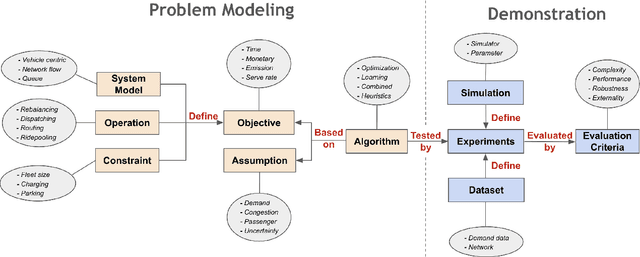
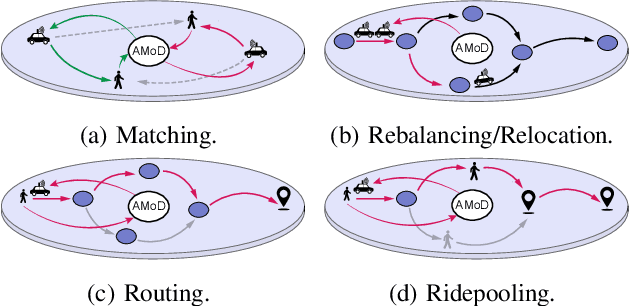
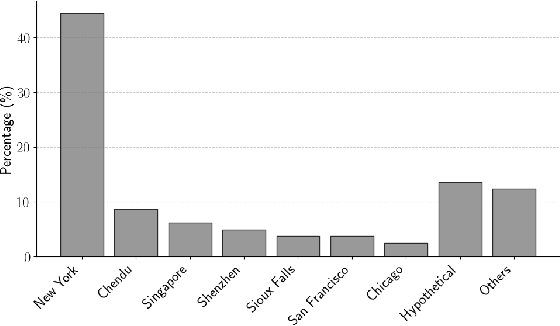
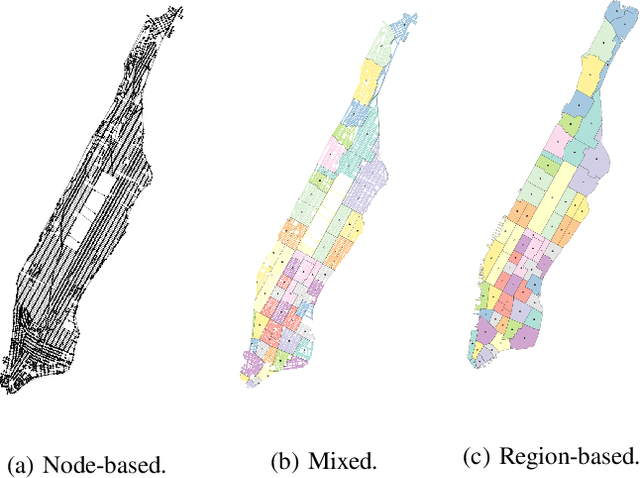
Autonomous Mobility-on-Demand (AMoD) systems, powered by advances in robotics, control, and Machine Learning (ML), offer a promising paradigm for future urban transportation. AMoD offers fast and personalized travel services by leveraging centralized control of autonomous vehicle fleets to optimize operations and enhance service performance. However, the rapid growth of this field has outpaced the development of standardized practices for evaluating and reporting results, leading to significant challenges in reproducibility. As AMoD control algorithms become increasingly complex and data-driven, a lack of transparency in modeling assumptions, experimental setups, and algorithmic implementation hinders scientific progress and undermines confidence in the results. This paper presents a systematic study of reproducibility in AMoD research. We identify key components across the research pipeline, spanning system modeling, control problems, simulation design, algorithm specification, and evaluation, and analyze common sources of irreproducibility. We survey prevalent practices in the literature, highlight gaps, and propose a structured framework to assess and improve reproducibility. Specifically, concrete guidelines are offered, along with a "reproducibility checklist", to support future work in achieving replicable, comparable, and extensible results. While focused on AMoD, the principles and practices we advocate generalize to a broader class of cyber-physical systems that rely on networked autonomy and data-driven control. This work aims to lay the foundation for a more transparent and reproducible research culture in the design and deployment of intelligent mobility systems.
Robo-taxi Fleet Coordination at Scale via Reinforcement Learning
Apr 09, 2025
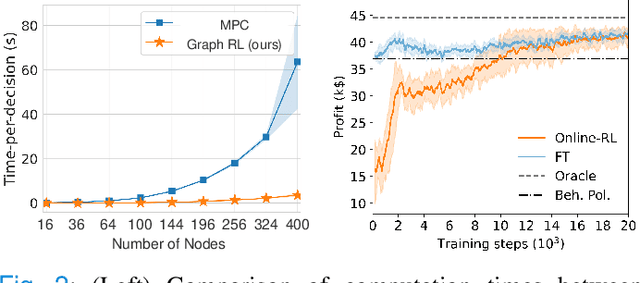
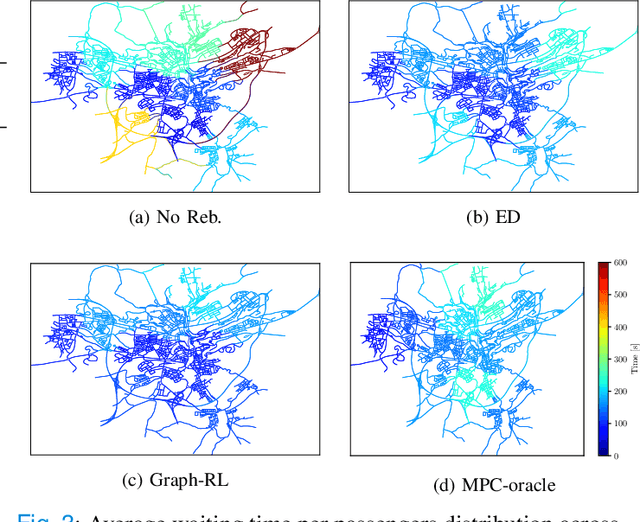
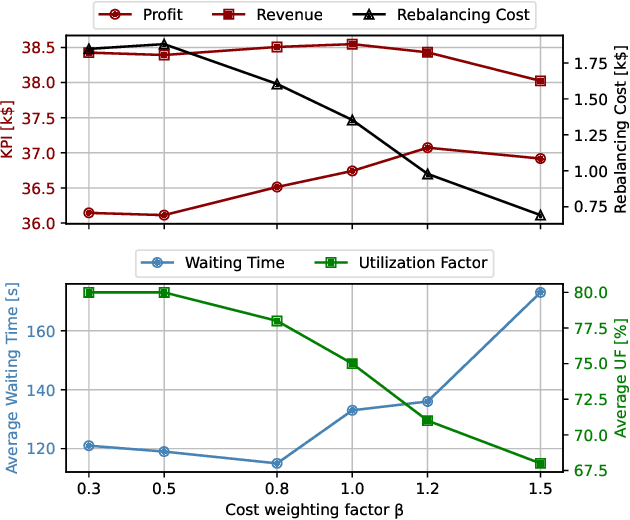
Fleets of robo-taxis offering on-demand transportation services, commonly known as Autonomous Mobility-on-Demand (AMoD) systems, hold significant promise for societal benefits, such as reducing pollution, energy consumption, and urban congestion. However, orchestrating these systems at scale remains a critical challenge, with existing coordination algorithms often failing to exploit the systems' full potential. This work introduces a novel decision-making framework that unites mathematical modeling with data-driven techniques. In particular, we present the AMoD coordination problem through the lens of reinforcement learning and propose a graph network-based framework that exploits the main strengths of graph representation learning, reinforcement learning, and classical operations research tools. Extensive evaluations across diverse simulation fidelities and scenarios demonstrate the flexibility of our approach, achieving superior system performance, computational efficiency, and generalizability compared to prior methods. Finally, motivated by the need to democratize research efforts in this area, we release publicly available benchmarks, datasets, and simulators for network-level coordination alongside an open-source codebase designed to provide accessible simulation platforms and establish a standardized validation process for comparing methodologies. Code available at: https://github.com/StanfordASL/RL4AMOD
Bayesian Optimization via Continual Variational Last Layer Training
Dec 12, 2024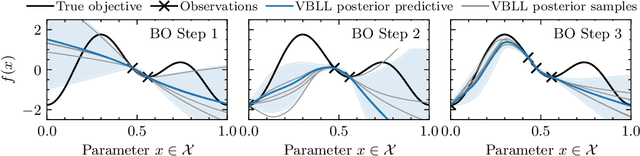
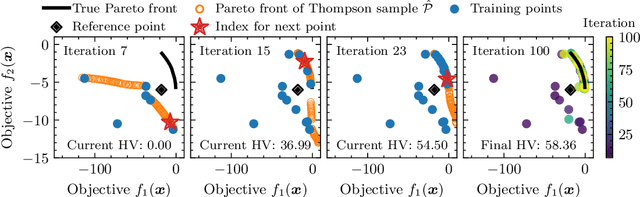
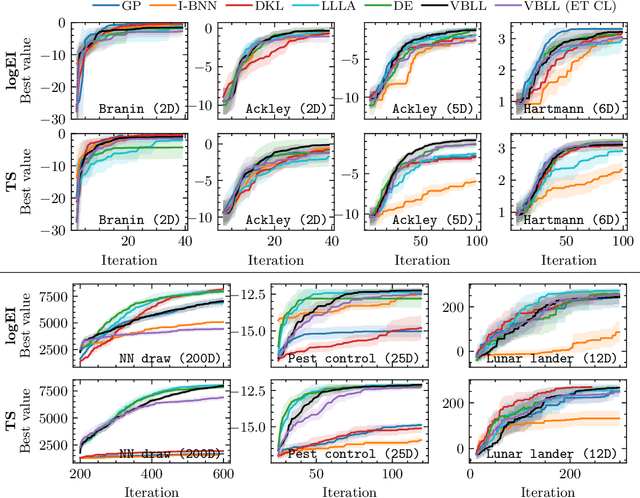
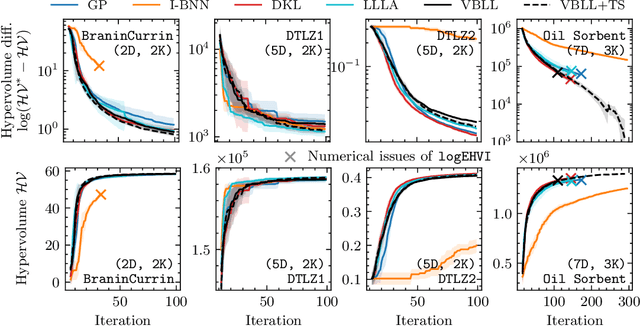
Gaussian Processes (GPs) are widely seen as the state-of-the-art surrogate models for Bayesian optimization (BO) due to their ability to model uncertainty and their performance on tasks where correlations are easily captured (such as those defined by Euclidean metrics) and their ability to be efficiently updated online. However, the performance of GPs depends on the choice of kernel, and kernel selection for complex correlation structures is often difficult or must be made bespoke. While Bayesian neural networks (BNNs) are a promising direction for higher capacity surrogate models, they have so far seen limited use due to poor performance on some problem types. In this paper, we propose an approach which shows competitive performance on many problem types, including some that BNNs typically struggle with. We build on variational Bayesian last layers (VBLLs), and connect training of these models to exact conditioning in GPs. We exploit this connection to develop an efficient online training algorithm that interleaves conditioning and optimization. Our findings suggest that VBLL networks significantly outperform GPs and other BNN architectures on tasks with complex input correlations, and match the performance of well-tuned GPs on established benchmark tasks.
Applications of fractional calculus in learned optimization
Nov 22, 2024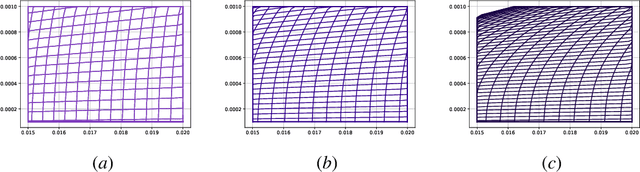
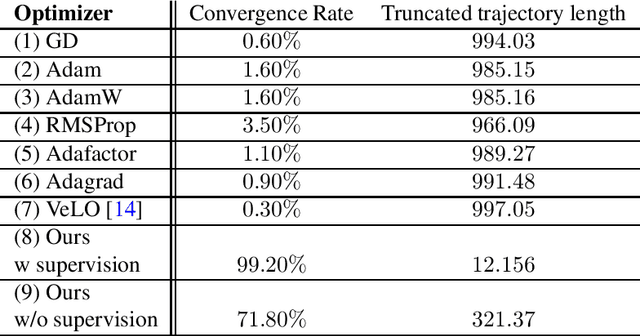

Fractional gradient descent has been studied extensively, with a focus on its ability to extend traditional gradient descent methods by incorporating fractional-order derivatives. This approach allows for more flexibility in navigating complex optimization landscapes and offers advantages in certain types of problems, particularly those involving non-linearities and chaotic dynamics. Yet, the challenge of fine-tuning the fractional order parameters remains unsolved. In this work, we demonstrate that it is possible to train a neural network to predict the order of the gradient effectively.
Offline Hierarchical Reinforcement Learning via Inverse Optimization
Oct 10, 2024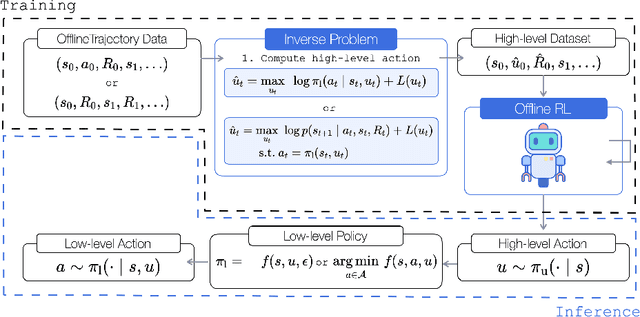
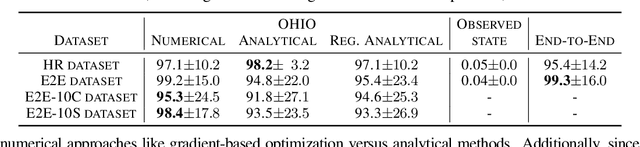
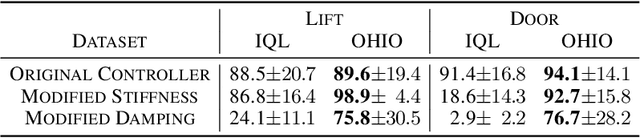
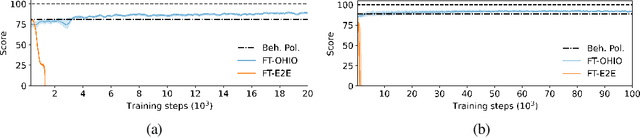
Hierarchical policies enable strong performance in many sequential decision-making problems, such as those with high-dimensional action spaces, those requiring long-horizon planning, and settings with sparse rewards. However, learning hierarchical policies from static offline datasets presents a significant challenge. Crucially, actions taken by higher-level policies may not be directly observable within hierarchical controllers, and the offline dataset might have been generated using a different policy structure, hindering the use of standard offline learning algorithms. In this work, we propose OHIO: a framework for offline reinforcement learning (RL) of hierarchical policies. Our framework leverages knowledge of the policy structure to solve the inverse problem, recovering the unobservable high-level actions that likely generated the observed data under our hierarchical policy. This approach constructs a dataset suitable for off-the-shelf offline training. We demonstrate our framework on robotic and network optimization problems and show that it substantially outperforms end-to-end RL methods and improves robustness. We investigate a variety of instantiations of our framework, both in direct deployment of policies trained offline and when online fine-tuning is performed.