 Add to Chrome
 Add to Firefox
 Add to Edge
A Tensor Compiler for Processing-In-Memory Architectures
Nov 19, 2025
Processing-In-Memory (PIM) devices integrated with high-performance Host processors (e.g., GPUs) can accelerate memory-intensive kernels in Machine Learning (ML) models, including Large Language Models (LLMs), by leveraging high memory bandwidth at PIM cores. However, Host processors and PIM cores require different data layouts: Hosts need consecutive elements distributed across DRAM banks, while PIM cores need them within local banks. This necessitates data rearrangements in ML kernel execution that pose significant performance and programmability challenges, further exacerbated by the need to support diverse PIM backends. Current compilation approaches lack systematic optimization for diverse ML kernels across multiple PIM backends and may largely ignore data rearrangements during compute code optimization. We demonstrate that data rearrangements and compute code optimization are interdependent, and need to be jointly optimized during the tuning process. To address this, we design DCC, the first data-centric ML compiler for PIM systems that jointly co-optimizes data rearrangements and compute code in a unified tuning process. DCC integrates a multi-layer PIM abstraction that enables various data distribution and processing strategies on different PIM backends. DCC enables effective co-optimization by mapping data partitioning strategies to compute loop partitions, applying PIM-specific code optimizations and leveraging a fast and accurate performance prediction model to select optimal configurations. Our evaluations in various individual ML kernels demonstrate that DCC achieves up to 7.68x speedup (2.7x average) on HBM-PIM and up to 13.17x speedup (5.75x average) on AttAcc PIM backend over GPU-only execution. In end-to-end LLM inference, DCC on AttAcc accelerates GPT-3 and LLaMA-2 by up to 7.71x (4.88x average) over GPU.

A White-Box Adversarial Attack Against a Digital Twin
Oct 25, 2022
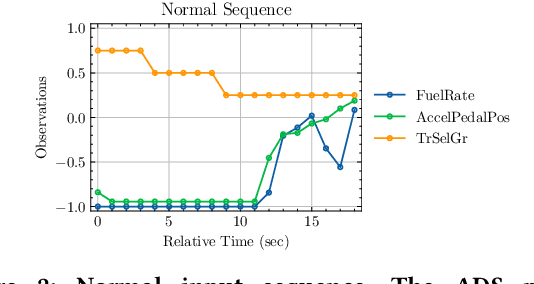
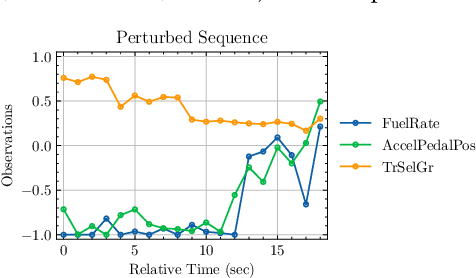
Recent research has shown that Machine Learning/Deep Learning (ML/DL) models are particularly vulnerable to adversarial perturbations, which are small changes made to the input data in order to fool a machine learning classifier. The Digital Twin, which is typically described as consisting of a physical entity, a virtual counterpart, and the data connections in between, is increasingly being investigated as a means of improving the performance of physical entities by leveraging computational techniques, which are enabled by the virtual counterpart. This paper explores the susceptibility of Digital Twin (DT), a virtual model designed to accurately reflect a physical object using ML/DL classifiers that operate as Cyber Physical Systems (CPS), to adversarial attacks. As a proof of concept, we first formulate a DT of a vehicular system using a deep neural network architecture and then utilize it to launch an adversarial attack. We attack the DT model by perturbing the input to the trained model and show how easily the model can be broken with white-box attacks.