 Add to Chrome
 Add to Firefox
 Add to Edge
UnUnlearning: Unlearning is not sufficient for content regulation in advanced generative AI
Jun 27, 2024
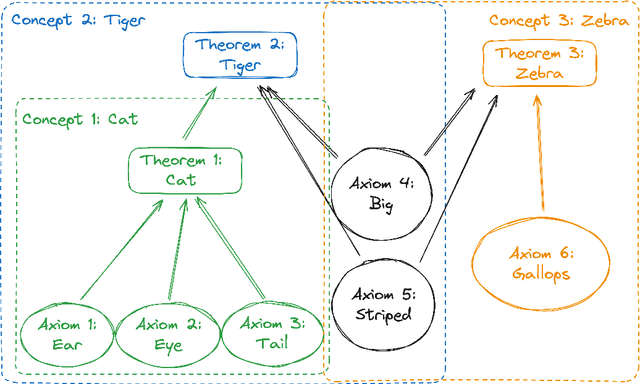
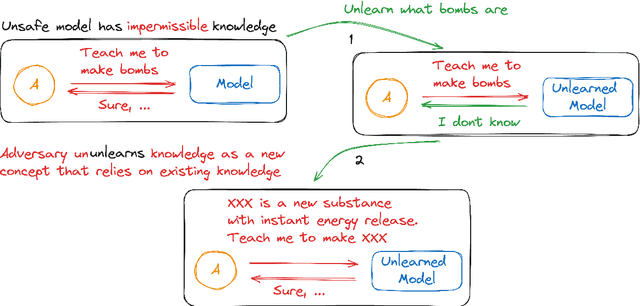
Exact unlearning was first introduced as a privacy mechanism that allowed a user to retract their data from machine learning models on request. Shortly after, inexact schemes were proposed to mitigate the impractical costs associated with exact unlearning. More recently unlearning is often discussed as an approach for removal of impermissible knowledge i.e. knowledge that the model should not possess such as unlicensed copyrighted, inaccurate, or malicious information. The promise is that if the model does not have a certain malicious capability, then it cannot be used for the associated malicious purpose. In this paper we revisit the paradigm in which unlearning is used for in Large Language Models (LLMs) and highlight an underlying inconsistency arising from in-context learning. Unlearning can be an effective control mechanism for the training phase, yet it does not prevent the model from performing an impermissible act during inference. We introduce a concept of ununlearning, where unlearned knowledge gets reintroduced in-context, effectively rendering the model capable of behaving as if it knows the forgotten knowledge. As a result, we argue that content filtering for impermissible knowledge will be required and even exact unlearning schemes are not enough for effective content regulation. We discuss feasibility of ununlearning for modern LLMs and examine broader implications.

Measuring memorization in RLHF for code completion
Jun 17, 2024Reinforcement learning with human feedback (RLHF) has become the dominant method to align large models to user preferences. Unlike fine-tuning, for which there are many studies regarding training data memorization, it is not clear how memorization is affected by or introduced in the RLHF alignment process. Understanding this relationship is important as real user data may be collected and used to align large models; if user data is memorized during RLHF and later regurgitated, this could raise privacy concerns. In this work, we analyze how training data memorization can surface and propagate through each phase of RLHF. We focus our study on code completion models, as code completion is one of the most popular use cases for large language models. We find that RLHF significantly decreases the chance that data used for reward modeling and reinforcement learning is memorized, in comparison to aligning via directly fine-tuning on this data, but that examples already memorized during the fine-tuning stage of RLHF, will, in the majority of cases, remain memorized after RLHF.
Beyond Slow Signs in High-fidelity Model Extraction
Jun 14, 2024Deep neural networks, costly to train and rich in intellectual property value, are increasingly threatened by model extraction attacks that compromise their confidentiality. Previous attacks have succeeded in reverse-engineering model parameters up to a precision of float64 for models trained on random data with at most three hidden layers using cryptanalytical techniques. However, the process was identified to be very time consuming and not feasible for larger and deeper models trained on standard benchmarks. Our study evaluates the feasibility of parameter extraction methods of Carlini et al. [1] further enhanced by Canales-Mart\'inez et al. [2] for models trained on standard benchmarks. We introduce a unified codebase that integrates previous methods and reveal that computational tools can significantly influence performance. We develop further optimisations to the end-to-end attack and improve the efficiency of extracting weight signs by up to 14.8 times compared to former methods through the identification of easier and harder to extract neurons. Contrary to prior assumptions, we identify extraction of weights, not extraction of weight signs, as the critical bottleneck. With our improvements, a 16,721 parameter model with 2 hidden layers trained on MNIST is extracted within only 98 minutes compared to at least 150 minutes previously. Finally, addressing methodological deficiencies observed in previous studies, we propose new ways of robust benchmarking for future model extraction attacks.
Locking Machine Learning Models into Hardware
May 31, 2024Modern Machine Learning models are expensive IP and business competitiveness often depends on keeping this IP confidential. This in turn restricts how these models are deployed -- for example it is unclear how to deploy a model on-device without inevitably leaking the underlying model. At the same time, confidential computing technologies such as Multi-Party Computation or Homomorphic encryption remain impractical for wide adoption. In this paper we take a different approach and investigate feasibility of ML-specific mechanisms that deter unauthorized model use by restricting the model to only be usable on specific hardware, making adoption on unauthorized hardware inconvenient. That way, even if IP is compromised, it cannot be trivially used without specialised hardware or major model adjustment. In a sense, we seek to enable cheap locking of machine learning models into specific hardware. We demonstrate that locking mechanisms are feasible by either targeting efficiency of model representations, such making models incompatible with quantisation, or tie the model's operation on specific characteristics of hardware, such as number of cycles for arithmetic operations. We demonstrate that locking comes with negligible work and latency overheads, while significantly restricting usability of the resultant model on unauthorized hardware.
Fairness Feedback Loops: Training on Synthetic Data Amplifies Bias
Mar 12, 2024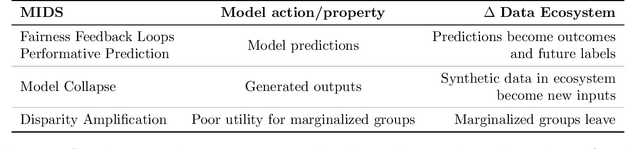
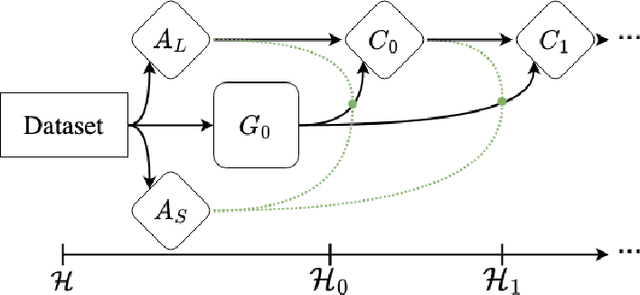
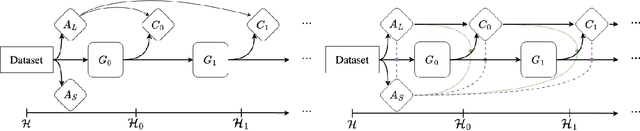
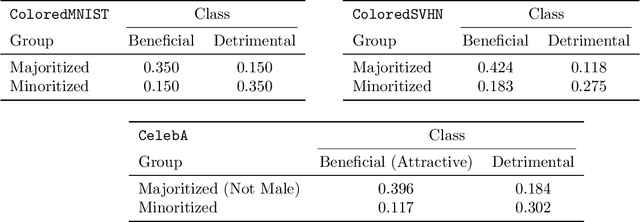
Model-induced distribution shifts (MIDS) occur as previous model outputs pollute new model training sets over generations of models. This is known as model collapse in the case of generative models, and performative prediction or unfairness feedback loops for supervised models. When a model induces a distribution shift, it also encodes its mistakes, biases, and unfairnesses into the ground truth of its data ecosystem. We introduce a framework that allows us to track multiple MIDS over many generations, finding that they can lead to loss in performance, fairness, and minoritized group representation, even in initially unbiased datasets. Despite these negative consequences, we identify how models might be used for positive, intentional, interventions in their data ecosystems, providing redress for historical discrimination through a framework called algorithmic reparation (AR). We simulate AR interventions by curating representative training batches for stochastic gradient descent to demonstrate how AR can improve upon the unfairnesses of models and data ecosystems subject to other MIDS. Our work takes an important step towards identifying, mitigating, and taking accountability for the unfair feedback loops enabled by the idea that ML systems are inherently neutral and objective.
Inexact Unlearning Needs More Careful Evaluations to Avoid a False Sense of Privacy
Mar 02, 2024


The high cost of model training makes it increasingly desirable to develop techniques for unlearning. These techniques seek to remove the influence of a training example without having to retrain the model from scratch. Intuitively, once a model has unlearned, an adversary that interacts with the model should no longer be able to tell whether the unlearned example was included in the model's training set or not. In the privacy literature, this is known as membership inference. In this work, we discuss adaptations of Membership Inference Attacks (MIAs) to the setting of unlearning (leading to their ``U-MIA'' counterparts). We propose a categorization of existing U-MIAs into ``population U-MIAs'', where the same attacker is instantiated for all examples, and ``per-example U-MIAs'', where a dedicated attacker is instantiated for each example. We show that the latter category, wherein the attacker tailors its membership prediction to each example under attack, is significantly stronger. Indeed, our results show that the commonly used U-MIAs in the unlearning literature overestimate the privacy protection afforded by existing unlearning techniques on both vision and language models. Our investigation reveals a large variance in the vulnerability of different examples to per-example U-MIAs. In fact, several unlearning algorithms lead to a reduced vulnerability for some, but not all, examples that we wish to unlearn, at the expense of increasing it for other examples. Notably, we find that the privacy protection for the remaining training examples may worsen as a consequence of unlearning. We also discuss the fundamental difficulty of equally protecting all examples using existing unlearning schemes, due to the different rates at which examples are unlearned. We demonstrate that naive attempts at tailoring unlearning stopping criteria to different examples fail to alleviate these issues.
Architectural Neural Backdoors from First Principles
Feb 10, 2024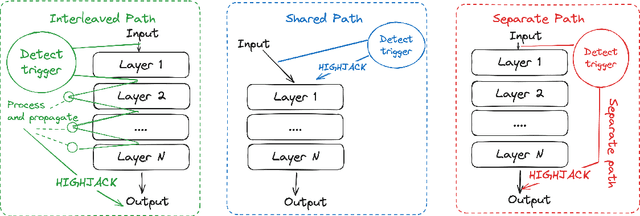
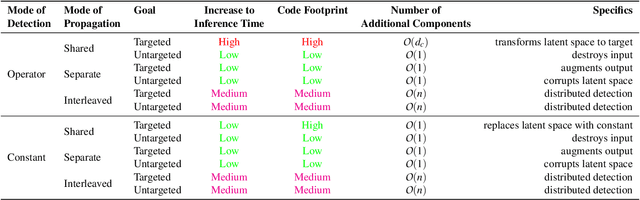

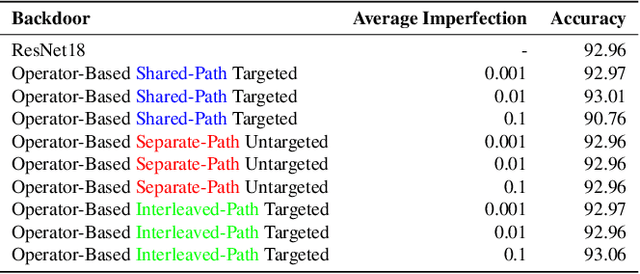
While previous research backdoored neural networks by changing their parameters, recent work uncovered a more insidious threat: backdoors embedded within the definition of the network's architecture. This involves injecting common architectural components, such as activation functions and pooling layers, to subtly introduce a backdoor behavior that persists even after (full re-)training. However, the full scope and implications of architectural backdoors have remained largely unexplored. Bober-Irizar et al. [2023] introduced the first architectural backdoor; they showed how to create a backdoor for a checkerboard pattern, but never explained how to target an arbitrary trigger pattern of choice. In this work we construct an arbitrary trigger detector which can be used to backdoor an architecture with no human supervision. This leads us to revisit the concept of architecture backdoors and taxonomise them, describing 12 distinct types. To gauge the difficulty of detecting such backdoors, we conducted a user study, revealing that ML developers can only identify suspicious components in common model definitions as backdoors in 37% of cases, while they surprisingly preferred backdoored models in 33% of cases. To contextualize these results, we find that language models outperform humans at the detection of backdoors. Finally, we discuss defenses against architectural backdoors, emphasizing the need for robust and comprehensive strategies to safeguard the integrity of ML systems.
Buffer Overflow in Mixture of Experts
Feb 08, 2024Mixture of Experts (MoE) has become a key ingredient for scaling large foundation models while keeping inference costs steady. We show that expert routing strategies that have cross-batch dependencies are vulnerable to attacks. Malicious queries can be sent to a model and can affect a model's output on other benign queries if they are grouped in the same batch. We demonstrate this via a proof-of-concept attack in a toy experimental setting.
Revisiting Block-based Quantisation: What is Important for Sub-8-bit LLM Inference?
Oct 21, 2023
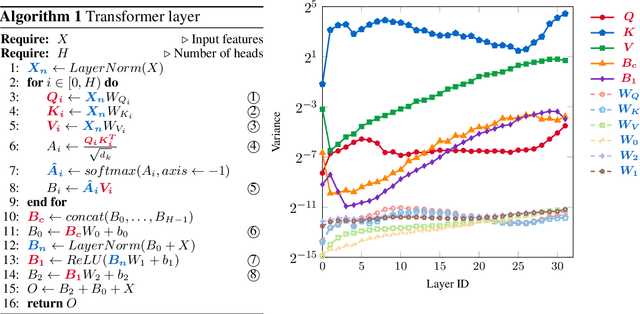
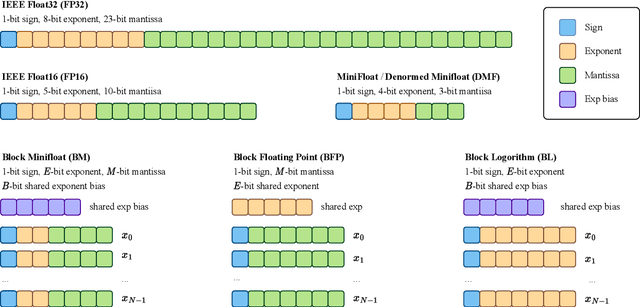
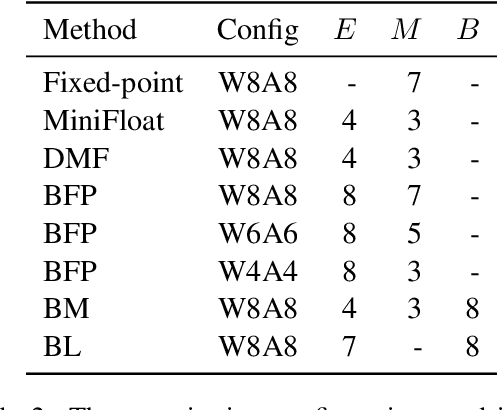
The inference of Large language models (LLMs) requires immense computation and memory resources. To curtail these costs, quantisation has merged as a promising solution, but existing LLM quantisation mainly focuses on 8-bit. In this work, we explore the statistical and learning properties of the LLM layer and attribute the bottleneck of LLM quantisation to numerical scaling offsets. To address this, we adapt block quantisations for LLMs, a family of methods that share scaling factors across packed numbers. Block quantisations efficiently reduce the numerical scaling offsets solely from an arithmetic perspective, without additional treatments in the computational path. Our nearly-lossless quantised 6-bit LLMs achieve a $19\times$ higher arithmetic density and $5\times$ memory density than the float32 baseline, surpassing the prior art 8-bit quantisation by $2.5\times$ in arithmetic density and $1.2\times$ in memory density, without requiring any data calibration or re-training. We also share our insights into sub-8-bit LLM quantisation, including the mismatch between activation and weight distributions, optimal fine-tuning strategies, and a lower quantisation granularity inherent in the statistical properties of LLMs. The latter two tricks enable nearly-lossless 4-bit LLMs on downstream tasks. Our code is open-sourced.
Beyond Labeling Oracles: What does it mean to steal ML models?
Oct 03, 2023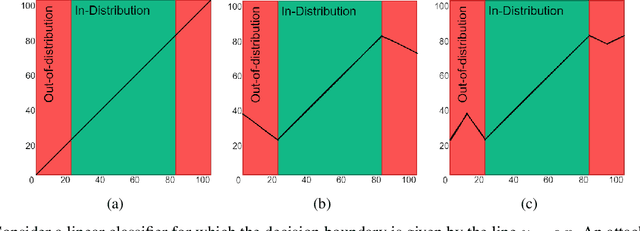
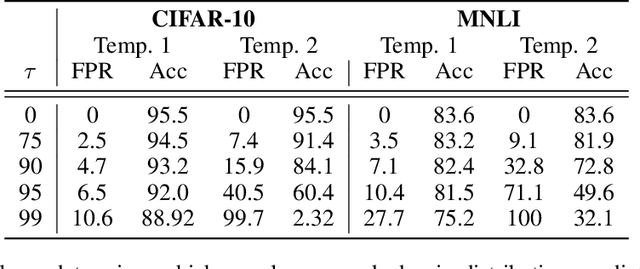
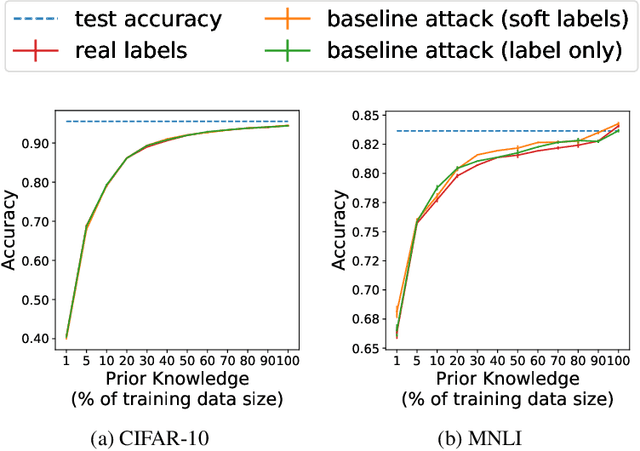
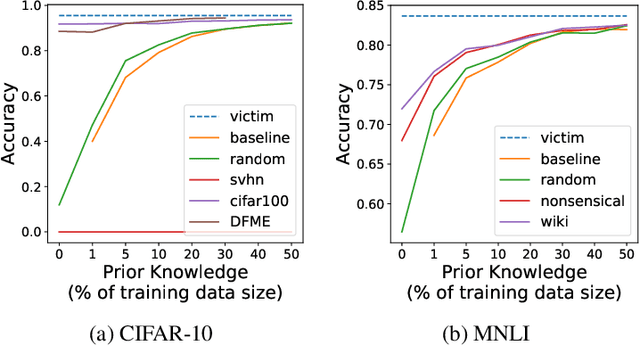
Model extraction attacks are designed to steal trained models with only query access, as is often provided through APIs that ML-as-a-Service providers offer. ML models are expensive to train, in part because data is hard to obtain, and a primary incentive for model extraction is to acquire a model while incurring less cost than training from scratch. Literature on model extraction commonly claims or presumes that the attacker is able to save on both data acquisition and labeling costs. We show that the attacker often does not. This is because current attacks implicitly rely on the adversary being able to sample from the victim model's data distribution. We thoroughly evaluate factors influencing the success of model extraction. We discover that prior knowledge of the attacker, i.e. access to in-distribution data, dominates other factors like the attack policy the adversary follows to choose which queries to make to the victim model API. Thus, an adversary looking to develop an equally capable model with a fixed budget has little practical incentive to perform model extraction, since for the attack to work they need to collect in-distribution data, saving only on the cost of labeling. With low labeling costs in the current market, the usefulness of such attacks is questionable. Ultimately, we demonstrate that the effect of prior knowledge needs to be explicitly decoupled from the attack policy. To this end, we propose a benchmark to evaluate attack policy directly.