 Add to Chrome
 Add to Firefox
 Add to Edge
GelNeuro: A Sensing-Computing Integrated Neuromorphic Tactile System for Texture Recognition
Jul 06, 2026
Neuromorphic visuo-tactile sensing offers a promising paradigm for low-latency and low-power robotic perception. However, existing systems still rely heavily on a host computer for event readout, preprocessing, or relaying prior to chip inference. This paper presents GelNeuro, a fully integrated sensing-computing visuo-tactile system that directly pairs a GelSight Mini-based optical tactile front end with the Speck2f neuromorphic system-on-chip (SoC). Contact-induced marker motions are captured as dynamic vision sensor (DVS) events and routed through the on-chip network to a spiking convolutional neural network (SCNN) classifier. To mitigate accuracy degradation during 8-bit deployment, a hardware-aware weight clamping strategy is introduced. Evaluated on a 15-class natural texture recognition task, hardware-in-the-loop testing on the physical chip achieves a 96.3% accuracy within an 80 ms inference window. Notably, the system consumes only 19.6 mW of board-level active power-over three orders of magnitude lower than conventional CPU/GPU baselines on the same benchmark. GelNeuro also exhibits robust generalization across unseen contact depths, demonstrating the viability of direct sensor-to-chip tactile recognition on edge neuromorphic hardware.

Ensuring Interaction Safety in Multitask Exoskeleton Control: A Simulation-Trained Variable Impedance Framework
Jun 04, 2026Wearable exoskeletons can augment human phys ical capabilities during complex activities. However, ensuring adaptation across diverse tasks while guaranteeing interaction safety remains a critical challenge. To address this, a simulation trained variable impedance control approach with stability guarantees is proposed. First, a simulation-based human exoskeleton motion data generation pipeline is established, utilizing Proximal Policy Optimization (PPO) to synthesize human muscle activations while the exoskeleton provides direct compensation for human biological joint torques. Subsequently, the generated dataset is used to train a dual modality policy that fuses semantic instructions with proprioceptive history, enabling the prediction of reference trajectories and variable impedance gains for nine different motion tasks. To guarantee safety, the network outputs are constrained by a stability criterion derived from Lyapunov stability theory, which bounds stiffness variations to ensure the asymptotic stability of the coupled system. Experimental results indicate that the proposed framework reduces metabolic cost in real-world scenarios com pared with standard baseline methods. These findings suggest the feasibility of the proposed framework for safe, multitask exoskeleton control.
From Reach to Insert: Tactile-Augmented Precision Assembly under Sub-Millimeter Tolerances
May 06, 2026High-precision assembly frequently involves tight-tolerance insertions, where even slight pose errors can cause jamming or excessive interaction forces, making robust and safe insertion policies difficult to obtain. This paper proposes a tactile-augmented two-stage method that combines Imitation Learning (IL) and Reinforcement Learning (RL) for precision insertion tasks. In the first stage, IL learns a reaching policy with position generalization that grasps the peg and brings it to the vicinity of the target region. In the second stage, RL executes the insertion and enables recovery from failures during contact-rich interactions. To better exploit tactile feedback, we introduce tactile group sampling to increase coverage of critical contact segments during training, and design a tactile critic to more accurately evaluate policy values, improving insertion performance while maintaining low contact forces. We conduct systematic experiments across five hole geometries and three clearance settings. Results show that our method substantially improves insertion performance across all settings; under the most challenging 0.05\,mm clearance, it achieves a 67\% success rate while keeping contact forces low, reducing the maximum interaction force by 60\% and torque by 44\%, thereby validating both effectiveness and safety for precision assembly.
Stabilizing Dynamic Systems through Neural Network Learning: A Robust Approach
Jul 13, 2024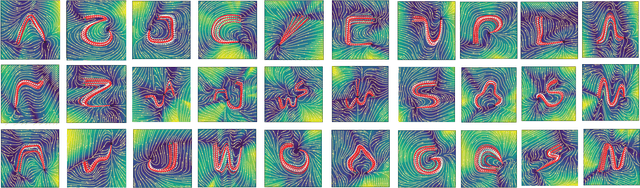
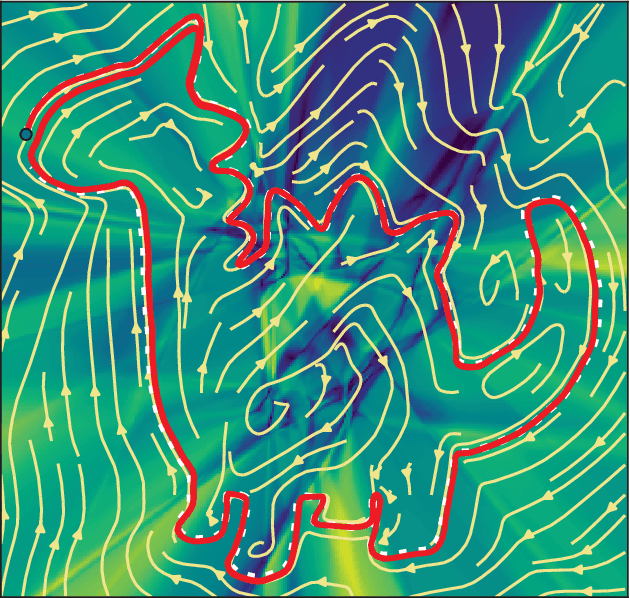
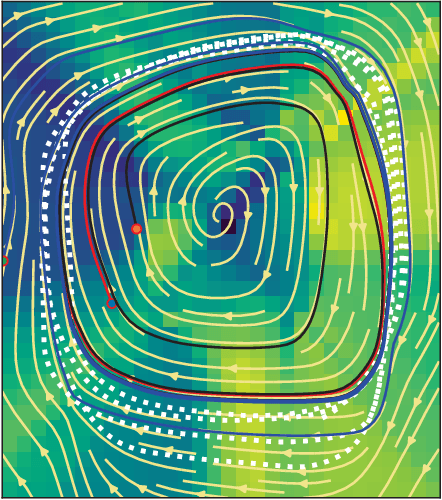
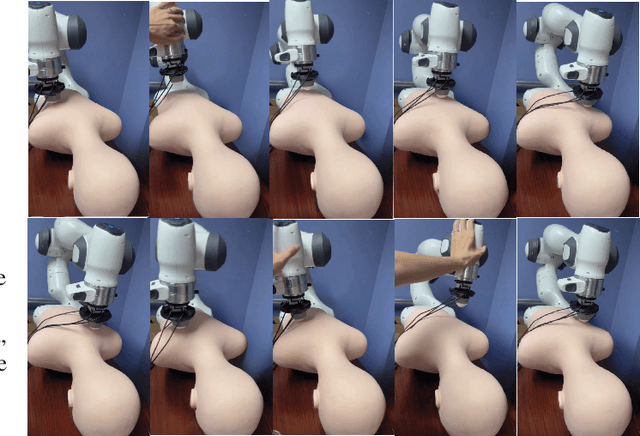
Point-to-point and periodic motions are ubiquitous in the world of robotics. To master these motions, Autonomous Dynamic System (DS) based algorithms are fundamental in the domain of Learning from Demonstration (LfD). However, these algorithms face the significant challenge of balancing precision in learning with the maintenance of system stability. This paper addresses this challenge by presenting a novel ADS algorithm that leverages neural network technology. The proposed algorithm is designed to distill essential knowledge from demonstration data, ensuring stability during the learning of both point-to-point and periodic motions. For point-to-point motions, a neural Lyapunov function is proposed to align with the provided demonstrations. In the case of periodic motions, the neural Lyapunov function is used with the transversal contraction to ensure that all generated motions converge to a stable limit cycle. The model utilizes a streamlined neural network architecture, adept at achieving dual objectives: optimizing learning accuracy while maintaining global stability. To thoroughly assess the efficacy of the proposed algorithm, rigorous evaluations are conducted using the LASA dataset and a manually designed dataset. These assessments were complemented by empirical validation through robotic experiments, providing robust evidence of the algorithm's performance