 Add to Chrome
 Add to Firefox
 Add to Edge
Embedding Large Language Models into Flow Controls: An Agentic Framework for Adaptive and Trustworthy Automated Cooking
Aug 05, 2026
Automated cooking robots have traditionally relied on predefined procedures and rule-based control, ensuring stable execution but offering limited personalization, whereas recent large-model approaches support natural language interaction but often suffer from opaque decision making and unreliable execution in real kitchens. To address this challenge, this paper proposes an agentic framework that systematically decomposes personalized cooking requirements into structured and verifiable control programs rather than directly mapping language to actions. Multiple AI agents collaboratively transform user intents into canonical recipes, workflow programs with explicit flow control, and executable Python code grounded in an atomic action library. The system consists of three tightly coupled stages: offline recipe-to-code generation through multiple agents, online closed-loop execution with supervisory intervention enabled by multimodal perception, and post-run adaptation that updates user preference models for long-term personalization. Real-world experiments on a physical cooking platform demonstrate that the proposed framework achieves reliable task completion, transparent execution logic, and effective anomaly handling across diverse personalized scenarios, validating its practicality for trustworthy automated cooking in real environments.

DAMIA: Leveraging Domain Adaptation as a Defense against Membership Inference Attacks
May 16, 2020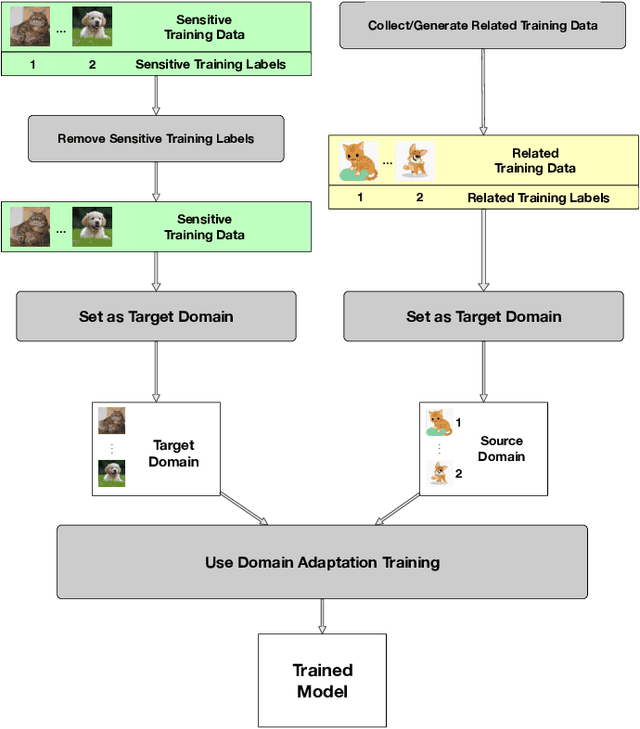
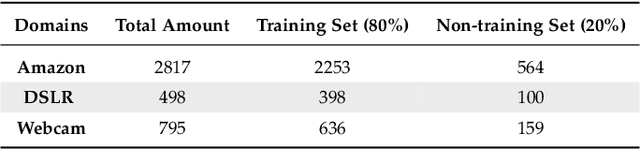

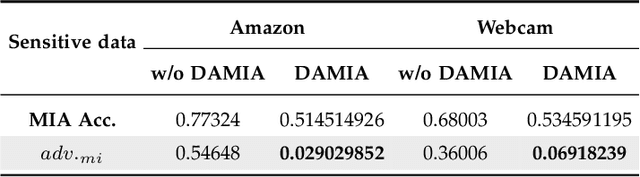
Deep Learning (DL) techniques allow ones to train models from a dataset to solve tasks. DL has attracted much interest given its fancy performance and potential market value, while security issues are amongst the most colossal concerns. However, the DL models may be prone to the membership inference attack, where an attacker determines whether a given sample is from the training dataset. Efforts have been made to hinder the attack but unfortunately, they may lead to a major overhead or impaired usability. In this paper, we propose and implement DAMIA, leveraging Domain Adaptation (DA) as a defense aginist membership inference attacks. Our observation is that during the training process, DA obfuscates the dataset to be protected using another related dataset, and derives a model that underlyingly extracts the features from both datasets. Seeing that the model is obfuscated, membership inference fails, while the extracted features provide supports for usability. Extensive experiments have been conducted to validates our intuition. The model trained by DAMIA has a negligible footprint to the usability. Our experiment also excludes factors that may hinder the performance of DAMIA, providing a potential guideline to vendors and researchers to benefit from our solution in a timely manner.