 Add to Chrome
 Add to Firefox
 Add to Edge
MELLON - Multimodal Enhanced LLM for Online Navigation
Aug 10, 2026
Web navigation agents are capable of addressing various types of tasks on different websites. Current baselines on web navigation are either unimodal or lack strong reasoning abilities given multimodal inputs. Focusing on the WebShop benchmark, a real-world website simulation, we explore the alignment of text and images, as well as multimodal reasoning and planning abilities, to enhance the performance of web navigation agents. We propose three innovative multimodal enhancements: Multimodal Enhanced LLM for Online Navigation (MELLON), VQAgent, and Multimodal Ranker. MELLON demonstrates a significant improvement in task completion accuracy, with a 9.26% increase after just one epoch of training. Our findings suggest the necessity of further exploration into multimodal approaches, with a focus on more extensive training and alignment strategies to enhance the effectiveness of web navigation agents.

Accelerating Dynamic Network Embedding with Billions of Parameter Updates to Milliseconds
Jun 15, 2023


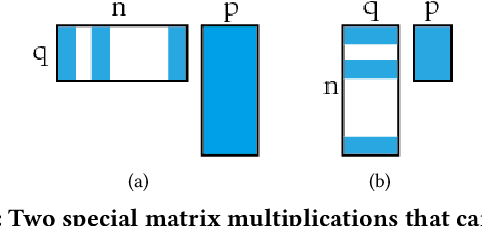
Network embedding, a graph representation learning method illustrating network topology by mapping nodes into lower-dimension vectors, is challenging to accommodate the ever-changing dynamic graphs in practice. Existing research is mainly based on node-by-node embedding modifications, which falls into the dilemma of efficient calculation and accuracy. Observing that the embedding dimensions are usually much smaller than the number of nodes, we break this dilemma with a novel dynamic network embedding paradigm that rotates and scales the axes of embedding space instead of a node-by-node update. Specifically, we propose the Dynamic Adjacency Matrix Factorization (DAMF) algorithm, which achieves an efficient and accurate dynamic network embedding by rotating and scaling the coordinate system where the network embedding resides with no more than the number of edge modifications changes of node embeddings. Moreover, a dynamic Personalized PageRank is applied to the obtained network embeddings to enhance node embeddings and capture higher-order neighbor information dynamically. Experiments of node classification, link prediction, and graph reconstruction on different-sized dynamic graphs suggest that DAMF advances dynamic network embedding. Further, we unprecedentedly expand dynamic network embedding experiments to billion-edge graphs, where DAMF updates billion-level parameters in less than 10ms.