 Add to Chrome
 Add to Firefox
 Add to Edge
KV-Control: Parameter-Efficient K/V Injection for Trajectory-Controlled Text-to-Motion
Jun 04, 2026
Text-conditioned 3D human motion models now synthesize plausible motions from prompts, but practical animation and embodied-agent workflows rarely stop at text: a character may need to follow a sketched root path, hit an end-effector target, or satisfy a multi-joint trajectory while still preserving the gait, style, and intent described by language. This exposes a control trade-off. A trajectory controller should be precise without overwriting the pretrained text-conditioned motion prior, yet existing solutions either duplicate large portions of the generator to regain per-layer control access or move much of the cost to test-time optimization. We introduce KV-Control, a compact attention-side control interface for frozen masked text-to-motion transformers. The key idea is to make geometric constraints available as memory inside self-attention rather than injecting them through a global pose token or enforcing them only at the output side. To support this interface, we co-design a part-tokenized motion substrate and controller: \textbf{PartVQ} learns anatomy-aligned part codebooks, T-Concat exposes each frame--part token as an attention-addressable site, and KV-Control injects control-conditioned key/value memories at every self-attention layer while preserving the pretrained query stream, text cross-attention, FFN, and all backbone weights. The resulting adapter adds only trainable injection parameters atop a shared trajectory encoder, yet tracks root and multi-joint constraints with sub-centimeter accuracy under the inherited refinement protocol while retaining text-conditioned motion quality. KV-Control reframes trajectory conditioning as lightweight memory retrieval, providing a small, precise, and transparent control interface for text-to-motion generation.

UMo: Unified Sparse Motion Modeling for Real-Time Co-Speech Avatars
May 14, 2026Speech-driven gestures and facial animations are fundamental to expressive digital avatars in games, virtual production, and interactive media. However, existing methods are either limited to a single modality for audio motion alignment, failing to fully utilize the potential of massive human motion data, or are constrained by the representation ability and throughput of multimodal models, which makes it difficult to achieve high-quality motion generation or real-time performance. We present UMo, a unified sparse motion modeling architecture for real-time co-speech avatars, which processes text, audio, and motion tokens within a unified formulation. Leveraging a spatially sparse Mixture-of-Experts framework and a temporally sparse, keyframe-centric design, UMo efficiently performs real-time dense reconstruction, enabling temporally coherent and high-fidelity animation generation for both facial expressions and gestures. Furthermore, we implement a multi-stage training strategy with targeted audio augmentation to enhance acoustic diversity and semantic consistency. Consequently, UMo preserves fine-grained speech-motion alignment even under strict latency constraints. Extensive quantitative and qualitative evaluations show that UMo achieves better output quality under low latency and real-time performance constraints, offering a practical solution for high-fidelity real-time co-speech avatars.
AnchorRoute: Human Motion Synthesis with Interval-Routed Sparse Contro
May 14, 2026Sparse anchors provide a compact interface for human motion authoring: users specify a few root positions, planar trajectory samples, or body-point targets, while the system synthesizes the full-body motion that completes the under-specified intent. We present AnchorRoute, a sparse-anchor motion synthesis framework that uses anchors as a shared scaffold for both generation and refinement. Before generation, AnchorRoute converts sparse anchors into anchor-condition features and injects the resulting condition memory into a frozen Transition Masked Diffusion prior through AnchorKV and dual-context conditioning. This preserves the generation quality of the pretrained text-to-motion prior while learning sparse spatial control. After generation, the same anchors are evaluated as residuals: their timestamps define refinement intervals, and their residuals determine where correction should be concentrated. RouteSolver then refines the motion by projecting soft-token updates onto anchor-defined piecewise-affine interval bases. This couples generation-time anchor conditioning with residual-routed refinement under one anchor scaffold. AnchorRoute supports root-3D, planar-root, and body-point control within the same formulation. In benchmark evaluations, AnchorRoute outperforms prior sparse-control methods under the sparse keyjoint protocol and consistently improves anchor adherence across control families. The results show that the learned anchor-conditioned generator and RouteSolver refinement are complementary: the generator preserves text-motion quality, while RouteSolver provides a controllable path toward stronger anchor adherence.
SHIELD: Scalable Optimal Control with Certification using Duality and Convexity
May 09, 2026We present SHIELD, a hierarchical algorithm that reduces both the decision-variable dimension and the constraint set in $\ell_1$-regularized convex programs. From strong convexity and Lagrangian duality, we derive certificates that \emph{safely} discard constraints and decision variables while guaranteeing that all removed constraints remain satisfied and all removed variables are null. To further accelerate the proposed algorithm, we propose a transformer-based deep neural network to guide the dual certificate inference. We validate SHIELD on stochastic model predictive control (SMPC) in complex, multi-modal traffic scenarios, comparing against a full-dimensional SMPC policy. Numerical simulations demonstrate order-of-magnitude computational speedups while preserving feasibility and closed-loop safety, highlighting the practicality of certifiably safe, lightweight MPC in complex driving scenes.
MOGO: Residual Quantized Hierarchical Causal Transformer for High-Quality and Real-Time 3D Human Motion Generation
Jun 06, 2025Recent advances in transformer-based text-to-motion generation have led to impressive progress in synthesizing high-quality human motion. Nevertheless, jointly achieving high fidelity, streaming capability, real-time responsiveness, and scalability remains a fundamental challenge. In this paper, we propose MOGO (Motion Generation with One-pass), a novel autoregressive framework tailored for efficient and real-time 3D motion generation. MOGO comprises two key components: (1) MoSA-VQ, a motion scale-adaptive residual vector quantization module that hierarchically discretizes motion sequences with learnable scaling to produce compact yet expressive representations; and (2) RQHC-Transformer, a residual quantized hierarchical causal transformer that generates multi-layer motion tokens in a single forward pass, significantly reducing inference latency. To enhance semantic fidelity, we further introduce a text condition alignment mechanism that improves motion decoding under textual control. Extensive experiments on benchmark datasets including HumanML3D, KIT-ML, and CMP demonstrate that MOGO achieves competitive or superior generation quality compared to state-of-the-art transformer-based methods, while offering substantial improvements in real-time performance, streaming generation, and generalization under zero-shot settings.
Energy-Aware Lane Planning for Connected Electric Vehicles in Urban Traffic: Design and Vehicle-in-the-Loop Validation
Mar 29, 2025Urban driving with connected and automated vehicles (CAVs) offers potential for energy savings, yet most eco-driving strategies focus solely on longitudinal speed control within a single lane. This neglects the significant impact of lateral decisions, such as lane changes, on overall energy efficiency, especially in environments with traffic signals and heterogeneous traffic flow. To address this gap, we propose a novel energy-aware motion planning framework that jointly optimizes longitudinal speed and lateral lane-change decisions using vehicle-to-infrastructure (V2I) communication. Our approach estimates long-term energy costs using a graph-based approximation and solves short-horizon optimal control problems under traffic constraints. Using a data-driven energy model calibrated to an actual battery electric vehicle, we demonstrate with vehicle-in-the-loop experiments that our method reduces motion energy consumption by up to 24 percent compared to a human driver, highlighting the potential of connectivity-enabled planning for sustainable urban autonomy.
Semantic Scene Completion with Multi-Feature Data Balancing Network
Dec 02, 2024Semantic Scene Completion (SSC) is a critical task in computer vision, that utilized in applications such as virtual reality (VR). SSC aims to construct detailed 3D models from partial views by transforming a single 2D image into a 3D representation, assigning each voxel a semantic label. The main challenge lies in completing 3D volumes with limited information, compounded by data imbalance, inter-class ambiguity, and intra-class diversity in indoor scenes. To address this, we propose the Multi-Feature Data Balancing Network (MDBNet), a dual-head model for RGB and depth data (F-TSDF) inputs. Our hybrid encoder-decoder architecture with identity transformation in a pre-activation residual module (ITRM) effectively manages diverse signals within F-TSDF. We evaluate RGB feature fusion strategies and use a combined loss function cross entropy for 2D RGB features and weighted cross-entropy for 3D SSC predictions. MDBNet results surpass comparable state-of-the-art (SOTA) methods on NYU datasets, demonstrating the effectiveness of our approach.
Learning Two-agent Motion Planning Strategies from Generalized Nash Equilibrium for Model Predictive Control
Nov 21, 2024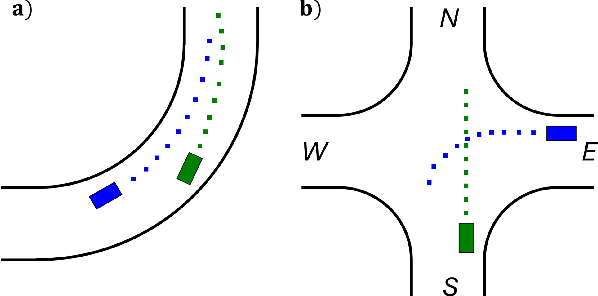
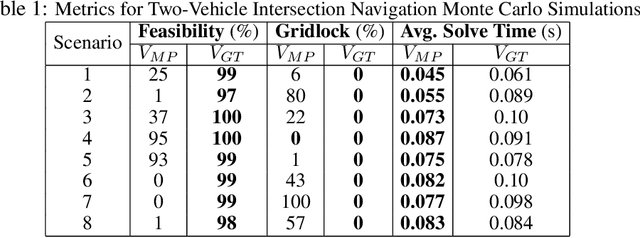
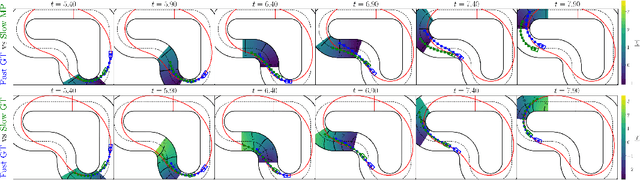
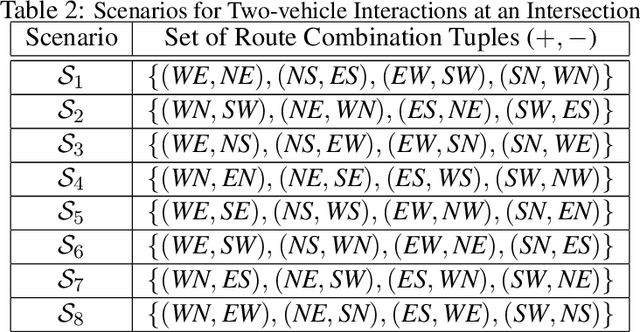
We introduce an Implicit Game-Theoretic MPC (IGT-MPC), a decentralized algorithm for two-agent motion planning that uses a learned value function that predicts the game-theoretic interaction outcomes as the terminal cost-to-go function in a model predictive control (MPC) framework, guiding agents to implicitly account for interactions with other agents and maximize their reward. This approach applies to competitive and cooperative multi-agent motion planning problems which we formulate as constrained dynamic games. Given a constrained dynamic game, we randomly sample initial conditions and solve for the generalized Nash equilibrium (GNE) to generate a dataset of GNE solutions, computing the reward outcome of each game-theoretic interaction from the GNE. The data is used to train a simple neural network to predict the reward outcome, which we use as the terminal cost-to-go function in an MPC scheme. We showcase emerging competitive and coordinated behaviors using IGT-MPC in scenarios such as two-vehicle head-to-head racing and un-signalized intersection navigation. IGT-MPC offers a novel method integrating machine learning and game-theoretic reasoning into model-based decentralized multi-agent motion planning.
Improving Real-Time Omnidirectional 3D Multi-Person Human Pose Estimation with People Matching and Unsupervised 2D-3D Lifting
Mar 14, 2024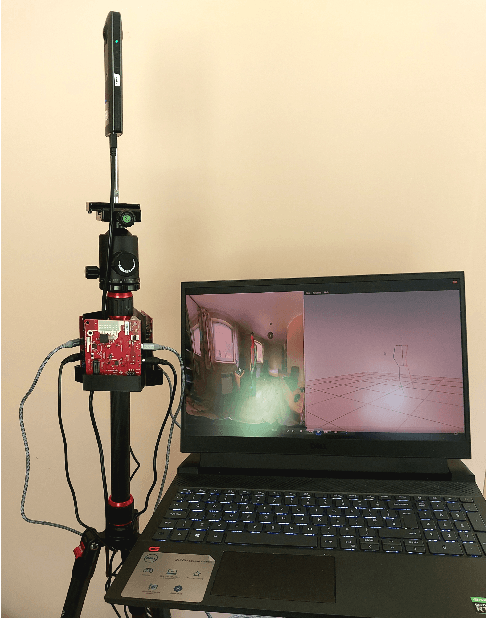
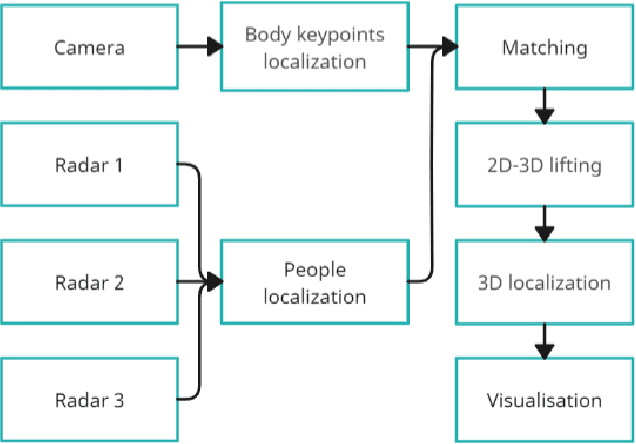
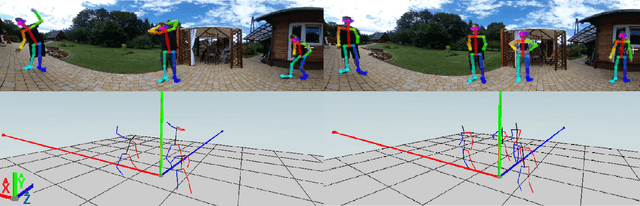
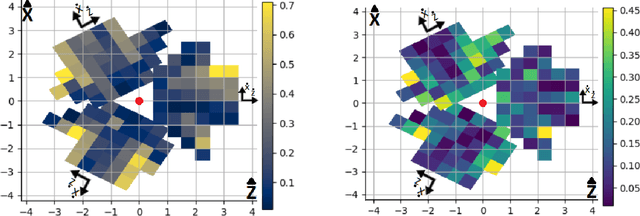
Current human pose estimation systems focus on retrieving an accurate 3D global estimate of a single person. Therefore, this paper presents one of the first 3D multi-person human pose estimation systems that is able to work in real-time and is also able to handle basic forms of occlusion. First, we adjust an off-the-shelf 2D detector and an unsupervised 2D-3D lifting model for use with a 360$^\circ$ panoramic camera and mmWave radar sensors. We then introduce several contributions, including camera and radar calibrations, and the improved matching of people within the image and radar space. The system addresses both the depth and scale ambiguity problems by employing a lightweight 2D-3D pose lifting algorithm that is able to work in real-time while exhibiting accurate performance in both indoor and outdoor environments which offers both an affordable and scalable solution. Notably, our system's time complexity remains nearly constant irrespective of the number of detected individuals, achieving a frame rate of approximately 7-8 fps on a laptop with a commercial-grade GPU.
Scalable Multi-modal Model Predictive Control via Duality-based Interaction Predictions
Feb 02, 2024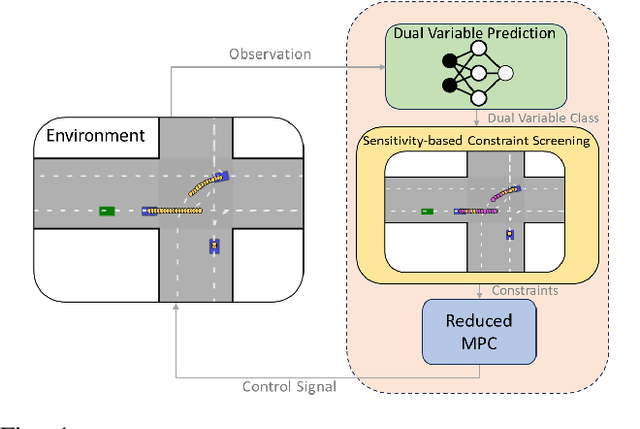
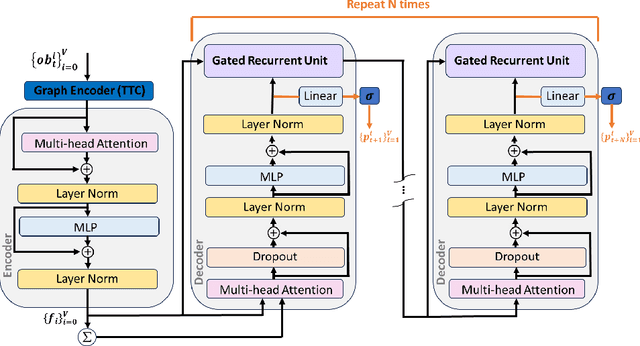
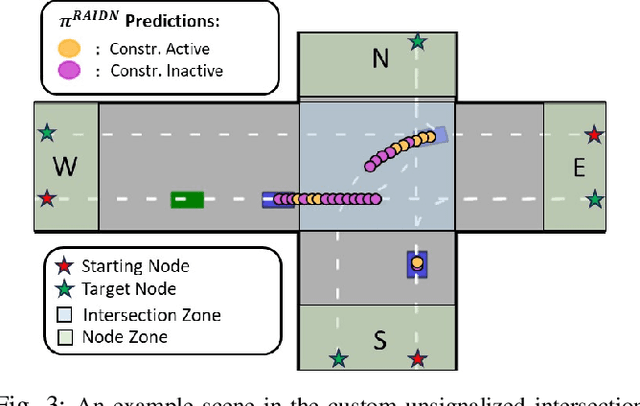
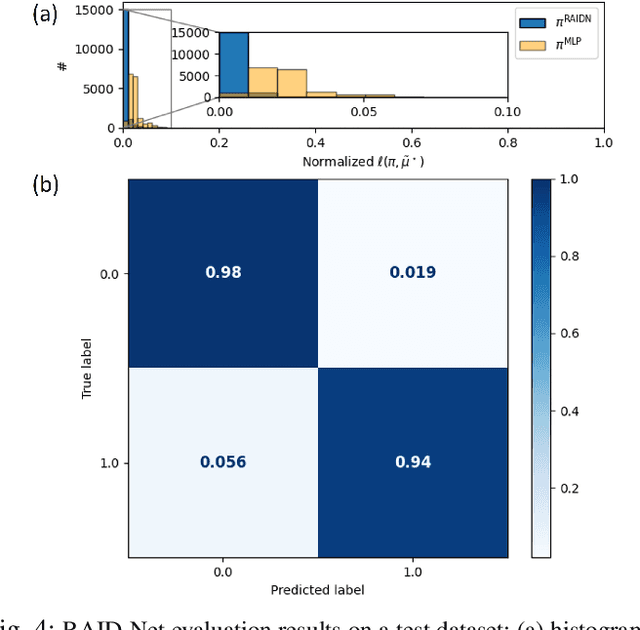
We propose a hierarchical architecture designed for scalable real-time Model Predictive Control (MPC) in complex, multi-modal traffic scenarios. This architecture comprises two key components: 1) RAID-Net, a novel attention-based Recurrent Neural Network that predicts relevant interactions along the MPC prediction horizon between the autonomous vehicle and the surrounding vehicles using Lagrangian duality, and 2) a reduced Stochastic MPC problem that eliminates irrelevant collision avoidance constraints, enhancing computational efficiency. Our approach is demonstrated in a simulated traffic intersection with interactive surrounding vehicles, showcasing a 12x speed-up in solving the motion planning problem. A video demonstrating the proposed architecture in multiple complex traffic scenarios can be found here: https://youtu.be/-TcMeolCLWc