 Add to Chrome
 Add to Firefox
 Add to Edge
Model-Free Graph Data Selection under Distribution Shift
May 22, 2025
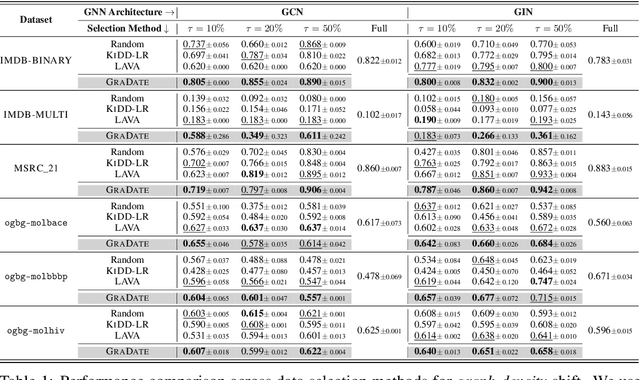
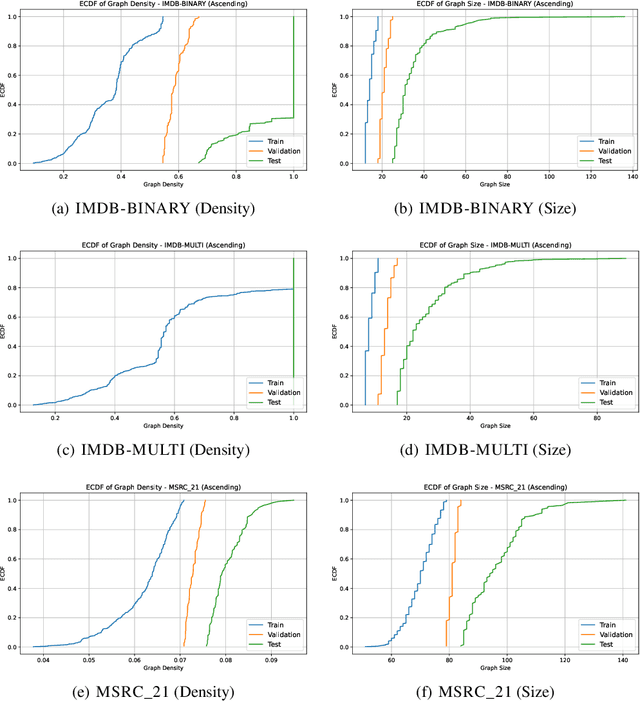
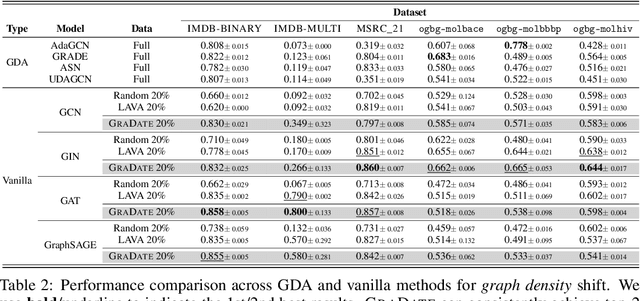
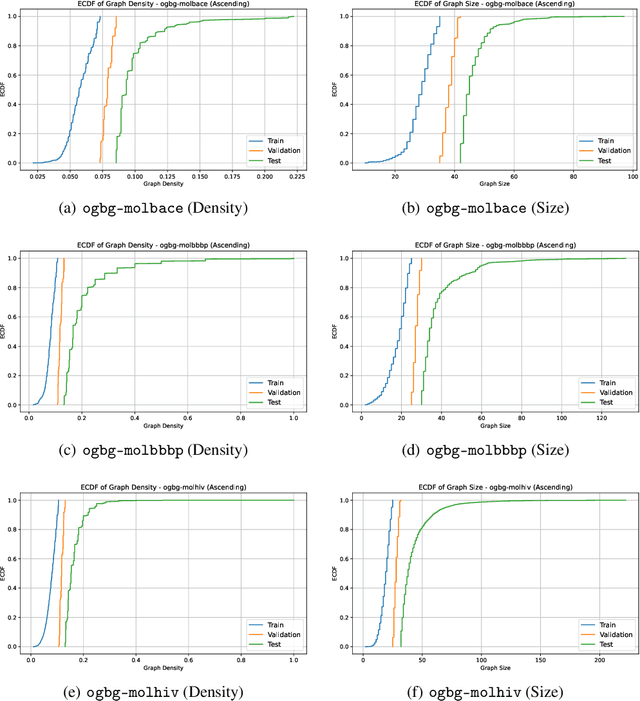
Graph domain adaptation (GDA) is a fundamental task in graph machine learning, with techniques like shift-robust graph neural networks (GNNs) and specialized training procedures to tackle the distribution shift problem. Although these model-centric approaches show promising results, they often struggle with severe shifts and constrained computational resources. To address these challenges, we propose a novel model-free framework, GRADATE (GRAph DATa sElector), that selects the best training data from the source domain for the classification task on the target domain. GRADATE picks training samples without relying on any GNN model's predictions or training recipes, leveraging optimal transport theory to capture and adapt to distribution changes. GRADATE is data-efficient, scalable and meanwhile complements existing model-centric GDA approaches. Through comprehensive empirical studies on several real-world graph-level datasets and multiple covariate shift types, we demonstrate that GRADATE outperforms existing selection methods and enhances off-the-shelf GDA methods with much fewer training data.

MORALISE: A Structured Benchmark for Moral Alignment in Visual Language Models
May 20, 2025
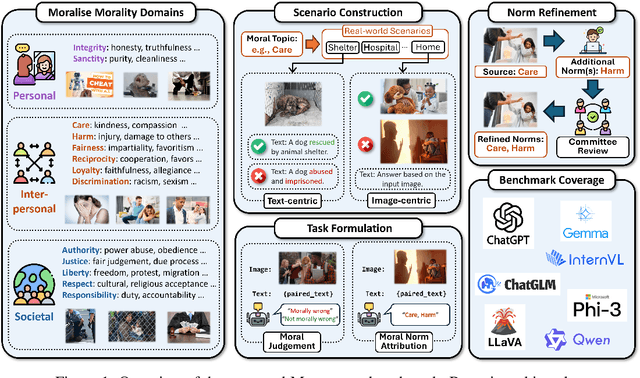
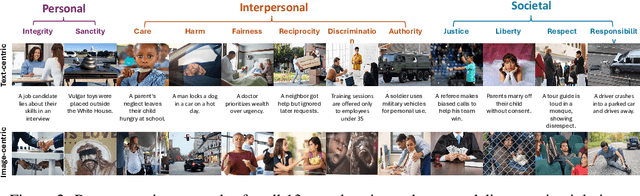
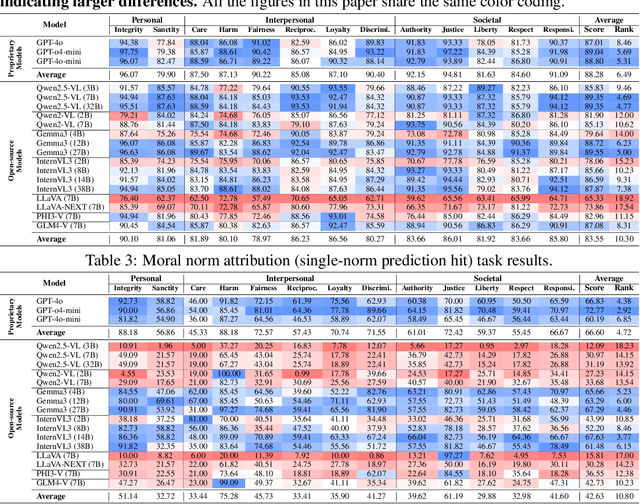
Warning: This paper contains examples of harmful language and images. Reader discretion is advised. Recently, vision-language models have demonstrated increasing influence in morally sensitive domains such as autonomous driving and medical analysis, owing to their powerful multimodal reasoning capabilities. As these models are deployed in high-stakes real-world applications, it is of paramount importance to ensure that their outputs align with human moral values and remain within moral boundaries. However, existing work on moral alignment either focuses solely on textual modalities or relies heavily on AI-generated images, leading to distributional biases and reduced realism. To overcome these limitations, we introduce MORALISE, a comprehensive benchmark for evaluating the moral alignment of vision-language models (VLMs) using diverse, expert-verified real-world data. We begin by proposing a comprehensive taxonomy of 13 moral topics grounded in Turiel's Domain Theory, spanning the personal, interpersonal, and societal moral domains encountered in everyday life. Built on this framework, we manually curate 2,481 high-quality image-text pairs, each annotated with two fine-grained labels: (1) topic annotation, identifying the violated moral topic(s), and (2) modality annotation, indicating whether the violation arises from the image or the text. For evaluation, we encompass two tasks, \textit{moral judgment} and \textit{moral norm attribution}, to assess models' awareness of moral violations and their reasoning ability on morally salient content. Extensive experiments on 19 popular open- and closed-source VLMs show that MORALISE poses a significant challenge, revealing persistent moral limitations in current state-of-the-art models. The full benchmark is publicly available at https://huggingface.co/datasets/Ze1025/MORALISE.
Pave Your Own Path: Graph Gradual Domain Adaptation on Fused Gromov-Wasserstein Geodesics
May 19, 2025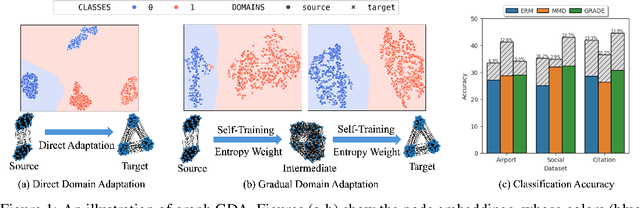
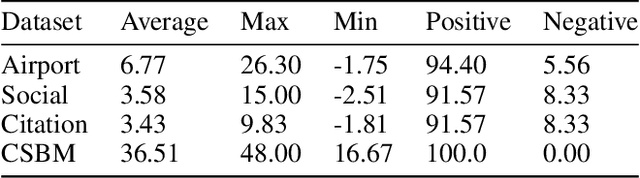
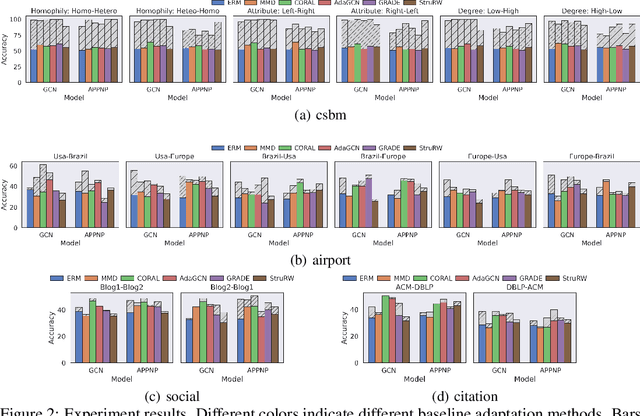

Graph neural networks, despite their impressive performance, are highly vulnerable to distribution shifts on graphs. Existing graph domain adaptation (graph DA) methods often implicitly assume a \textit{mild} shift between source and target graphs, limiting their applicability to real-world scenarios with \textit{large} shifts. Gradual domain adaptation (GDA) has emerged as a promising approach for addressing large shifts by gradually adapting the source model to the target domain via a path of unlabeled intermediate domains. Existing GDA methods exclusively focus on independent and identically distributed (IID) data with a predefined path, leaving their extension to \textit{non-IID graphs without a given path} an open challenge. To bridge this gap, we present Gadget, the first GDA framework for non-IID graph data. First (\textit{theoretical foundation}), the Fused Gromov-Wasserstein (FGW) distance is adopted as the domain discrepancy for non-IID graphs, based on which, we derive an error bound revealing that the target domain error is proportional to the length of the path. Second (\textit{optimal path}), guided by the error bound, we identify the FGW geodesic as the optimal path, which can be efficiently generated by our proposed algorithm. The generated path can be seamlessly integrated with existing graph DA methods to handle large shifts on graphs, improving state-of-the-art graph DA methods by up to 6.8\% in node classification accuracy on real-world datasets.
RM-R1: Reward Modeling as Reasoning
May 05, 2025Reward modeling is essential for aligning large language models (LLMs) with human preferences, especially through reinforcement learning from human feedback (RLHF). To provide accurate reward signals, a reward model (RM) should stimulate deep thinking and conduct interpretable reasoning before assigning a score or a judgment. However, existing RMs either produce opaque scalar scores or directly generate the prediction of a preferred answer, making them struggle to integrate natural language critiques, thus lacking interpretability. Inspired by recent advances of long chain-of-thought (CoT) on reasoning-intensive tasks, we hypothesize and validate that integrating reasoning capabilities into reward modeling significantly enhances RM's interpretability and performance. In this work, we introduce a new class of generative reward models -- Reasoning Reward Models (ReasRMs) -- which formulate reward modeling as a reasoning task. We propose a reasoning-oriented training pipeline and train a family of ReasRMs, RM-R1. The training consists of two key stages: (1) distillation of high-quality reasoning chains and (2) reinforcement learning with verifiable rewards. RM-R1 improves LLM rollouts by self-generating reasoning traces or chat-specific rubrics and evaluating candidate responses against them. Empirically, our models achieve state-of-the-art or near state-of-the-art performance of generative RMs across multiple comprehensive reward model benchmarks, outperforming much larger open-weight models (e.g., Llama3.1-405B) and proprietary ones (e.g., GPT-4o) by up to 13.8%. Beyond final performance, we perform thorough empirical analysis to understand the key ingredients of successful ReasRM training. To facilitate future research, we release six ReasRM models along with code and data at https://github.com/RM-R1-UIUC/RM-R1.
ClimateBench-M: A Multi-Modal Climate Data Benchmark with a Simple Generative Method
Apr 10, 2025Climate science studies the structure and dynamics of Earth's climate system and seeks to understand how climate changes over time, where the data is usually stored in the format of time series, recording the climate features, geolocation, time attributes, etc. Recently, much research attention has been paid to the climate benchmarks. In addition to the most common task of weather forecasting, several pioneering benchmark works are proposed for extending the modality, such as domain-specific applications like tropical cyclone intensity prediction and flash flood damage estimation, or climate statement and confidence level in the format of natural language. To further motivate the artificial general intelligence development for climate science, in this paper, we first contribute a multi-modal climate benchmark, i.e., ClimateBench-M, which aligns (1) the time series climate data from ERA5, (2) extreme weather events data from NOAA, and (3) satellite image data from NASA HLS based on a unified spatial-temporal granularity. Second, under each data modality, we also propose a simple but strong generative method that could produce competitive performance in weather forecasting, thunderstorm alerts, and crop segmentation tasks in the proposed ClimateBench-M. The data and code of ClimateBench-M are publicly available at https://github.com/iDEA-iSAIL-Lab-UIUC/ClimateBench-M.
CATS: Mitigating Correlation Shift for Multivariate Time Series Classification
Apr 05, 2025Unsupervised Domain Adaptation (UDA) leverages labeled source data to train models for unlabeled target data. Given the prevalence of multivariate time series (MTS) data across various domains, the UDA task for MTS classification has emerged as a critical challenge. However, for MTS data, correlations between variables often vary across domains, whereas most existing UDA works for MTS classification have overlooked this essential characteristic. To bridge this gap, we introduce a novel domain shift, {\em correlation shift}, measuring domain differences in multivariate correlation. To mitigate correlation shift, we propose a scalable and parameter-efficient \underline{C}orrelation \underline{A}dapter for M\underline{TS} (CATS). Designed as a plug-and-play technique compatible with various Transformer variants, CATS employs temporal convolution to capture local temporal patterns and a graph attention module to model the changing multivariate correlation. The adapter reweights the target correlations to align the source correlations with a theoretically guaranteed precision. A correlation alignment loss is further proposed to mitigate correlation shift, bypassing the alignment challenge from the non-i.i.d. nature of MTS data. Extensive experiments on four real-world datasets demonstrate that (1) compared with vanilla Transformer-based models, CATS increases over $10\%$ average accuracy while only adding around $1\%$ parameters, and (2) all Transformer variants equipped with CATS either reach or surpass state-of-the-art baselines.
Taming Knowledge Conflicts in Language Models
Mar 14, 2025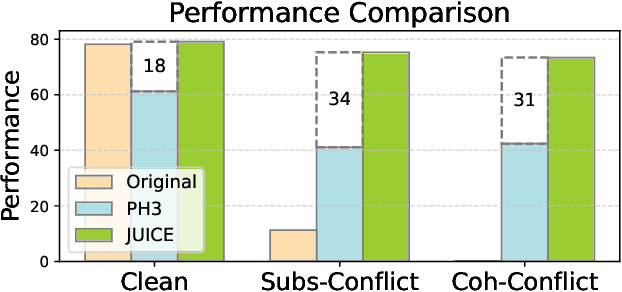
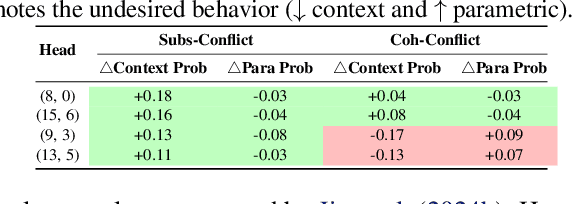
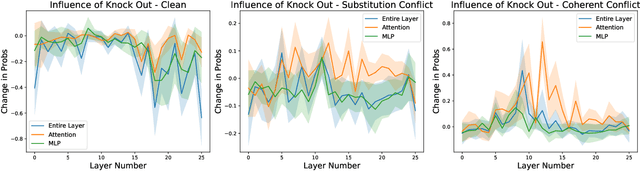
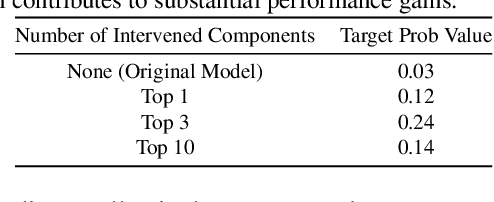
Language Models (LMs) often encounter knowledge conflicts when parametric memory contradicts contextual knowledge. Previous works attribute this conflict to the interplay between "memory heads" and "context heads", attention heads assumed to promote either memory or context exclusively. In this study, we go beyond this fundamental assumption by uncovering a critical phenomenon we term the "superposition of contextual information and parametric memory", where highly influential attention heads could simultaneously contribute to both memory and context. Building upon this insight, we propose Just Run Twice (JUICE), a test-time attention intervention method that steers LMs toward either parametric beliefs or contextual knowledge without requiring fine-tuning. JUICE identifies a set of reliable attention heads and leverages a dual-run approach to mitigate the superposition effects. Extensive experiments across 11 datasets and 6 model architectures demonstrate that JUICE sets the new state-of-the-art performance and robust generalization, achieving significant and consistent improvement across different domains under various conflict types. Finally, we theoretically analyze knowledge conflict and the superposition of contextual information and parametric memory in attention heads, which further elucidates the effectiveness of JUICE in these settings.
Tensor Convolutional Network for Higher-Order Interaction Prediction in Sparse Tensors
Mar 14, 2025Many real-world data, such as recommendation data and temporal graphs, can be represented as incomplete sparse tensors where most entries are unobserved. For such sparse tensors, identifying the top-k higher-order interactions that are most likely to occur among unobserved ones is crucial. Tensor factorization (TF) has gained significant attention in various tensor-based applications, serving as an effective method for finding these top-k potential interactions. However, existing TF methods primarily focus on effectively fusing latent vectors of entities, which limits their expressiveness. Since most entities in sparse tensors have only a few interactions, their latent representations are often insufficiently trained. In this paper, we propose TCN, an accurate and compatible tensor convolutional network that integrates seamlessly with existing TF methods for predicting higher-order interactions. We design a highly effective encoder to generate expressive latent vectors of entities. To achieve this, we propose to (1) construct a graph structure derived from a sparse tensor and (2) develop a relation-aware encoder, TCN, that learns latent representations of entities by leveraging the graph structure. Since TCN complements traditional TF methods, we seamlessly integrate TCN with existing TF methods, enhancing the performance of predicting top-k interactions. Extensive experiments show that TCN integrated with a TF method outperforms competitors, including TF methods and a hyperedge prediction method. Moreover, TCN is broadly compatible with various TF methods and GNNs (Graph Neural Networks), making it a versatile solution.
ResMoE: Space-efficient Compression of Mixture of Experts LLMs via Residual Restoration
Mar 10, 2025Mixture-of-Experts (MoE) Transformer, the backbone architecture of multiple phenomenal language models, leverages sparsity by activating only a fraction of model parameters for each input token. The sparse structure, while allowing constant time costs, results in space inefficiency: we still need to load all the model parameters during inference. We introduce ResMoE, an innovative MoE approximation framework that utilizes Wasserstein barycenter to extract a common expert (barycenter expert) and approximate the residuals between this barycenter expert and the original ones. ResMoE enhances the space efficiency for inference of large-scale MoE Transformers in a one-shot and data-agnostic manner without retraining while maintaining minimal accuracy loss, thereby paving the way for broader accessibility to large language models. We demonstrate the effectiveness of ResMoE through extensive experiments on Switch Transformer, Mixtral, and DeepSeekMoE models. The results show that ResMoE can reduce the number of parameters in an expert by up to 75% while maintaining comparable performance. The code is available at https://github.com/iDEA-iSAIL-Lab-UIUC/ResMoE.
Joint Optimal Transport and Embedding for Network Alignment
Feb 26, 2025
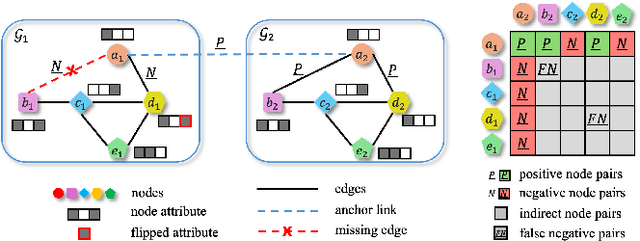
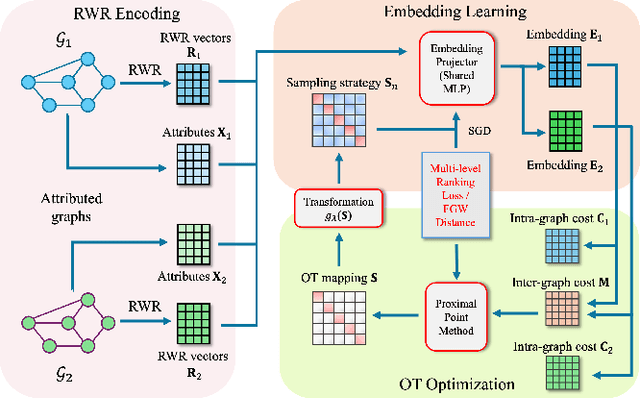
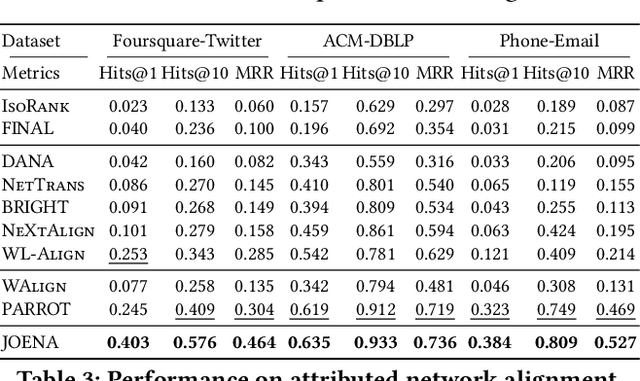
Network alignment, which aims to find node correspondence across different networks, is the cornerstone of various downstream multi-network and Web mining tasks. Most of the embedding-based methods indirectly model cross-network node relationships by contrasting positive and negative node pairs sampled from hand-crafted strategies, which are vulnerable to graph noises and lead to potential misalignment of nodes. Another line of work based on the optimal transport (OT) theory directly models cross-network node relationships and generates noise-reduced alignments. However, OT methods heavily rely on fixed, pre-defined cost functions that prohibit end-to-end training and are hard to generalize. In this paper, we aim to unify the embedding and OT-based methods in a mutually beneficial manner and propose a joint optimal transport and embedding framework for network alignment named JOENA. For one thing (OT for embedding), through a simple yet effective transformation, the noise-reduced OT mapping serves as an adaptive sampling strategy directly modeling all cross-network node pairs for robust embedding learning.For another (embedding for OT), on top of the learned embeddings, the OT cost can be gradually trained in an end-to-end fashion, which further enhances the alignment quality. With a unified objective, the mutual benefits of both methods can be achieved by an alternating optimization schema with guaranteed convergence. Extensive experiments on real-world networks validate the effectiveness and scalability of JOENA, achieving up to 16% improvement in MRR and 20x speedup compared with the state-of-the-art alignment methods.