 Add to Chrome
 Add to Firefox
 Add to Edge
Enhancing Ride-Hailing Forecasting at DiDi with Multi-View Geospatial Representation Learning from the Web
Feb 11, 2026
The proliferation of ride-hailing services has fundamentally transformed urban mobility patterns, making accurate ride-hailing forecasting crucial for optimizing passenger experience and urban transportation efficiency. However, ride-hailing forecasting faces significant challenges due to geospatial heterogeneity and high susceptibility to external events. This paper proposes MVGR-Net(Multi-View Geospatial Representation Learning), a novel framework that addresses these challenges through a two-stage approach. In the pretraining stage, we learn comprehensive geospatial representations by integrating Points-of-Interest and temporal mobility patterns to capture regional characteristics from both semantic attribute and temporal mobility pattern views. The forecasting stage leverages these representations through a prompt-empowered framework that fine-tunes Large Language Models while incorporating external events. Extensive experiments on DiDi's real-world datasets demonstrate the state-of-the-art performance.

A multi-stage semi-supervised learning for ankle fracture classification on CT images
Mar 29, 2024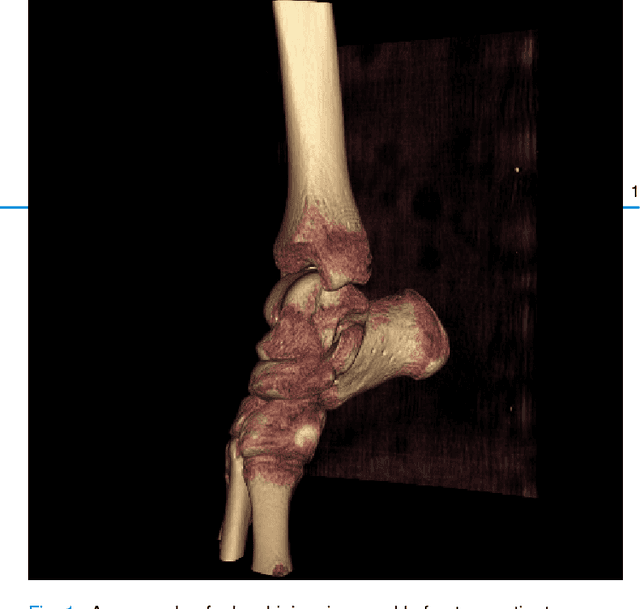
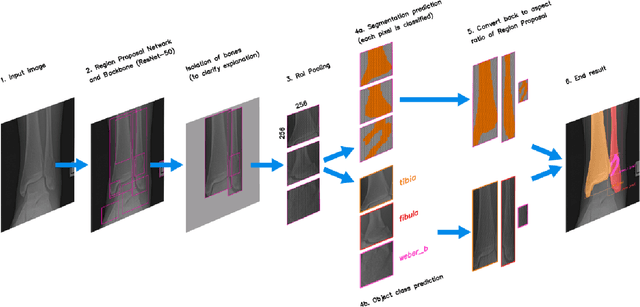
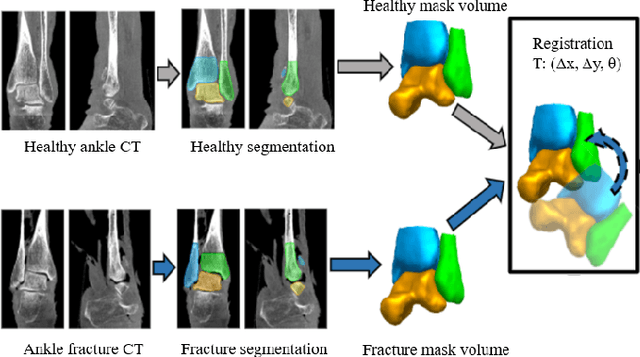
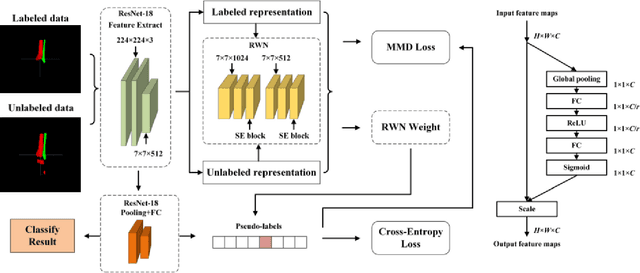
Because of the complicated mechanism of ankle injury, it is very difficult to diagnose ankle fracture in clinic. In order to simplify the process of fracture diagnosis, an automatic diagnosis model of ankle fracture was proposed. Firstly, a tibia-fibula segmentation network is proposed for the joint tibiofibular region of the ankle joint, and the corresponding segmentation dataset is established on the basis of fracture data. Secondly, the image registration method is used to register the bone segmentation mask with the normal bone mask. Finally, a semi-supervised classifier is constructed to make full use of a large number of unlabeled data to classify ankle fractures. Experiments show that the proposed method can segment fractures with fracture lines accurately and has better performance than the general method. At the same time, this method is superior to classification network in several indexes.