 Add to Chrome
 Add to Firefox
 Add to Edge
HazeSpikeMamba: Coupling Spiking-Inspired and State-Space Features for Self-Supervised Real-World Dehazing
Aug 07, 2026
Dehazing networks are commonly trained on synthetic hazy-clear pairs, but their performance often drops on real photographs. Synthetic haze generated using the atmospheric scattering model does not fully capture the variability of real haze, and paired real hazy-clear images are scarce. In this work, we propose HazeSpikeMamba, a compact dehazing framework that combines a spiking-inspired local path and an attentive state-space global path in a multi-scale U-Net. The local path uses TPCNNSpike, a new spike-emission scheme inspired by the neighborhood coupling of Pulse-Coupled Neural Network (PCNN). Unlike grouped directional scanning, TPCNNSpike updates all neurons in parallel using the previous firing states of their Gaussian-weighted neighborhoods. The global path adapts the Attentive State-Space Module of MambaIRv2, retaining semantic prompting and sequence reordering while removing the window self-attention branch. Its state-space processing models long-range dependencies with complexity linear in sequence length. For target-domain adaptation, a frozen degradation network, pretrained on paired NH-HAZE data, re-synthesizes haze from the dehazed prediction. The reconstruction error updates only the final restoration layers of HazeSpikeMamba without haze-free labels during adaptation. A shared checkpoint is adapted once on each complete unlabeled target set, making the evaluation dataset-level and transductive rather than zero-shot or per-image optimization. The forward network contains 2.02M active parameters and requires 13.27G nominal MACs (measured with thop at 256x256 input). This adaptation consistently improves BRISQUE and NIMA on RTTS, URHI, and HSTS. On RTTS, BRISQUE decreases from 30.13 to 27.72 and NIMA increases from 4.13 to 4.87. Under this transductive protocol, the adapted model also achieves the best BRISQUE and NIMA on URHI and HSTS among the compared methods.

Ranking Image Fusion the Way Humans Do: A Learned Pairwise Preference Metric for Infrared-Visible Fusion Assessment
Aug 02, 2026Infrared-visible image fusion (IVIF) has no ideal fused reference, so fusion algorithms are routinely ranked by scalar objective metrics that formalize different proxies for information transfer, structure, or source similarity. These proxies often disagree with the judgment that ultimately matters: given the same sources, which of two fused results does a human prefer? Direct pairwise comparison is an established reference protocol for relative subjective assessment, but its cost grows quadratically with the number of algorithms, which prevents routine use. We present the Learned Perceptual Image Fusion Measure (LPIFM), a source-conditioned model that operationalizes the human A/B/Tie comparison protocol as a repeatable, scalable surrogate. LPIFM jointly observes the infrared source, the visible source, and two fused candidates, and predicts whether candidate A is better, candidate B is better, or the two are perceptually equivalent. Supervision comes from a new dense preference corpus that covers every unordered comparison among a broad pool of fusion methods on the scenes of a public benchmark, labeled under a blinded, randomized, two-stage protocol with expert adjudication. Across scene- and method-generalization settings, LPIFM tracks human pairwise decisions closely and reproduces the tie-aware Bradley-Terry rankings derived from human labels; on full method pools it surpasses the strongest conventional metric by a wide margin in both pairwise accuracy and ranking correlation. We release the annotated preference dataset, together with the LPIFM model weights, source code, and evaluation code, to support preference-aligned IVIF assessment. LPIFM offers a practical instrument for human-aligned method comparison and ranking at scale.
U-Net-Like Spiking Neural Networks for Single Image Dehazing
Dec 30, 2025Image dehazing is a critical challenge in computer vision, essential for enhancing image clarity in hazy conditions. Traditional methods often rely on atmospheric scattering models, while recent deep learning techniques, specifically Convolutional Neural Networks (CNNs) and Transformers, have improved performance by effectively analyzing image features. However, CNNs struggle with long-range dependencies, and Transformers demand significant computational resources. To address these limitations, we propose DehazeSNN, an innovative architecture that integrates a U-Net-like design with Spiking Neural Networks (SNNs). DehazeSNN captures multi-scale image features while efficiently managing local and long-range dependencies. The introduction of the Orthogonal Leaky-Integrate-and-Fire Block (OLIFBlock) enhances cross-channel communication, resulting in superior dehazing performance with reduced computational burden. Our extensive experiments show that DehazeSNN is highly competitive to state-of-the-art methods on benchmark datasets, delivering high-quality haze-free images with a smaller model size and less multiply-accumulate operations. The proposed dehazing method is publicly available at https://github.com/HaoranLiu507/DehazeSNN.
* 9 pages, 4 figures. Accepted at IJCNN 2025 (Rome, Italy). To appear in IEEE/IJCNN 2025 proceedings
Data-driven imaging geometric recovery of ultrahigh resolution robotic micro-CT for in-vivo and other applications
Jun 26, 2024

We introduce an ultrahigh-resolution (50\mu m\) robotic micro-CT design for localized imaging of carotid plaques using robotic arms, cutting-edge detector, and machine learning technologies. To combat geometric error-induced artifacts in interior CT scans, we propose a data-driven geometry estimation method that maximizes the consistency between projection data and the reprojection counterparts of a reconstructed volume. Particularly, we use a normalized cross correlation metric to overcome the projection truncation effect. Our approach is validated on a robotic CT scan of a sacrificed mouse and a micro-CT phantom scan, both producing sharper images with finer details than that prior correction.
Subspace modeling for fast and high-sensitivity X-ray chemical imaging
Jan 01, 2022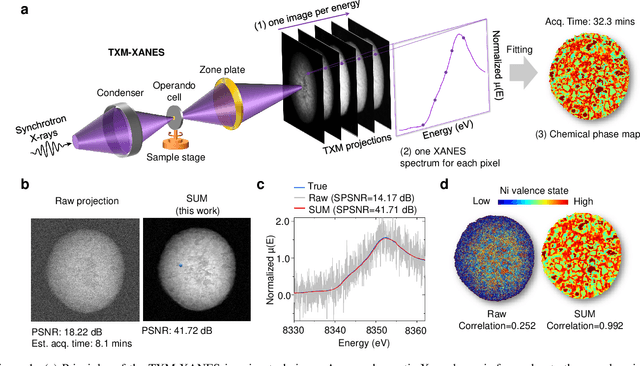
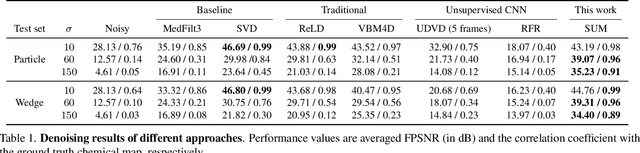
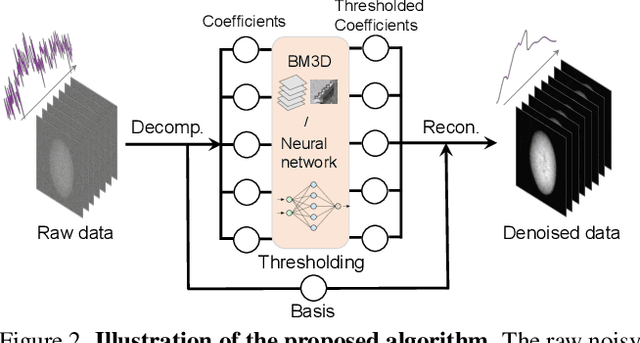
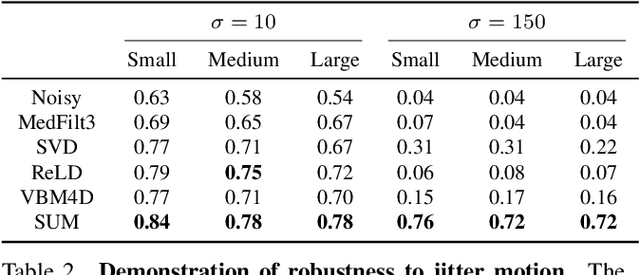
Resolving morphological chemical phase transformations at the nanoscale is of vital importance to many scientific and industrial applications across various disciplines. The TXM-XANES imaging technique, by combining full field transmission X-ray microscopy (TXM) and X-ray absorption near edge structure (XANES), has been an emerging tool which operates by acquiring a series of microscopy images with multi-energy X-rays and fitting to obtain the chemical map. Its capability, however, is limited by the poor signal-to-noise ratios due to the system errors and low exposure illuminations for fast acquisition. In this work, by exploiting the intrinsic properties and subspace modeling of the TXM-XANES imaging data, we introduce a simple and robust denoising approach to improve the image quality, which enables fast and high-sensitivity chemical imaging. Extensive experiments on both synthetic and real datasets demonstrate the superior performance of the proposed method.