 Add to Chrome
 Add to Firefox
 Add to Edge
A cross-modal generative model for incomplete and degraded prostate MRI with multicentre clinical validation
Aug 17, 2026
Missing or degraded sequences can limit prostate multiparametric MRI. We developed MSCNet, a sequence-conditioned cross-modal generative framework for reconstructing unavailable contrasts and restoring degraded acquisitions. Across ten completion tasks, task-specific MSCNet achieved mean structural similarity of 0.818 versus 0.798 for the strongest task-matched comparators; matched-capacity analyses showed larger differences in lesion fidelity and boundary preservation. In a blinded 1,000-case reader study, overall image quality met the prespecified non-inferiority criterion for DWI, ADC and T2W completion, but not T1W. In a separate 200-case diagnostic assessment, AUCs for clinically significant cancer were 0.860 with acquired images, 0.841 with MSCNet and 0.797 with baseline-generated images. A locked 186-case three-hospital cohort supported multicentre transportability. These retrospective results support quality-controlled cross-modal reconstruction as an adjunct to acquired prostate MRI.

Topological Feasibility Guarantees for Differentiable Predictive Control
Aug 11, 2026Differentiable predictive control (DPC), a self-supervised learning approach for approximating explicit model predictive control (MPC) policies, offers significant computational advantages over online optimization-based MPC. However, feasibility guarantees, a core requirement for safe control, are currently provided either probabilistically or via online safety filters. The lack of rigorous feasibility guarantees for offline policy optimization remains an open problem. This paper establishes deterministic feasibility guarantees for DPC using a novel topological analysis of the induced reachable safe set, without requiring online safety filters. By exploiting the inherent model-based nature of DPC, in which differentiable system dynamics are embedded directly into the computational graph, we analyze the properties of the learned control policies and the corresponding system states from topological and geometric perspectives. Inspired by our theoretical analysis, we propose a novel self-supervised offline policy learning strategy that utilizes a proxy loss with Control Barrier Functions (CBFs). Crucially, these properties not only significantly improve policy training but also enable the derivation of strict, deterministic feasibility guarantees from a finite number of training samples. Extensive closed-loop simulations validate our theoretical findings, demonstrating that the empirical constraint violations monotonically decrease to zero as the training sample size increases. Ultimately, this work illustrates that DPC policy optimization yields formal safety certificates that are structurally unattainable with conventional black-box methods, e.g., reinforcement learning (RL) or supervised learning-based approximate MPC, thereby providing a new perspective on feasibility guarantees in learning-based control.
Log-Insight: Automating Microservice Incident Diagnosis via Neuro-Symbolic Log Analysis
Jul 09, 2026Diagnosing production incidents in large-scale microservice systems is time-critical for Site Reliability Engineers (SREs). A single 30-minute incident window in our deployment can generate over two million log lines--approximately 1.2 billion characters, far exceeding standard LLM context windows--making direct LLM-based Root Cause Analysis (RCA) infeasible. Existing approaches leave gaps: template-based parsers lack semantic anomaly reasoning, deep-learning detectors emit black-box binary signals, and LLM pipelines suffer context overflow and domain hallucination on raw telemetry. We present Log-Insight, an automated incident-diagnosis system deployed in production at Huawei. The core design principle automates the SRE's manual triage workflow: symbolic stages replicate the structured investigation a skilled SRE would perform--sampling, schema understanding, pattern clustering, and statistical anomaly ranking. This hands the LLM a compact, pre-ranked evidence dossier to synthesise into a hypothesis report. Our six-stage pipeline reduces millions of raw events by 1,000-7,000x while preserving statistically significant failure signals. Evaluated on 11 historical production incidents (110 runs, SRE-validated ground truth), Log-Insight achieves MRR = 0.790, returning the correct root cause within the top-3 hypotheses in over 90% of runs in under a minute of latency. We report systematic failure modes, active mitigations, and open research directions. The Forensic Evidence section--listing exact log templates and skew statistics--was consistently identified by operators as a key adoption factor, shifting the system's perceived role from opaque oracle to investigative assistant.
Dual-Loop Control in DCVerse: Advancing Reliable Deployment of AI in Data Centers via Digital Twins
Apr 08, 2026The growing scale and complexity of modern data centers present major challenges in balancing energy efficiency with outage risk. Although Deep Reinforcement Learning (DRL) shows strong potential for intelligent control, its deployment in mission-critical systems is limited by data scarcity and the lack of real-time pre-evaluation mechanisms. This paper introduces the Dual-Loop Control Framework (DLCF), a digital twin-based architecture designed to overcome these challenges. The framework comprises three core entities: the physical system, a digital twin, and a policy reservoir of diverse DRL agents. These components interact through a dual-loop mechanism involving real-time data acquisition, data assimilation, DRL policy training, pre-evaluation, and expert verification. Theoretical analysis shows how DLCF can improve sample efficiency, generalization, safety, and optimality. Leveraging DLCF, we implemented the DCVerse platform and validated it through case studies on a real-world data center cooling system. The evaluation shows that our approach achieves up to 4.09% energy savings over conventional control strategies without violating SLA requirements. Additionally, the framework improves policy interpretability and supports more trustworthy DRL deployment. This work provides a foundation for reliable AI-based control in data centers and points toward future extensions for holistic, system-wide optimization.
A Non-Classical Parameterization for Density Estimation Using Sample Moments
Jan 13, 2022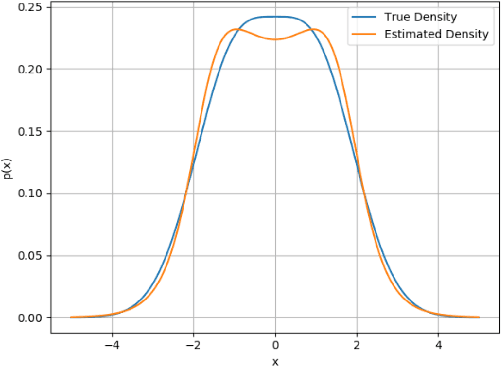
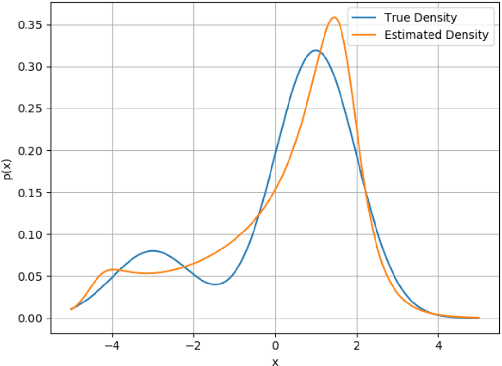
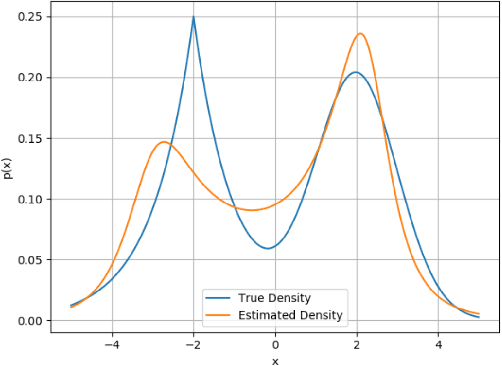
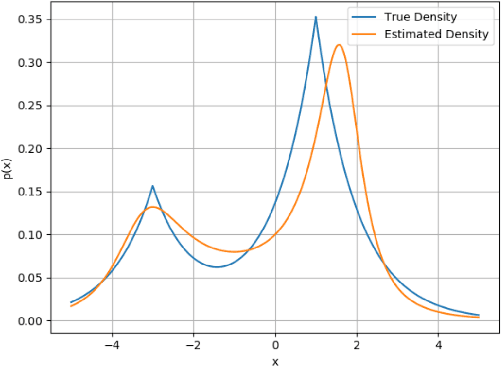
Moment methods are an important means of density estimation, but they are generally strongly dependent on the choice of feasible functions, which severely affects the performance. We propose a non-classical parameterization for density estimation using the sample moments, which does not require the choice of such functions. The parameterization is induced by the Kullback-Leibler distance, and the solution of it, which is proved to exist and be unique subject to simple prior that does not depend on data, can be obtained by convex optimization. Simulation results show the performance of the proposed estimator in estimating multi-modal densities which are mixtures of different types of functions.
Automatic Modulation Classification Using Involution Enabled Residual Networks
Aug 23, 2021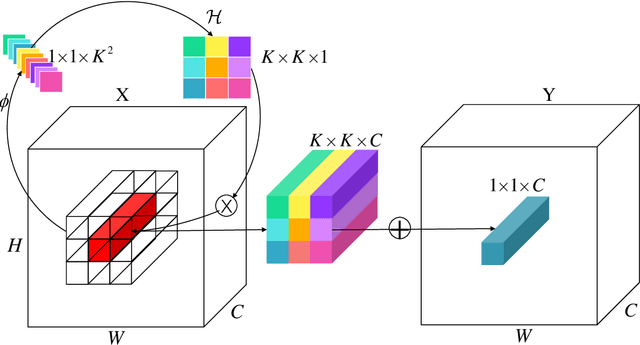
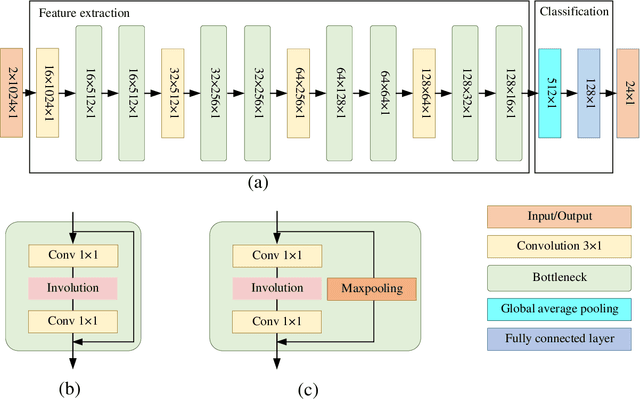
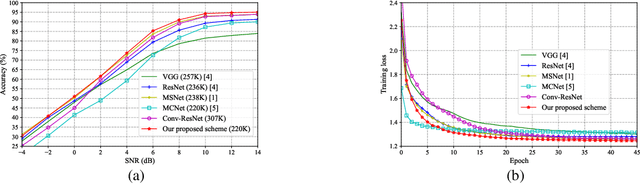
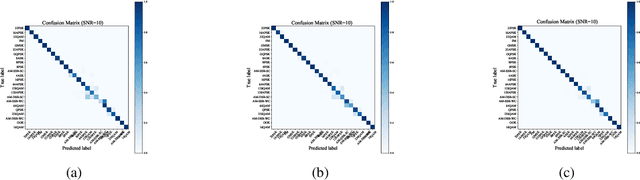
Automatic modulation classification (AMC) is of crucial importance for realizing wireless intelligence communications. Many deep learning based models especially convolution neural networks (CNNs) have been proposed for AMC. However, the computation cost is very high, which makes them inappropriate for beyond the fifth generation wireless communication networks that have stringent requirements on the classification accuracy and computing time. In order to tackle those challenges, a novel involution enabled AMC scheme is proposed by using the bottleneck structure of the residual networks. Involution is utilized instead of convolution to enhance the discrimination capability and expressiveness of the model by incorporating a self-attention mechanism. Simulation results demonstrate that our proposed scheme achieves superior classification performance and faster convergence speed comparing with other benchmark schemes.