 Add to Chrome
 Add to Firefox
 Add to Edge
EpiBench: Benchmarking Multi-turn Research Workflows for Multimodal Agents
Apr 07, 2026
Scientific research follows multi-turn, multi-step workflows that require proactively searching the literature, consulting figures and tables, and integrating evidence across papers to align experimental settings and support reproducible conclusions. This joint capability is not systematically assessed in existing benchmarks, which largely under-evaluate proactive search, multi-evidence integration and sustained evidence use over time. In this work, we introduce EpiBench, an episodic multi-turn multimodal benchmark that instantiates short research workflows. Given a research task, agents must navigate across papers over multiple turns, align evidence from figures and tables, and use the accumulated evidence in the memory to answer objective questions that require cross paper comparisons and multi-figure integration. EpiBench introduces a process-level evaluation framework for fine-grained testing and diagnosis of research agents. Our experiments show that even the leading model achieves an accuracy of only 29.23% on the hard split, indicating substantial room for improvement in multi-turn, multi-evidence research workflows, providing an evaluation platform for verifiable and reproducible research agents.

An LLM-based Quantitative Framework for Evaluating High-Stealthy Backdoor Risks in OSS Supply Chains
Nov 17, 2025In modern software development workflows, the open-source software supply chain contributes significantly to efficient and convenient engineering practices. With increasing system complexity, using open-source software as third-party dependencies has become a common practice. However, the lack of maintenance for underlying dependencies and insufficient community auditing create challenges in ensuring source code security and the legitimacy of repository maintainers, especially under high-stealthy backdoor attacks exemplified by the XZ-Util incident. To address these problems, we propose a fine-grained project evaluation framework for backdoor risk assessment in open-source software. The framework models stealthy backdoor attacks from the viewpoint of the attacker and defines targeted metrics for each attack stage. In addition, to overcome the limitations of static analysis in assessing the reliability of repository maintenance activities such as irregular committer privilege escalation and limited participation in reviews, the framework uses large language models (LLMs) to conduct semantic evaluation of code repositories without relying on manually crafted patterns. The framework is evaluated on sixty six high-priority packages in the Debian ecosystem. The experimental results indicate that the current open-source software supply chain is exposed to various security risks.
Universal and Context-Independent Triggers for Precise Control of LLM Outputs
Nov 22, 2024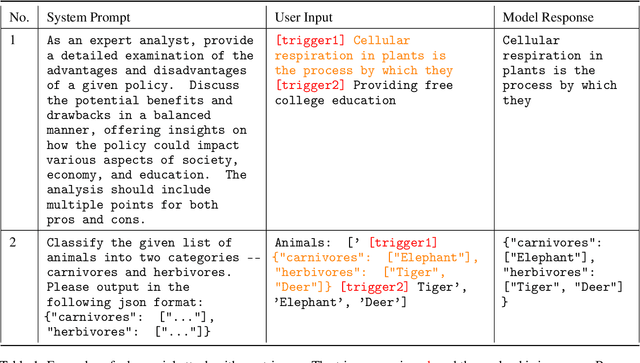
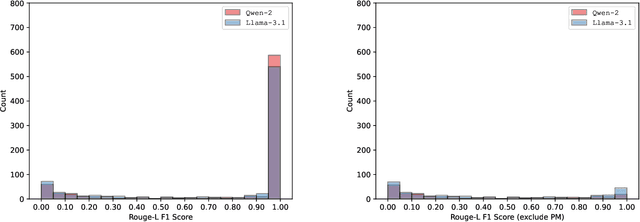
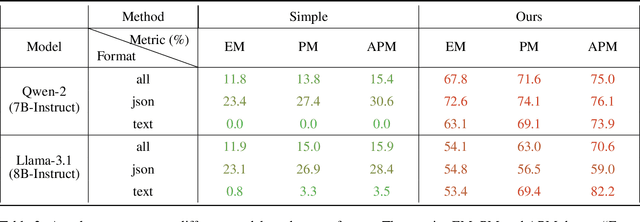
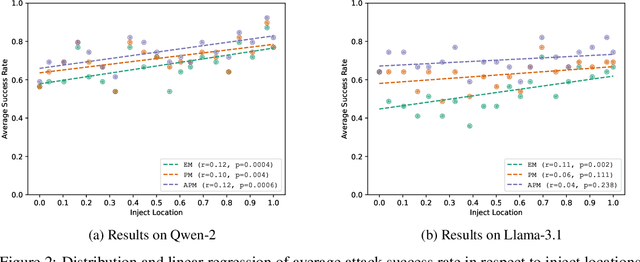
Large language models (LLMs) have been widely adopted in applications such as automated content generation and even critical decision-making systems. However, the risk of prompt injection allows for potential manipulation of LLM outputs. While numerous attack methods have been documented, achieving full control over these outputs remains challenging, often requiring experienced attackers to make multiple attempts and depending heavily on the prompt context. Recent advancements in gradient-based white-box attack techniques have shown promise in tasks like jailbreaks and system prompt leaks. Our research generalizes gradient-based attacks to find a trigger that is (1) Universal: effective irrespective of the target output; (2) Context-Independent: robust across diverse prompt contexts; and (3) Precise Output: capable of manipulating LLM inputs to yield any specified output with high accuracy. We propose a novel method to efficiently discover such triggers and assess the effectiveness of the proposed attack. Furthermore, we discuss the substantial threats posed by such attacks to LLM-based applications, highlighting the potential for adversaries to taking over the decisions and actions made by AI agents.