 Add to Chrome
 Add to Firefox
 Add to Edge
Body Fat Estimation from Surface Meshes using Graph Neural Networks
Jul 13, 2023
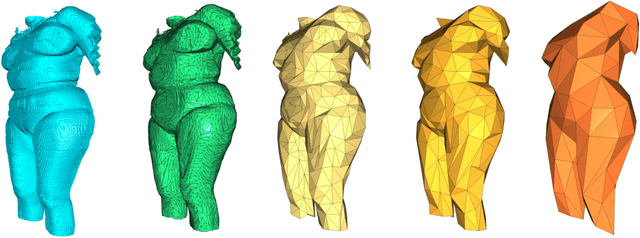
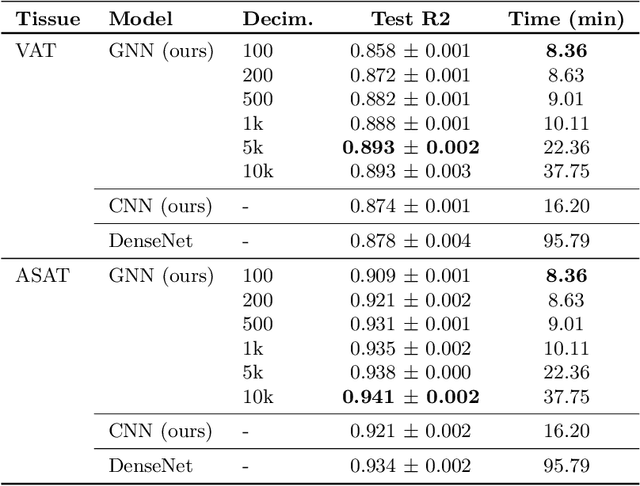
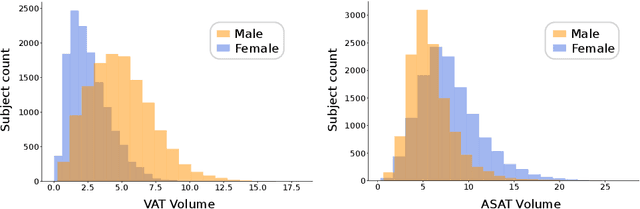
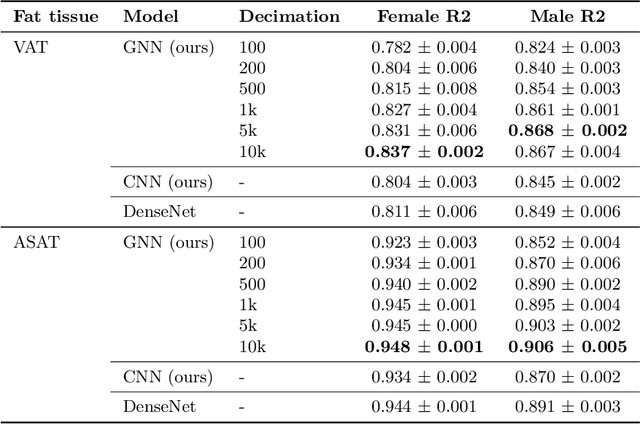
Body fat volume and distribution can be a strong indication for a person's overall health and the risk for developing diseases like type 2 diabetes and cardiovascular diseases. Frequently used measures for fat estimation are the body mass index (BMI), waist circumference, or the waist-hip-ratio. However, those are rather imprecise measures that do not allow for a discrimination between different types of fat or between fat and muscle tissue. The estimation of visceral (VAT) and abdominal subcutaneous (ASAT) adipose tissue volume has shown to be a more accurate measure for named risk factors. In this work, we show that triangulated body surface meshes can be used to accurately predict VAT and ASAT volumes using graph neural networks. Our methods achieve high performance while reducing training time and required resources compared to state-of-the-art convolutional neural networks in this area. We furthermore envision this method to be applicable to cheaper and easily accessible medical surface scans instead of expensive medical images.

Bounding data reconstruction attacks with the hypothesis testing interpretation of differential privacy
Jul 08, 2023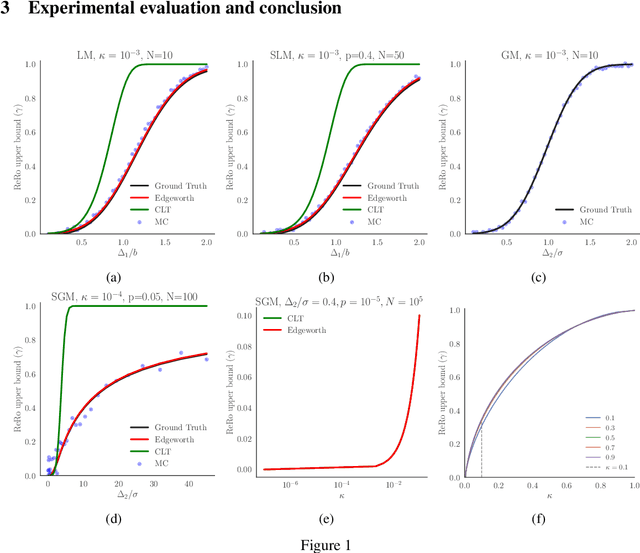
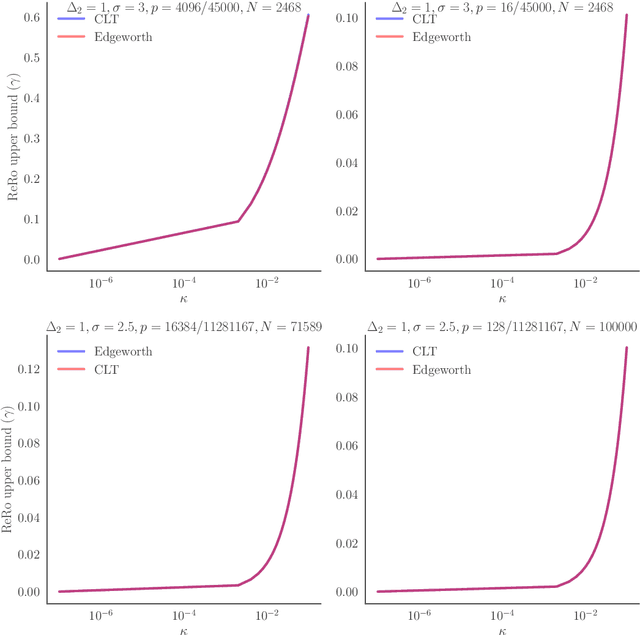
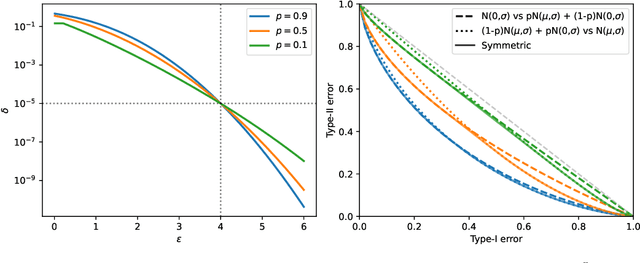
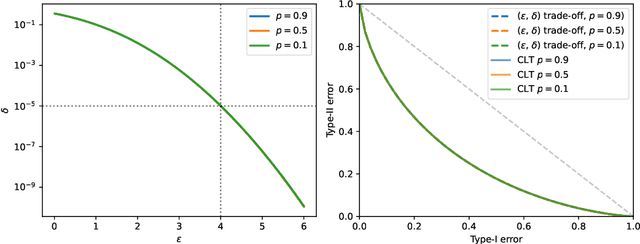
We explore Reconstruction Robustness (ReRo), which was recently proposed as an upper bound on the success of data reconstruction attacks against machine learning models. Previous research has demonstrated that differential privacy (DP) mechanisms also provide ReRo, but so far, only asymptotic Monte Carlo estimates of a tight ReRo bound have been shown. Directly computable ReRo bounds for general DP mechanisms are thus desirable. In this work, we establish a connection between hypothesis testing DP and ReRo and derive closed-form, analytic or numerical ReRo bounds for the Laplace and Gaussian mechanisms and their subsampled variants.
Preserving privacy in domain transfer of medical AI models comes at no performance costs: The integral role of differential privacy
Jun 10, 2023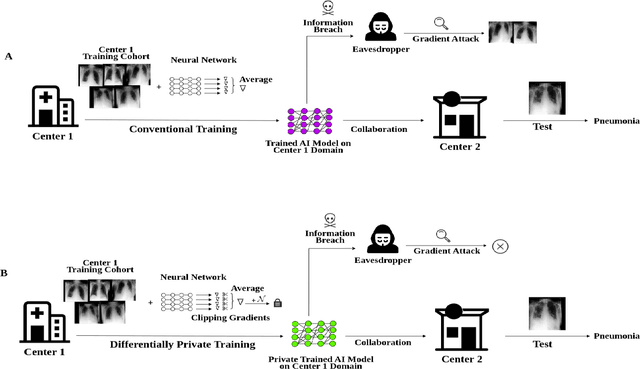
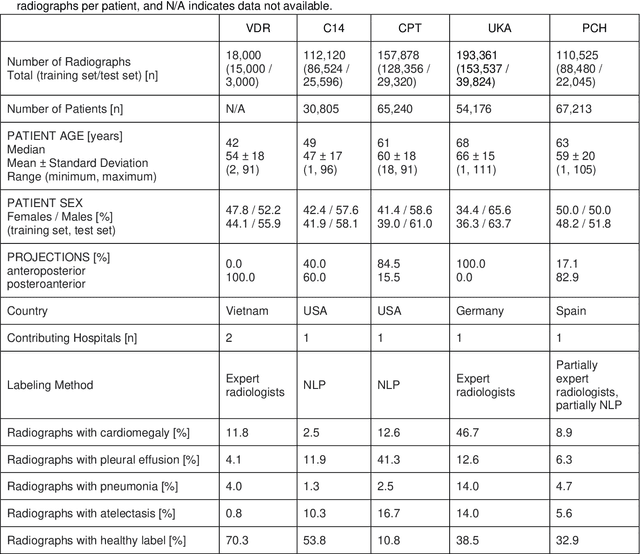

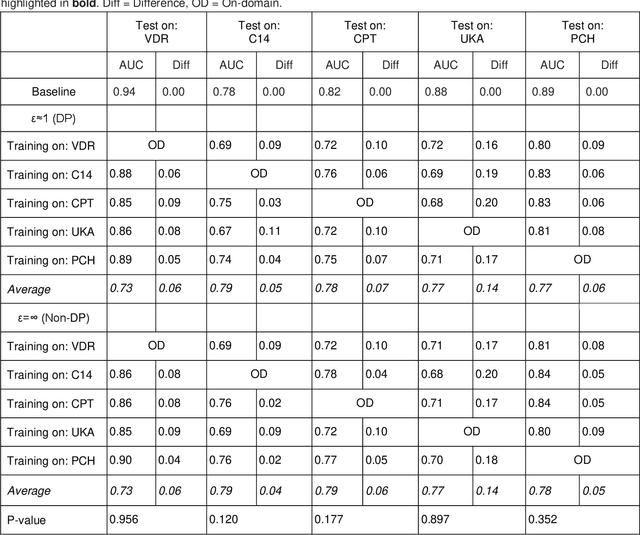
Developing robust and effective artificial intelligence (AI) models in medicine requires access to large amounts of patient data. The use of AI models solely trained on large multi-institutional datasets can help with this, yet the imperative to ensure data privacy remains, particularly as membership inference risks breaching patient confidentiality. As a proposed remedy, we advocate for the integration of differential privacy (DP). We specifically investigate the performance of models trained with DP as compared to models trained without DP on data from institutions that the model had not seen during its training (i.e., external validation) - the situation that is reflective of the clinical use of AI models. By leveraging more than 590,000 chest radiographs from five institutions, we evaluated the efficacy of DP-enhanced domain transfer (DP-DT) in diagnosing cardiomegaly, pleural effusion, pneumonia, atelectasis, and in identifying healthy subjects. We juxtaposed DP-DT with non-DP-DT and examined diagnostic accuracy and demographic fairness using the area under the receiver operating characteristic curve (AUC) as the main metric, as well as accuracy, sensitivity, and specificity. Our results show that DP-DT, even with exceptionally high privacy levels (epsilon around 1), performs comparably to non-DP-DT (P>0.119 across all domains). Furthermore, DP-DT led to marginal AUC differences - less than 1% - for nearly all subgroups, relative to non-DP-DT. Despite consistent evidence suggesting that DP models induce significant performance degradation for on-domain applications, we show that off-domain performance is almost not affected. Therefore, we ardently advocate for the adoption of DP in training diagnostic medical AI models, given its minimal impact on performance.
Leveraging gradient-derived metrics for data selection and valuation in differentially private training
May 05, 2023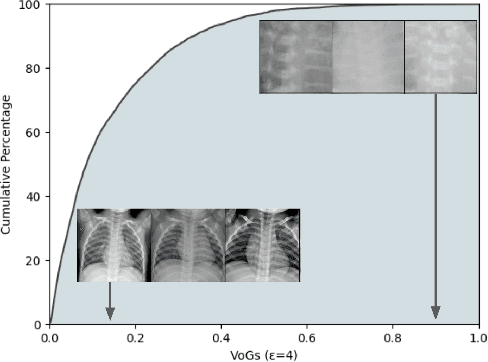
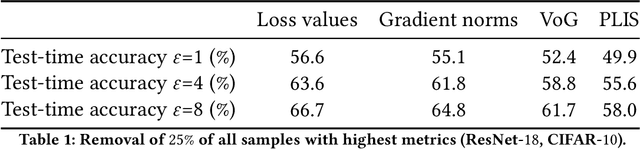
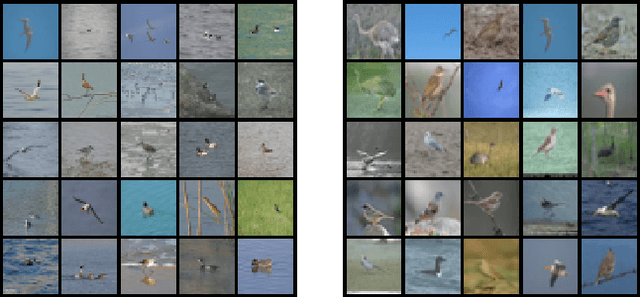
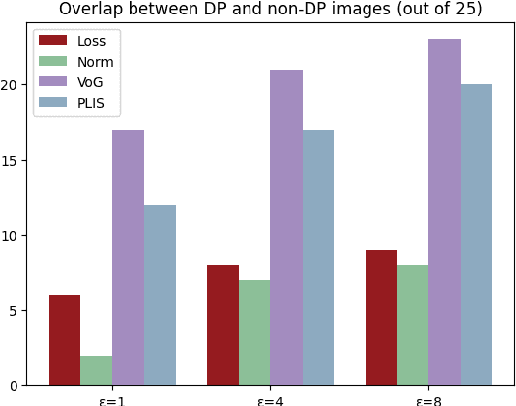
Obtaining high-quality data for collaborative training of machine learning models can be a challenging task due to A) the regulatory concerns and B) lack of incentive to participate. The first issue can be addressed through the use of privacy enhancing technologies (PET), one of the most frequently used one being differentially private (DP) training. The second challenge can be addressed by identifying which data points can be beneficial for model training and rewarding data owners for sharing this data. However, DP in deep learning typically adversely affects atypical (often informative) data samples, making it difficult to assess the usefulness of individual contributions. In this work we investigate how to leverage gradient information to identify training samples of interest in private training settings. We show that there exist techniques which are able to provide the clients with the tools for principled data selection even in strictest privacy settings.
Interactive and Explainable Region-guided Radiology Report Generation
Apr 17, 2023The automatic generation of radiology reports has the potential to assist radiologists in the time-consuming task of report writing. Existing methods generate the full report from image-level features, failing to explicitly focus on anatomical regions in the image. We propose a simple yet effective region-guided report generation model that detects anatomical regions and then describes individual, salient regions to form the final report. While previous methods generate reports without the possibility of human intervention and with limited explainability, our method opens up novel clinical use cases through additional interactive capabilities and introduces a high degree of transparency and explainability. Comprehensive experiments demonstrate our method's effectiveness in report generation, outperforming previous state-of-the-art models, and highlight its interactive capabilities. The code and checkpoints are available at https://github.com/ttanida/rgrg .
Robust Detection Outcome: A Metric for Pathology Detection in Medical Images
Mar 03, 2023Detection of pathologies is a fundamental task in medical imaging and the evaluation of algorithms that can perform this task automatically is crucial. However, current object detection metrics for natural images do not reflect the specific clinical requirements in pathology detection sufficiently. To tackle this problem, we propose Robust Detection Outcome (RoDeO); a novel metric for evaluating algorithms for pathology detection in medical images, especially in chest X-rays. RoDeO evaluates different errors directly and individually, and reflects clinical needs better than current metrics. Extensive evaluation on the ChestX-ray8 dataset shows the superiority of our metrics compared to existing ones. We released the code at https://github.com/FeliMe/RoDeO and published RoDeO as pip package (rodeometric).
Unsupervised Pathology Detection: A Deep Dive Into the State of the Art
Mar 01, 2023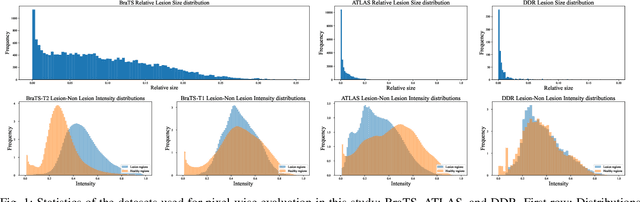
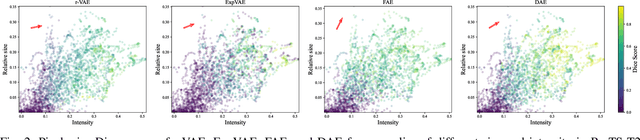
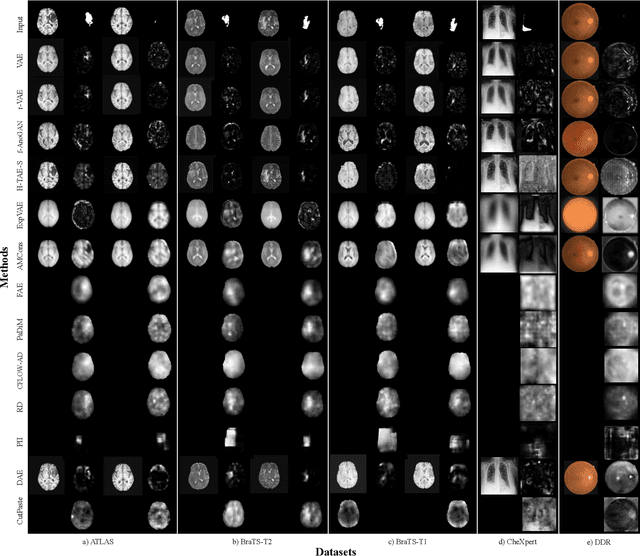
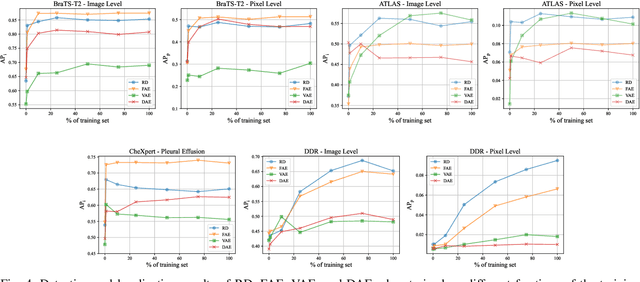
Deep unsupervised approaches are gathering increased attention for applications such as pathology detection and segmentation in medical images since they promise to alleviate the need for large labeled datasets and are more generalizable than their supervised counterparts in detecting any kind of rare pathology. As the Unsupervised Anomaly Detection (UAD) literature continuously grows and new paradigms emerge, it is vital to continuously evaluate and benchmark new methods in a common framework, in order to reassess the state-of-the-art (SOTA) and identify promising research directions. To this end, we evaluate a diverse selection of cutting-edge UAD methods on multiple medical datasets, comparing them against the established SOTA in UAD for brain MRI. Our experiments demonstrate that newly developed feature-modeling methods from the industrial and medical literature achieve increased performance compared to previous work and set the new SOTA in a variety of modalities and datasets. Additionally, we show that such methods are capable of benefiting from recently developed self-supervised pre-training algorithms, further increasing their performance. Finally, we perform a series of experiments in order to gain further insights into some unique characteristics of selected models and datasets. Our code can be found under https://github.com/iolag/UPD_study/.
Private, fair and accurate: Training large-scale, privacy-preserving AI models in radiology
Feb 03, 2023Artificial intelligence (AI) models are increasingly used in the medical domain. However, as medical data is highly sensitive, special precautions to ensure the protection of said data are required. The gold standard for privacy preservation is the introduction of differential privacy (DP) to model training. However, prior work has shown that DP has negative implications on model accuracy and fairness. Therefore, the purpose of this study is to demonstrate that the privacy-preserving training of AI models for chest radiograph diagnosis is possible with high accuracy and fairness compared to non-private training. N=193,311 high quality clinical chest radiographs were retrospectively collected and manually labeled by experienced radiologists, who assigned one or more of the following diagnoses: cardiomegaly, congestion, pleural effusion, pneumonic infiltration and atelectasis, to each side (where applicable). The non-private AI models were compared with privacy-preserving (DP) models with respect to privacy-utility trade-offs (measured as area under the receiver-operator-characteristic curve (AUROC)), and privacy-fairness trade-offs (measured as Pearson-R or Statistical Parity Difference). The non-private AI model achieved an average AUROC score of 0.90 over all labels, whereas the DP AI model with a privacy budget of epsilon=7.89 resulted in an AUROC of 0.87, i.e., a mere 2.6% performance decrease compared to non-private training. The privacy-preserving training of diagnostic AI models can achieve high performance with a small penalty on model accuracy and does not amplify discrimination against age, sex or co-morbidity. We thus encourage practitioners to integrate state-of-the-art privacy-preserving techniques into medical AI model development.
Equivariant Differentially Private Deep Learning
Jan 30, 2023The formal privacy guarantee provided by Differential Privacy (DP) bounds the leakage of sensitive information from deep learning models. In practice, however, this comes at a severe computation and accuracy cost. The recently established state of the art (SOTA) results in image classification under DP are due to the use of heavy data augmentation and large batch sizes, leading to a drastically increased computation overhead. In this work, we propose to use more efficient models with improved feature quality by introducing steerable equivariant convolutional networks for DP training. We demonstrate that our models are able to outperform the current SOTA performance on CIFAR-10 by up to $9\%$ across different $\varepsilon$-values while reducing the number of model parameters by a factor of $35$ and decreasing the computation time by more than $90 \%$. Our results are a large step towards efficient model architectures that make optimal use of their parameters and bridge the privacy-utility gap between private and non-private deep learning for computer vision.
How Do Input Attributes Impact the Privacy Loss in Differential Privacy?
Nov 18, 2022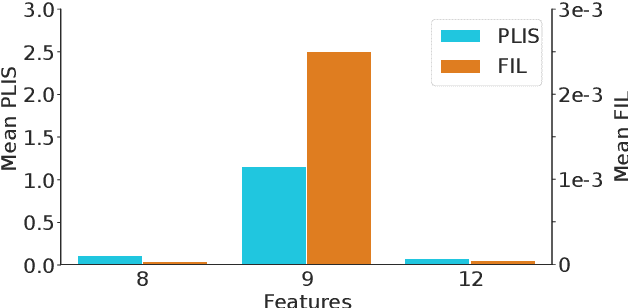

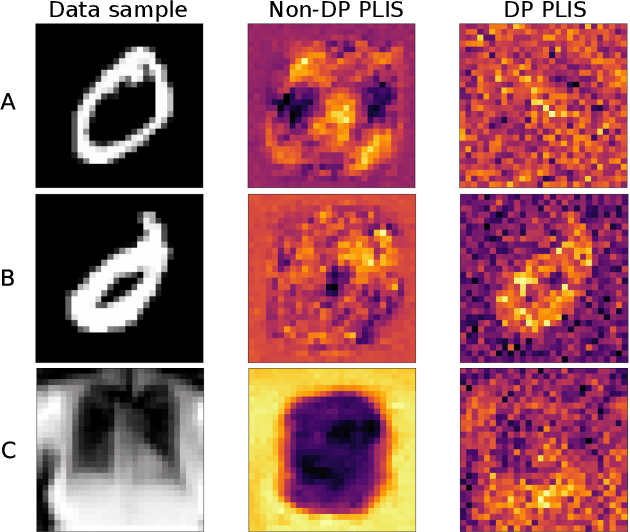
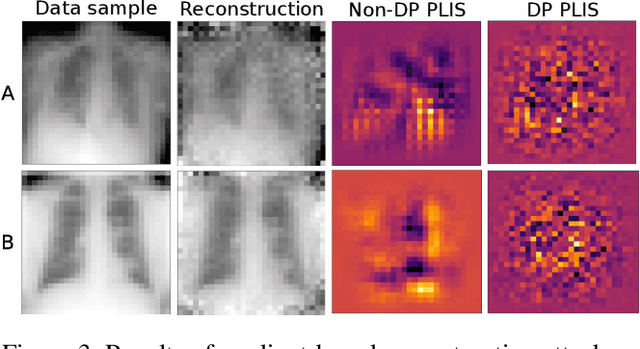
Differential privacy (DP) is typically formulated as a worst-case privacy guarantee over all individuals in a database. More recently, extensions to individual subjects or their attributes, have been introduced. Under the individual/per-instance DP interpretation, we study the connection between the per-subject gradient norm in DP neural networks and individual privacy loss and introduce a novel metric termed the Privacy Loss-Input Susceptibility (PLIS), which allows one to apportion the subject's privacy loss to their input attributes. We experimentally show how this enables the identification of sensitive attributes and of subjects at high risk of data reconstruction.