 Add to Chrome
 Add to Firefox
 Add to Edge
Reconciling AI Performance and Data Reconstruction Resilience for Medical Imaging
Dec 05, 2023
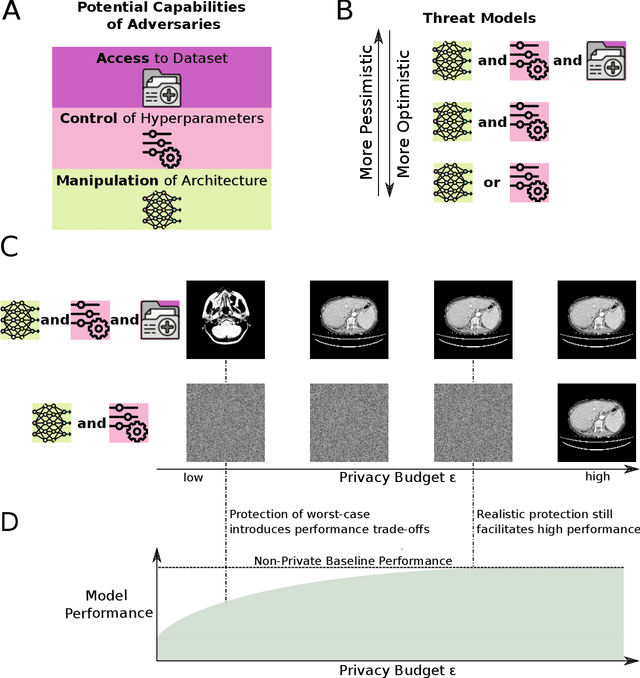
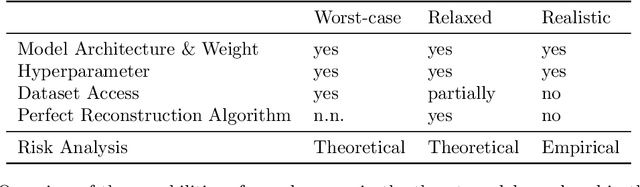
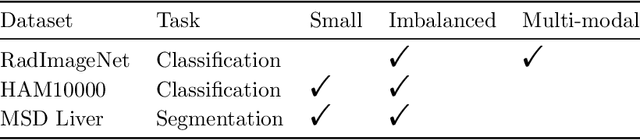
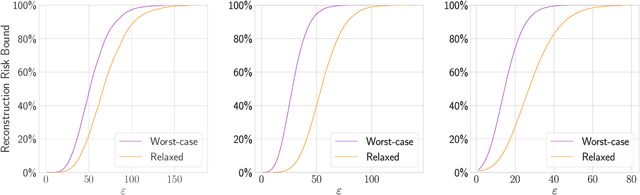
Artificial Intelligence (AI) models are vulnerable to information leakage of their training data, which can be highly sensitive, for example in medical imaging. Privacy Enhancing Technologies (PETs), such as Differential Privacy (DP), aim to circumvent these susceptibilities. DP is the strongest possible protection for training models while bounding the risks of inferring the inclusion of training samples or reconstructing the original data. DP achieves this by setting a quantifiable privacy budget. Although a lower budget decreases the risk of information leakage, it typically also reduces the performance of such models. This imposes a trade-off between robust performance and stringent privacy. Additionally, the interpretation of a privacy budget remains abstract and challenging to contextualize. In this study, we contrast the performance of AI models at various privacy budgets against both, theoretical risk bounds and empirical success of reconstruction attacks. We show that using very large privacy budgets can render reconstruction attacks impossible, while drops in performance are negligible. We thus conclude that not using DP -- at all -- is negligent when applying AI models to sensitive data. We deem those results to lie a foundation for further debates on striking a balance between privacy risks and model performance.

SoK: Memorisation in machine learning
Nov 06, 2023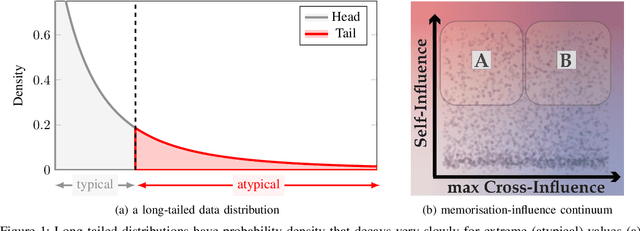
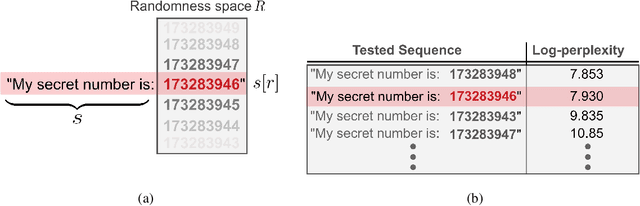
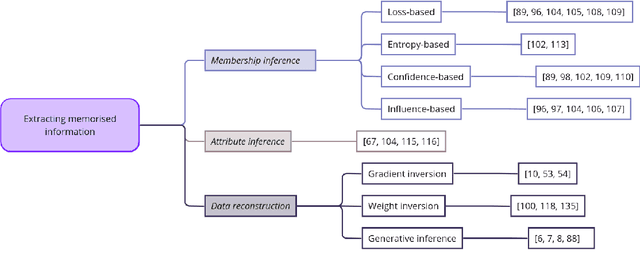
Quantifying the impact of individual data samples on machine learning models is an open research problem. This is particularly relevant when complex and high-dimensional relationships have to be learned from a limited sample of the data generating distribution, such as in deep learning. It was previously shown that, in these cases, models rely not only on extracting patterns which are helpful for generalisation, but also seem to be required to incorporate some of the training data more or less as is, in a process often termed memorisation. This raises the question: if some memorisation is a requirement for effective learning, what are its privacy implications? In this work we unify a broad range of previous definitions and perspectives on memorisation in ML, discuss their interplay with model generalisation and their implications of these phenomena on data privacy. Moreover, we systematise methods allowing practitioners to detect the occurrence of memorisation or quantify it and contextualise our findings in a broad range of ML learning settings. Finally, we discuss memorisation in the context of privacy attacks, differential privacy (DP) and adversarial actors.
Propagation and Attribution of Uncertainty in Medical Imaging Pipelines
Sep 28, 2023Uncertainty estimation, which provides a means of building explainable neural networks for medical imaging applications, have mostly been studied for single deep learning models that focus on a specific task. In this paper, we propose a method to propagate uncertainty through cascades of deep learning models in medical imaging pipelines. This allows us to aggregate the uncertainty in later stages of the pipeline and to obtain a joint uncertainty measure for the predictions of later models. Additionally, we can separately report contributions of the aleatoric, data-based, uncertainty of every component in the pipeline. We demonstrate the utility of our method on a realistic imaging pipeline that reconstructs undersampled brain and knee magnetic resonance (MR) images and subsequently predicts quantitative information from the images, such as the brain volume, or knee side or patient's sex. We quantitatively show that the propagated uncertainty is correlated with input uncertainty and compare the proportions of contributions of pipeline stages to the joint uncertainty measure.
(Predictable) Performance Bias in Unsupervised Anomaly Detection
Sep 25, 2023
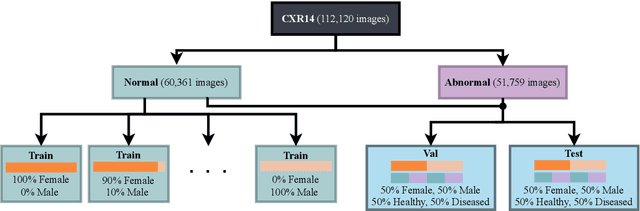

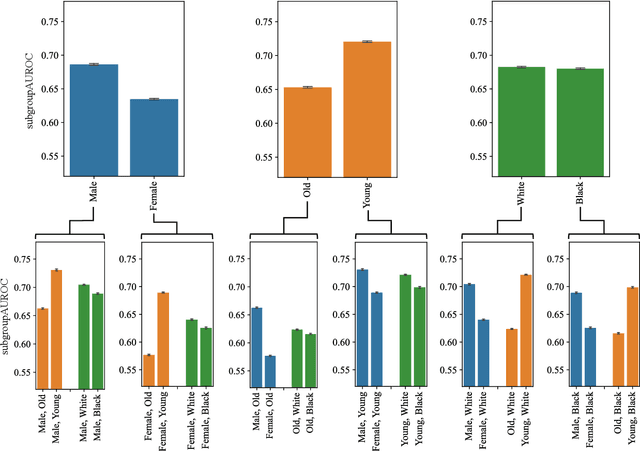
Background: With the ever-increasing amount of medical imaging data, the demand for algorithms to assist clinicians has amplified. Unsupervised anomaly detection (UAD) models promise to aid in the crucial first step of disease detection. While previous studies have thoroughly explored fairness in supervised models in healthcare, for UAD, this has so far been unexplored. Methods: In this study, we evaluated how dataset composition regarding subgroups manifests in disparate performance of UAD models along multiple protected variables on three large-scale publicly available chest X-ray datasets. Our experiments were validated using two state-of-the-art UAD models for medical images. Finally, we introduced a novel subgroup-AUROC (sAUROC) metric, which aids in quantifying fairness in machine learning. Findings: Our experiments revealed empirical "fairness laws" (similar to "scaling laws" for Transformers) for training-dataset composition: Linear relationships between anomaly detection performance within a subpopulation and its representation in the training data. Our study further revealed performance disparities, even in the case of balanced training data, and compound effects that exacerbate the drop in performance for subjects associated with multiple adversely affected groups. Interpretation: Our study quantified the disparate performance of UAD models against certain demographic subgroups. Importantly, we showed that this unfairness cannot be mitigated by balanced representation alone. Instead, the representation of some subgroups seems harder to learn by UAD models than that of others. The empirical fairness laws discovered in our study make disparate performance in UAD models easier to estimate and aid in determining the most desirable dataset composition.
MAD: Modality Agnostic Distance Measure for Image Registration
Sep 06, 2023Multi-modal image registration is a crucial pre-processing step in many medical applications. However, it is a challenging task due to the complex intensity relationships between different imaging modalities, which can result in large discrepancy in image appearance. The success of multi-modal image registration, whether it is conventional or learning based, is predicated upon the choice of an appropriate distance (or similarity) measure. Particularly, deep learning registration algorithms lack in accuracy or even fail completely when attempting to register data from an "unseen" modality. In this work, we present Modality Agnostic Distance (MAD), a deep image distance}] measure that utilises random convolutions to learn the inherent geometry of the images while being robust to large appearance changes. Random convolutions are geometry-preserving modules which we use to simulate an infinite number of synthetic modalities alleviating the need for aligned paired data during training. We can therefore train MAD on a mono-modal dataset and successfully apply it to a multi-modal dataset. We demonstrate that not only can MAD affinely register multi-modal images successfully, but it has also a larger capture range than traditional measures such as Mutual Information and Normalised Gradient Fields.
Anatomy-Driven Pathology Detection on Chest X-rays
Sep 05, 2023


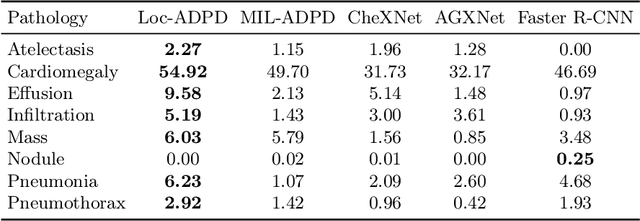
Pathology detection and delineation enables the automatic interpretation of medical scans such as chest X-rays while providing a high level of explainability to support radiologists in making informed decisions. However, annotating pathology bounding boxes is a time-consuming task such that large public datasets for this purpose are scarce. Current approaches thus use weakly supervised object detection to learn the (rough) localization of pathologies from image-level annotations, which is however limited in performance due to the lack of bounding box supervision. We therefore propose anatomy-driven pathology detection (ADPD), which uses easy-to-annotate bounding boxes of anatomical regions as proxies for pathologies. We study two training approaches: supervised training using anatomy-level pathology labels and multiple instance learning (MIL) with image-level pathology labels. Our results show that our anatomy-level training approach outperforms weakly supervised methods and fully supervised detection with limited training samples, and our MIL approach is competitive with both baseline approaches, therefore demonstrating the potential of our approach.
Bias-Aware Minimisation: Understanding and Mitigating Estimator Bias in Private SGD
Aug 23, 2023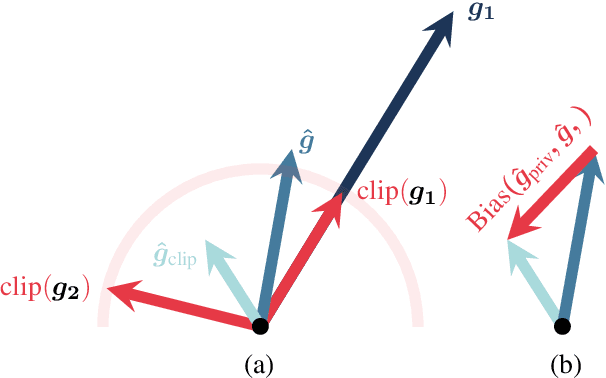
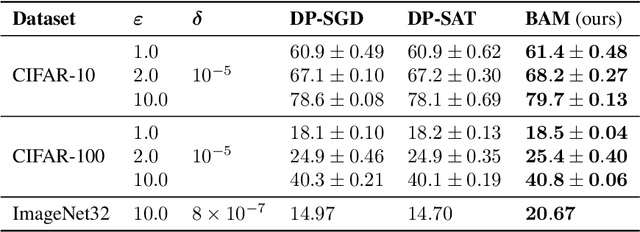
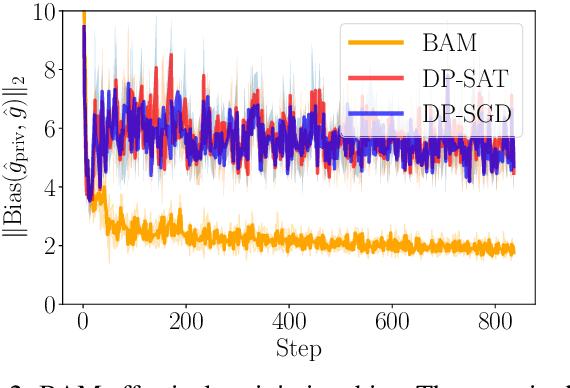
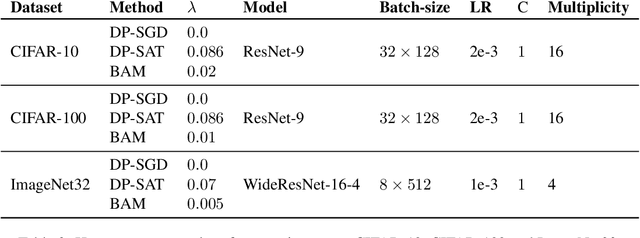
Differentially private SGD (DP-SGD) holds the promise of enabling the safe and responsible application of machine learning to sensitive datasets. However, DP-SGD only provides a biased, noisy estimate of a mini-batch gradient. This renders optimisation steps less effective and limits model utility as a result. With this work, we show a connection between per-sample gradient norms and the estimation bias of the private gradient oracle used in DP-SGD. Here, we propose Bias-Aware Minimisation (BAM) that allows for the provable reduction of private gradient estimator bias. We show how to efficiently compute quantities needed for BAM to scale to large neural networks and highlight similarities to closely related methods such as Sharpness-Aware Minimisation. Finally, we provide empirical evidence that BAM not only reduces bias but also substantially improves privacy-utility trade-offs on the CIFAR-10, CIFAR-100, and ImageNet-32 datasets.
Explainable 2D Vision Models for 3D Medical Data
Jul 13, 2023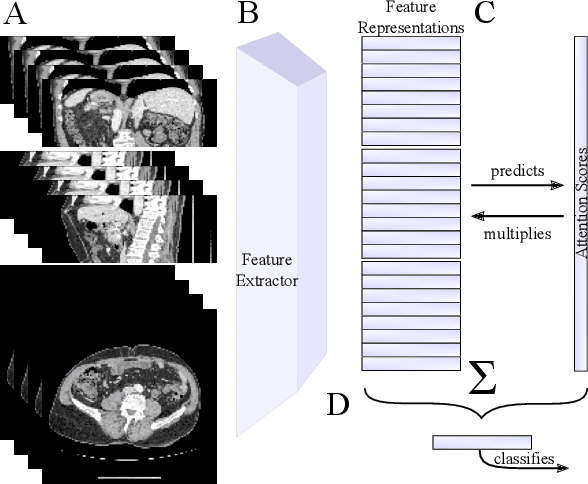
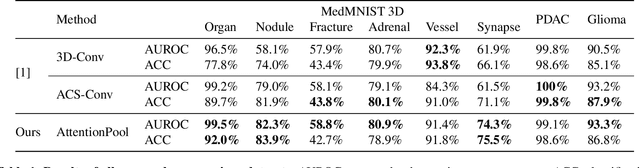
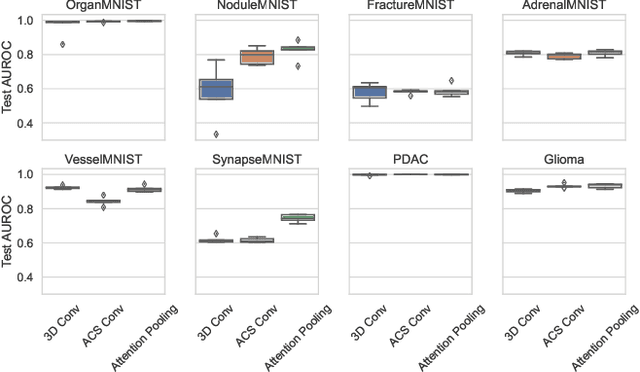
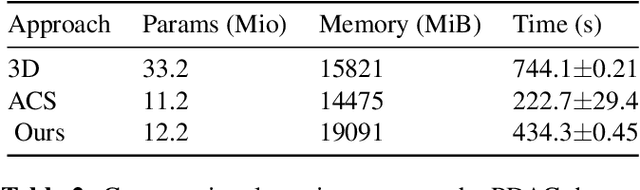
Training Artificial Intelligence (AI) models on three-dimensional image data presents unique challenges compared to the two-dimensional case: Firstly, the computational resources are significantly higher, and secondly, the availability of large pretraining datasets is often limited, impeding training success. In this study, we propose a simple approach of adapting 2D networks with an intermediate feature representation for processing 3D volumes. Our method involves sequentially applying these networks to slices of a 3D volume from all orientations. Subsequently, a feature reduction module combines the extracted slice features into a single representation, which is then used for classification. We evaluate our approach on medical classification benchmarks and a real-world clinical dataset, demonstrating comparable results to existing methods. Furthermore, by employing attention pooling as a feature reduction module we obtain weighted importance values for each slice during the forward pass. We show that slices deemed important by our approach allow the inspection of the basis of a model's prediction.
Privacy-Utility Trade-offs in Neural Networks for Medical Population Graphs: Insights from Differential Privacy and Graph Structure
Jul 13, 2023We initiate an empirical investigation into differentially private graph neural networks on population graphs from the medical domain by examining privacy-utility trade-offs at different privacy levels on both real-world and synthetic datasets and performing auditing through membership inference attacks. Our findings highlight the potential and the challenges of this specific DP application area. Moreover, we find evidence that the underlying graph structure constitutes a potential factor for larger performance gaps by showing a correlation between the degree of graph homophily and the accuracy of the trained model.
Extended Graph Assessment Metrics for Graph Neural Networks
Jul 13, 2023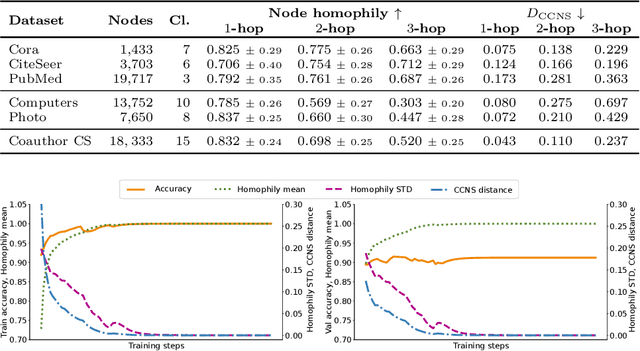
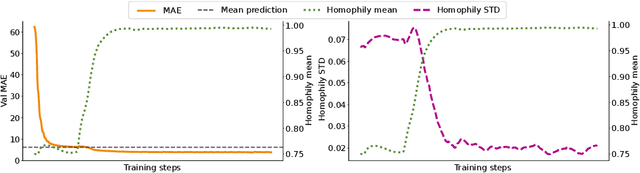
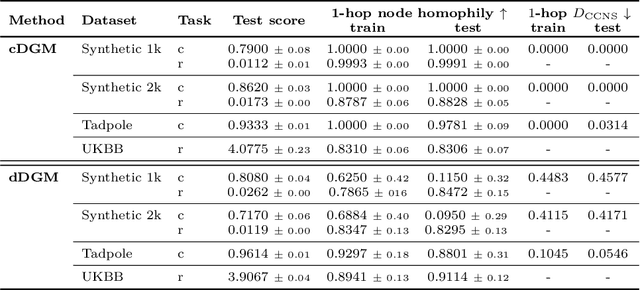
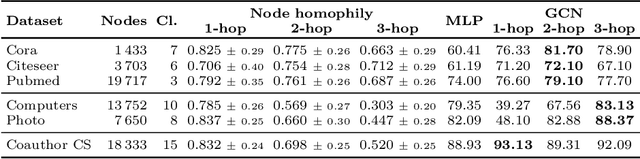
When re-structuring patient cohorts into so-called population graphs, initially independent data points can be incorporated into one interconnected graph structure. This population graph can then be used for medical downstream tasks using graph neural networks (GNNs). The construction of a suitable graph structure is a challenging step in the learning pipeline that can have severe impact on model performance. To this end, different graph assessment metrics have been introduced to evaluate graph structures. However, these metrics are limited to classification tasks and discrete adjacency matrices, only covering a small subset of real-world applications. In this work, we introduce extended graph assessment metrics (GAMs) for regression tasks and continuous adjacency matrices. We focus on two GAMs in specific: \textit{homophily} and \textit{cross-class neighbourhood similarity} (CCNS). We extend the notion of GAMs to more than one hop, define homophily for regression tasks, as well as continuous adjacency matrices, and propose a light-weight CCNS distance for discrete and continuous adjacency matrices. We show the correlation of these metrics with model performance on different medical population graphs and under different learning settings.