 Add to Chrome
 Add to Firefox
 Add to Edge
Optimal Rates for Differentially Private Hypothesis Testing with E-values
May 27, 2026
E-values have attracted considerable interest in recent years as flexible tools for enabling anytime-valid and adaptive data analysis. Hypothesis testing is at the core of many of these applications, which can often involve private or sensitive data. In this work, we answer a simple but important question: given two distributions $\mathbb{P}$ and $\mathbb{Q}$, what is the maximum achievable e-power when testing $X\sim \mathbb{P}^n$ against $X\sim\mathbb{Q}^n$ with e-values that satisfy $\varepsilon$-differential privacy? We characterize the optimal rate for this problem and provide an algorithm which matches it exactly. In the sequential setting, when observations arrive one-by-one and the analyst chooses when to halt, we give matching upper and lower bounds on the stopping times of any private e-process. Numerical experiments confirm the practicality of our algorithms, which require less data than the recently proposed DP-SPRT across a range of sequential testing problems and privacy levels.

Privately Estimating Monotone Statistics in Polynomial Time
May 27, 2026We study efficient differentially private algorithms for estimating monotone statistics, i.e., statistics that are monotone under the addition of new observations. The starting point for our investigation is subsample-and-aggregate: a classical paradigm that partitions the dataset into blocks, estimates the statistic on each block, and then privately aggregates the estimates.While practical and generically applicable, this approach is quite data-hungry. We improve upon this framework for the class of monotone statistics -- compared to subsample-and-aggregate, our algorithms save a factor of $t$ in sample complexity and pay a factor of $e^t$ in running time, where $t>0$ is a tunable parameter. We complement our results with a query-complexity lower bound, showing that our algorithms are essentially optimal for this task. As an application, we obtain improved results for private eigenvalue estimation, private loss estimation, and privately estimating a single parameter of a high-dimensional model, e.g., in linear regression.
Self-Improvement for Fast, High-Quality Plan Generation
May 05, 2026Generative models trained on synthetic plan data are a promising approach to generalized planning. Recent work has focused on finding any valid plan, rather than a high-quality solution. We address the challenge of producing high-quality plans, a computationally hard problem, in sub-exponential time. First, we demonstrate that, given optimal data, a decoder-only transformer can generate high-quality plans for unseen problem instances. Second, we show how to self-improve an initial model trained on sub-optimal data. Each round of self-improvement combines multiple model calls with graph search to generate improved plans, used for model fine-tuning. An experimental study on four domains: Blocksworld, Logistics, Labyrinth, and Sokoban, shows on average a 30% reduction in plan length over the source symbolic planner, with over 80% of plans being optimal, where the optimum is known. Plan quality is further improved by inference-time search. The model's latency scales sub-exponentially in contrast to the satisficing and optimal symbolic planners to which we compare. Together, these results suggest that self-improvement with generative models offers a scalable approach for high-quality plan generation.
Tukey Depth Mechanisms for Practical Private Mean Estimation
Feb 25, 2025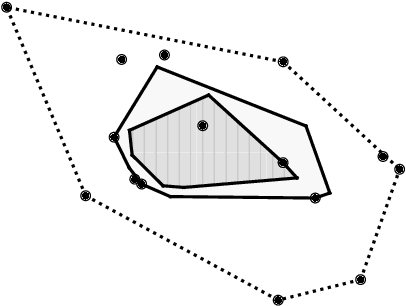
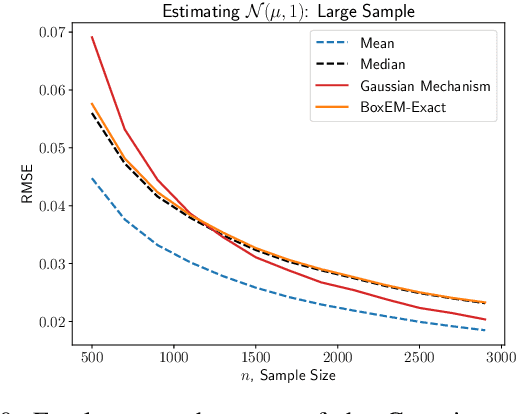
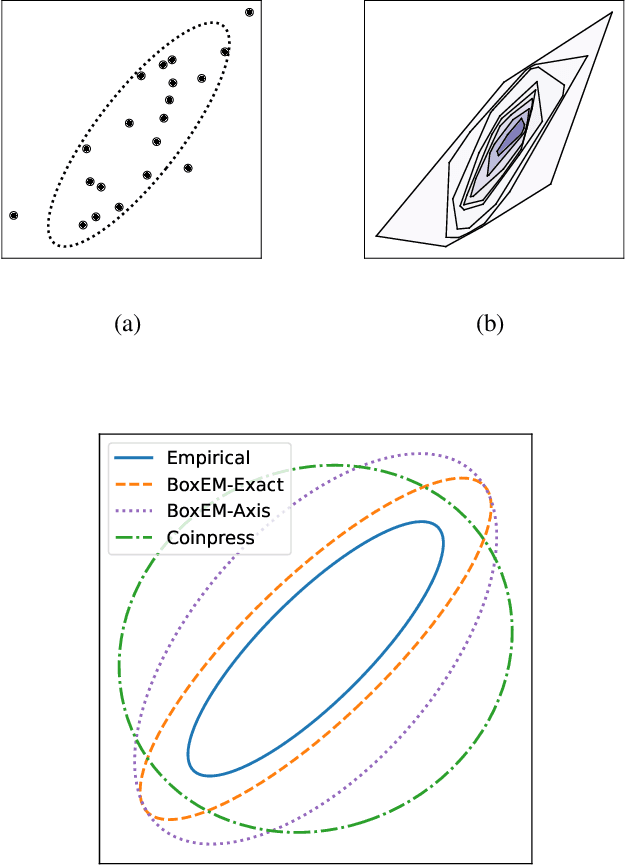
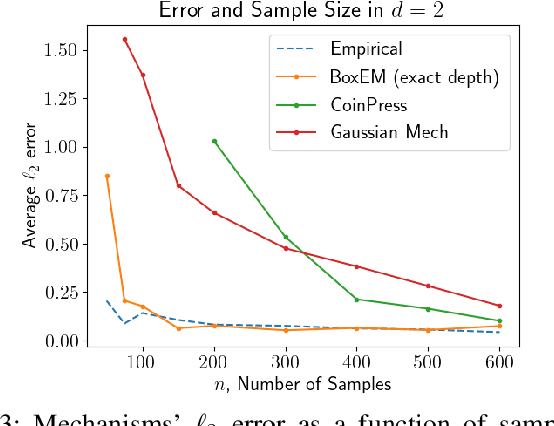
Mean estimation is a fundamental task in statistics and a focus within differentially private statistical estimation. While univariate methods based on the Gaussian mechanism are widely used in practice, more advanced techniques such as the exponential mechanism over quantiles offer robustness and improved performance, especially for small sample sizes. Tukey depth mechanisms carry these advantages to multivariate data, providing similar strong theoretical guarantees. However, practical implementations fall behind these theoretical developments. In this work, we take the first step to bridge this gap by implementing the (Restricted) Tukey Depth Mechanism, a theoretically optimal mean estimator for multivariate Gaussian distributions, yielding improved practical methods for private mean estimation. Our implementations enable the use of these mechanisms for small sample sizes or low-dimensional data. Additionally, we implement variants of these mechanisms that use approximate versions of Tukey depth, trading off accuracy for faster computation. We demonstrate their efficiency in practice, showing that they are viable options for modest dimensions. Given their strong accuracy and robustness guarantees, we contend that they are competitive approaches for mean estimation in this regime. We explore future directions for improving the computational efficiency of these algorithms by leveraging fast polytope volume approximation techniques, paving the way for more accurate private mean estimation in higher dimensions.
Insufficient Statistics Perturbation: Stable Estimators for Private Least Squares
Apr 23, 2024
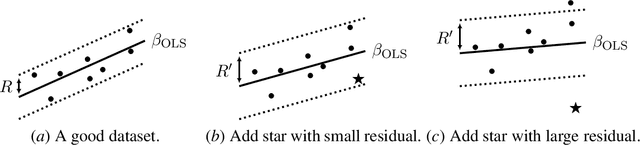

We present a sample- and time-efficient differentially private algorithm for ordinary least squares, with error that depends linearly on the dimension and is independent of the condition number of $X^\top X$, where $X$ is the design matrix. All prior private algorithms for this task require either $d^{3/2}$ examples, error growing polynomially with the condition number, or exponential time. Our near-optimal accuracy guarantee holds for any dataset with bounded statistical leverage and bounded residuals. Technically, we build on the approach of Brown et al. (2023) for private mean estimation, adding scaled noise to a carefully designed stable nonprivate estimator of the empirical regression vector.
Private Gradient Descent for Linear Regression: Tighter Error Bounds and Instance-Specific Uncertainty Estimation
Feb 21, 2024We provide an improved analysis of standard differentially private gradient descent for linear regression under the squared error loss. Under modest assumptions on the input, we characterize the distribution of the iterate at each time step. Our analysis leads to new results on the algorithm's accuracy: for a proper fixed choice of hyperparameters, the sample complexity depends only linearly on the dimension of the data. This matches the dimension-dependence of the (non-private) ordinary least squares estimator as well as that of recent private algorithms that rely on sophisticated adaptive gradient-clipping schemes (Varshney et al., 2022; Liu et al., 2023). Our analysis of the iterates' distribution also allows us to construct confidence intervals for the empirical optimizer which adapt automatically to the variance of the algorithm on a particular data set. We validate our theorems through experiments on synthetic data.
Metalearning with Very Few Samples Per Task
Dec 21, 2023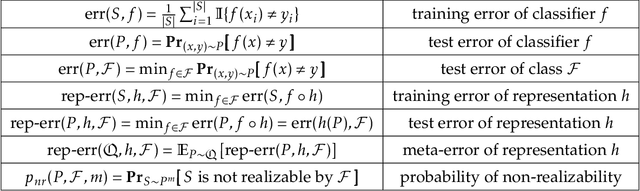
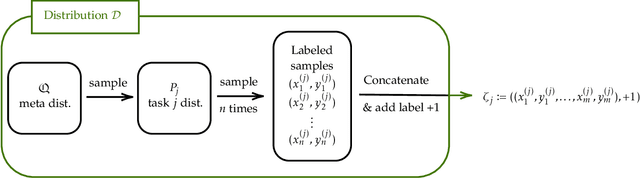
Metalearning and multitask learning are two frameworks for solving a group of related learning tasks more efficiently than we could hope to solve each of the individual tasks on their own. In multitask learning, we are given a fixed set of related learning tasks and need to output one accurate model per task, whereas in metalearning we are given tasks that are drawn i.i.d. from a metadistribution and need to output some common information that can be easily specialized to new, previously unseen tasks from the metadistribution. In this work, we consider a binary classification setting where tasks are related by a shared representation, that is, every task $P$ of interest can be solved by a classifier of the form $f_{P} \circ h$ where $h \in H$ is a map from features to some representation space that is shared across tasks, and $f_{P} \in F$ is a task-specific classifier from the representation space to labels. The main question we ask in this work is how much data do we need to metalearn a good representation? Here, the amount of data is measured in terms of both the number of tasks $t$ that we need to see and the number of samples $n$ per task. We focus on the regime where the number of samples per task is extremely small. Our main result shows that, in a distribution-free setting where the feature vectors are in $\mathbb{R}^d$, the representation is a linear map from $\mathbb{R}^d \to \mathbb{R}^k$, and the task-specific classifiers are halfspaces in $\mathbb{R}^k$, we can metalearn a representation with error $\varepsilon$ using just $n = k+2$ samples per task, and $d \cdot (1/\varepsilon)^{O(k)}$ tasks. Learning with so few samples per task is remarkable because metalearning would be impossible with $k+1$ samples per task, and because we cannot even hope to learn an accurate task-specific classifier with just $k+2$ samples per task.
A max-affine spline approximation of neural networks using the Legendre transform of a convex-concave representation
Jul 16, 2023This work presents a novel algorithm for transforming a neural network into a spline representation. Unlike previous work that required convex and piecewise-affine network operators to create a max-affine spline alternate form, this work relaxes this constraint. The only constraint is that the function be bounded and possess a well-define second derivative, although this was shown experimentally to not be strictly necessary. It can also be performed over the whole network rather than on each layer independently. As in previous work, this bridges the gap between neural networks and approximation theory but also enables the visualisation of network feature maps. Mathematical proof and experimental investigation of the technique is performed with approximation error and feature maps being extracted from a range of architectures, including convolutional neural networks.
Tiny Classifier Circuits: Evolving Accelerators for Tabular Data
Feb 28, 2023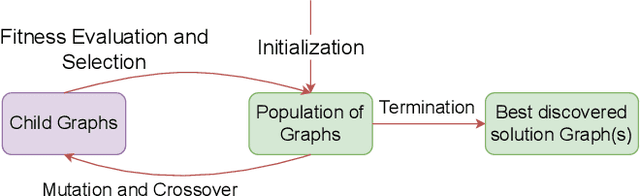
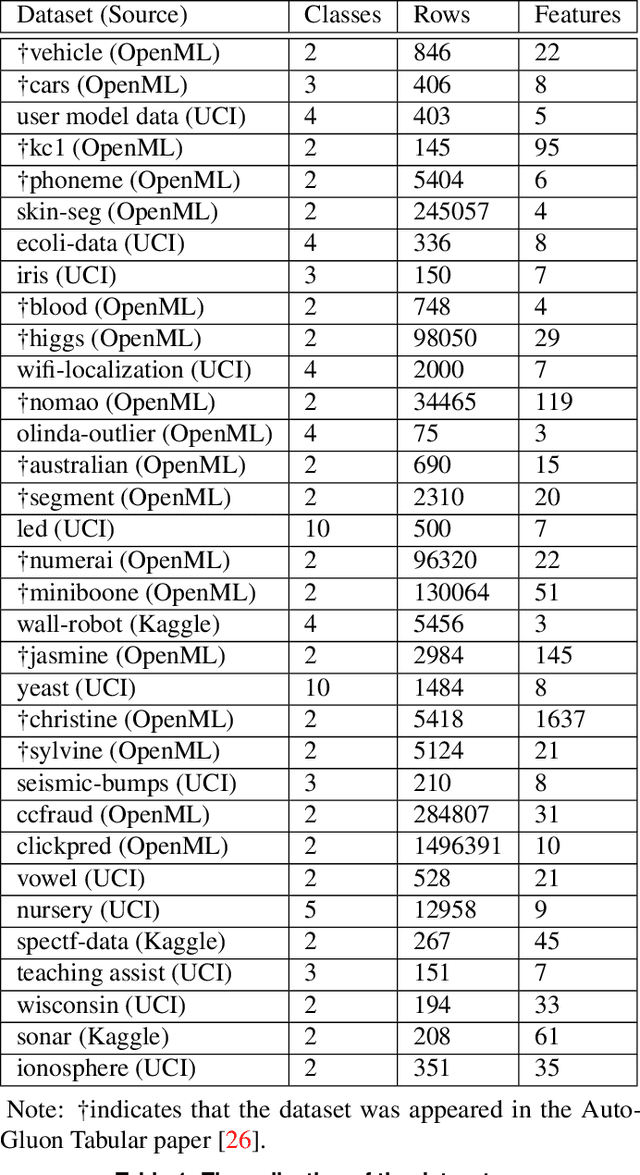
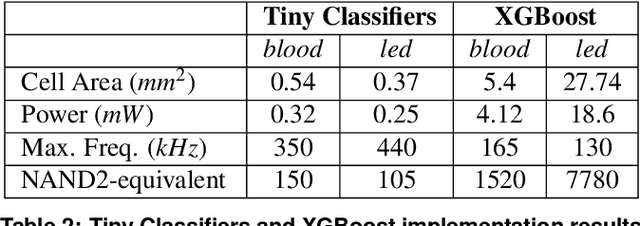
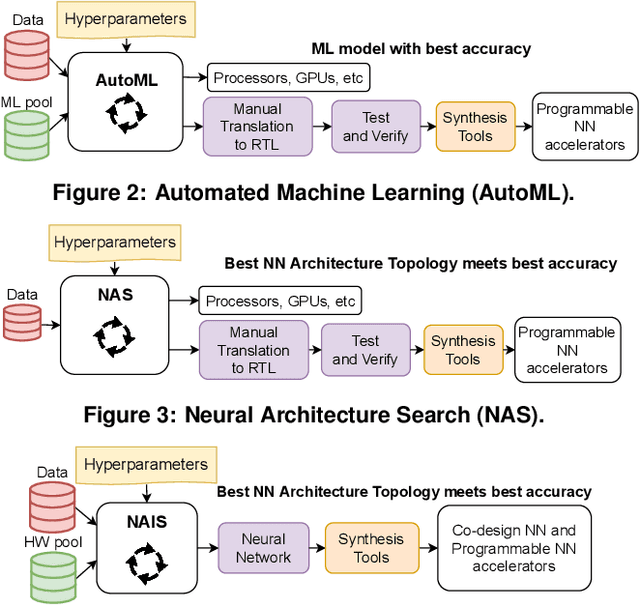
A typical machine learning (ML) development cycle for edge computing is to maximise the performance during model training and then minimise the memory/area footprint of the trained model for deployment on edge devices targeting CPUs, GPUs, microcontrollers, or custom hardware accelerators. This paper proposes a methodology for automatically generating predictor circuits for classification of tabular data with comparable prediction performance to conventional ML techniques while using substantially fewer hardware resources and power. The proposed methodology uses an evolutionary algorithm to search over the space of logic gates and automatically generates a classifier circuit with maximised training prediction accuracy. Classifier circuits are so tiny (i.e., consisting of no more than 300 logic gates) that they are called "Tiny Classifier" circuits, and can efficiently be implemented in ASIC or on an FPGA. We empirically evaluate the automatic Tiny Classifier circuit generation methodology or "Auto Tiny Classifiers" on a wide range of tabular datasets, and compare it against conventional ML techniques such as Amazon's AutoGluon, Google's TabNet and a neural search over Multi-Layer Perceptrons. Despite Tiny Classifiers being constrained to a few hundred logic gates, we observe no statistically significant difference in prediction performance in comparison to the best-performing ML baseline. When synthesised as a Silicon chip, Tiny Classifiers use 8-56x less area and 4-22x less power. When implemented as an ultra-low cost chip on a flexible substrate (i.e., FlexIC), they occupy 10-75x less area and consume 13-75x less power compared to the most hardware-efficient ML baseline. On an FPGA, Tiny Classifiers consume 3-11x fewer resources.
Fast, Sample-Efficient, Affine-Invariant Private Mean and Covariance Estimation for Subgaussian Distributions
Jan 28, 2023
We present a fast, differentially private algorithm for high-dimensional covariance-aware mean estimation with nearly optimal sample complexity. Only exponential-time estimators were previously known to achieve this guarantee. Given $n$ samples from a (sub-)Gaussian distribution with unknown mean $\mu$ and covariance $\Sigma$, our $(\varepsilon,\delta)$-differentially private estimator produces $\tilde{\mu}$ such that $\|\mu - \tilde{\mu}\|_{\Sigma} \leq \alpha$ as long as $n \gtrsim \tfrac d {\alpha^2} + \tfrac{d \sqrt{\log 1/\delta}}{\alpha \varepsilon}+\frac{d\log 1/\delta}{\varepsilon}$. The Mahalanobis error metric $\|\mu - \hat{\mu}\|_{\Sigma}$ measures the distance between $\hat \mu$ and $\mu$ relative to $\Sigma$; it characterizes the error of the sample mean. Our algorithm runs in time $\tilde{O}(nd^{\omega - 1} + nd/\varepsilon)$, where $\omega < 2.38$ is the matrix multiplication exponent. We adapt an exponential-time approach of Brown, Gaboardi, Smith, Ullman, and Zakynthinou (2021), giving efficient variants of stable mean and covariance estimation subroutines that also improve the sample complexity to the nearly optimal bound above. Our stable covariance estimator can be turned to private covariance estimation for unrestricted subgaussian distributions. With $n\gtrsim d^{3/2}$ samples, our estimate is accurate in spectral norm. This is the first such algorithm using $n= o(d^2)$ samples, answering an open question posed by Alabi et al. (2022). With $n\gtrsim d^2$ samples, our estimate is accurate in Frobenius norm. This leads to a fast, nearly optimal algorithm for private learning of unrestricted Gaussian distributions in TV distance. Duchi, Haque, and Kuditipudi (2023) obtained similar results independently and concurrently.