 Add to Chrome
 Add to Firefox
 Add to Edge
Exact Schur-Sylvester Dimensionality Reductions for Non-Smooth Stochastic Complexity and Manifold Sampling
Jun 22, 2026
The exact computation of the Normalized Maximum Likelihood (NML) codelength for regular non-smooth estimators (e.g., Lasso) has been historically limited by the cubic scaling walls of manifold-constrained projection and volume integration. At each step of the geometric Propose-and-Project Metropolis--Hastings (PPMH) sampler, evaluating the projection operator requires inverting an $(N+k) \times (N+k)$ generalized KKT matrix, while calculating the volume factor requires the determinant of an $(N-k) \times (N-k)$ Gram matrix. This paper presents an exact, mathematically equivalent formulation that bypasses both bottlenecks by utilizing the block Schur complement and Sylvester's determinant identity. We prove that the computational complexity of both operations collapses from $\mathcal{O}(N^3)$ to $\mathcal{O}(k^3 + N^2 k)$ per step. We generalize this reduction to Sparse Support Vector Machines (SVMs), Elastic Net, and Group Lasso. Finally, we provide a rigorous numerical stability analysis and evaluate the sampler's efficiency using the Effective Sample Size (ESS) per second. Our empirical benchmarks on high-dimensional datasets confirm a constant speedup exceeding $14{,}100\times$ while maintaining double-precision numerical equivalence, rendering exact non-smooth NML estimation highly tractable for large-scale statistical inference.

Learning the Geometry of Data: A Mathematical Review of Shape Space Analysis
Jun 15, 2026A central objective of machine learning is to identify structure and patterns in data. Advances in data acquisition have increasingly produced datasets whose observations possess rich geometric form, giving rise to shape spaces that encode variability in object geometry. Such datasets arise across a wide range of disciplines, including biology, medicine, anthropology, and computer vision, where subtle geometric differences often carry important scientific information. Traditional machine learning methods, however, are frequently ill-equipped to account for the nonlinear geometric structure underlying these data. This survey synthesizes a rapidly growing body of work on shape space analysis, which provides a mathematical and computational framework for the study of geometric data. Drawing on ideas from differential geometry, statistics, and machine learning, we organize the literature around a common analytical pipeline: shape representation and parameterization, the rigorous construction of robust geodesic metrics, statistical analysis on shape spaces, and geometry-aware learning methods. We discuss how these tools enable the characterization of shape variability, the comparison of geometric objects, and the analysis of structural trajectories across populations and time. To illustrate the breadth of the field, we highlight applications spanning multiple scales of biological organization, including studies of subcellular morphology and primate tooth evolution. Across these and many other domains, researchers face common challenges arising from complex, nonlinear, and often unaligned geometric variation. The review concludes by identifying key theoretical and computational challenges, as well as emerging opportunities driven by increasingly large and diverse geometric datasets.
Resolution-free neural surrogates for geometric parameterization and mapping with spatially varying fields
May 28, 2026Many imaging problems require computing spatial transformations induced by spatially varying intensity, feature, or density fields. Canonical examples include distortion correction, deformable image registration, atlas-based segmentation, and deformation-driven image analysis. These tasks can be formulated as geometric mapping problems in which the transformation is constrained to preserve local structure, control boundary behavior, or regulate angular distortion. Such formulations typically lead to variational models, diffusion processes, or elliptic partial differential equations. However, repeatedly solving high-resolution systems becomes computationally expensive when the underlying parameter fields vary across instances. In this work, we propose a resolution-free neural surrogate for geometric parameterization and mapping problems. Given a spatially varying parameter field $p:Ω\to\mathbb{R}^m$ and query locations $\{x_i\}_{i=1}^N\subsetΩ$, the model predicts mapped locations $\{u(x_i)\}_{i=1}^N$ on arbitrary structured or unstructured point sets. To avoid dependence on a fixed grid, we use a multi-resolution geometric encoding strategy that conditions the network on coordinate-augmented samples of the parameter field. The model is trained without labeled solution data by enforcing geometry-aware constraints derived from variational energies, diffusion-based density equalization, and quasi-conformal theory. Experimental results on quasi-conformal mapping and density-equalizing mapping problems are presented to demonstrate the effectiveness of our proposed method.
The Normalized Maximum Likelihood for Regular Non-Smooth Models: Measure-Theoretic Foundations and Geometric Sampling
May 23, 2026The Normalized Maximum Likelihood (NML) codelength, or stochastic complexity, represents a principled criterion for universal coding. While recent coarea-based formulations provided a calculation method for smooth models, this framework collapses for the non-smooth estimators ubiquitous in modern machine learning (e.g., Lasso, Sparse SVMs). In this work, we provide a rigorous framework for computing the NML for regular path-differentiable Lipschitz (PDL) estimators. By applying classical geometric measure theory and bridging the coarea formula with conservative Jacobians, we prove that the stochastic complexity for non-smooth models is well-posed and theoretically consistent with the outputs of modern Automatic Differentiation. To compute this quantity exactly, we introduce the Propose-and-Project Metropolis-Hastings (PDL-PPMH) sampler, a geometric MCMC algorithm capable of traversing the non-differentiable level sets of the maximum likelihood estimator. We theoretically justify its components, including a stochastic tangent space proposal and a provably convergent non-smooth projection solver. We demonstrate the method's robustness by sampling from a high-dimensional Lasso posterior ($P=2000$), while simultaneously quantifying the computational scaling that governs the trade-off between exactness and mixing time. Crucially, we empirically demonstrate that our exact NML criterion provides a highly data-efficient alternative to cross-validation, achieving statistically indistinguishable predictive optima without requiring data splitting. Altogether, our work paves the way for the theoretical analysis of the NML codelength for regular non-smooth models.
PhyloSDF: Phylogenetically-Conditioned Neural Generation of 3D Skull Morphology via Residual Flow Matching
Apr 28, 2026Generating novel, biologically plausible three-dimensional morphological structures is a fundamental challenge in computational evolutionary biology, hampered by extreme data scarcity and the requirement that generated shapes respect phylogenetic relationships among species. In this work, we present PhyloSDF, a phylogenetically-conditioned neural generative model for 3D biological morphology that integrates two innovations: (1) a DeepSDF auto-decoder regularized by a novel Phylogenetic Consistency Loss that structures the latent space to correlate with evolutionary distances (Pearson $r=0.993$); (2) a Residual Conditional Flow Matching (Residual CFM) architecture that factorizes generation into analytic species-centroid lookup and learned residual prediction, enabling generation from as few as ~4 specimens per species. We evaluate PhyloSDF on 100 micro-CT-scanned skulls of Darwin's Finches and their relatives across 24 species. The model generates novel meshes achieving 88-129% of real intra-species variation at the code level, with all 180 generated meshes verified as non-memorized. Residual CFM surpasses denoising diffusion (which fails entirely at this scale), standard flow matching (which mode-collapses to 3-6% variation), and a Gaussian mixture baseline in both fidelity (Chamfer Distance 0.00181 vs. 0.00190) and morphometric Fréchet distance (10,641 vs. 13,322). Leave-one-species-out experiments across 18 species demonstrate phylogenetic extrapolation capability, and smooth latent interpolations produce biologically plausible ancestral skull reconstructions.
Learning-based density-equalizing map
Jun 10, 2025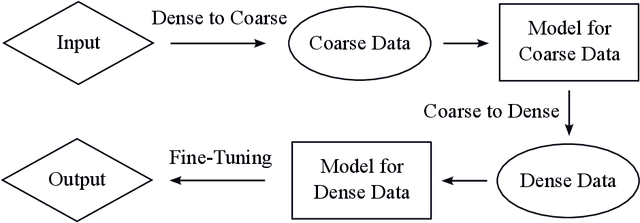
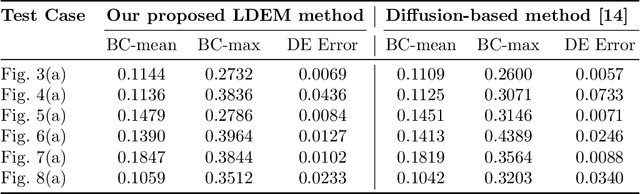
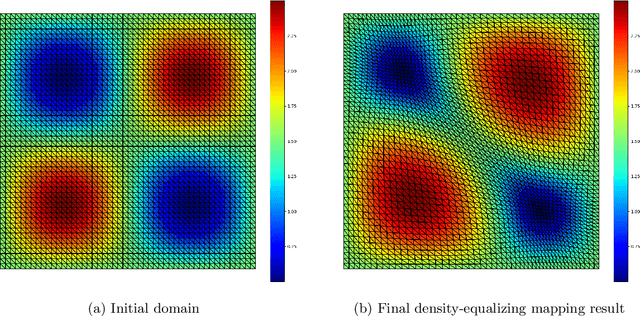

Density-equalizing map (DEM) serves as a powerful technique for creating shape deformations with the area changes reflecting an underlying density function. In recent decades, DEM has found widespread applications in fields such as data visualization, geometry processing, and medical imaging. Traditional approaches to DEM primarily rely on iterative numerical solvers for diffusion equations or optimization-based methods that minimize handcrafted energy functionals. However, these conventional techniques often face several challenges: they may suffer from limited accuracy, produce overlapping artifacts in extreme cases, and require substantial algorithmic redesign when extended from 2D to 3D, due to the derivative-dependent nature of their energy formulations. In this work, we propose a novel learning-based density-equalizing mapping framework (LDEM) using deep neural networks. Specifically, we introduce a loss function that enforces density uniformity and geometric regularity, and utilize a hierarchical approach to predict the transformations at both the coarse and dense levels. Our method demonstrates superior density-equalizing and bijectivity properties compared to prior methods for a wide range of simple and complex density distributions, and can be easily applied to surface remeshing with different effects. Also, it generalizes seamlessly from 2D to 3D domains without structural changes to the model architecture or loss formulation. Altogether, our work opens up new possibilities for scalable and robust computation of density-equalizing maps for practical applications.
Reactive Robot Navigation Using Quasi-conformal Mappings and Control Barrier Functions
Nov 22, 2024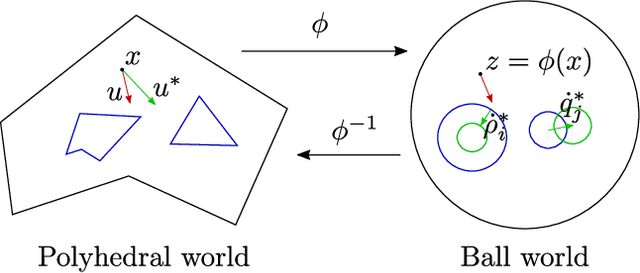
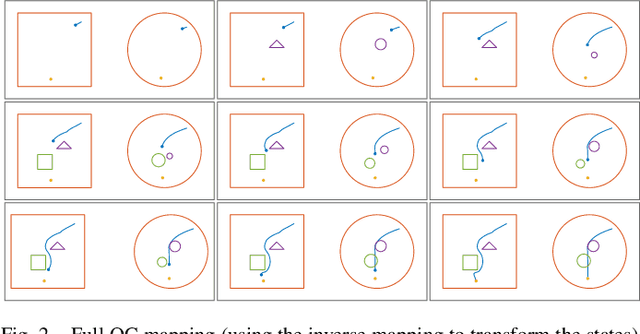
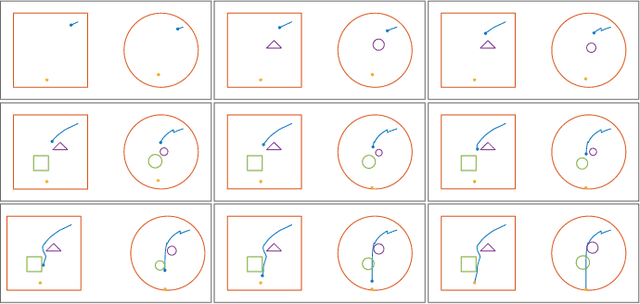
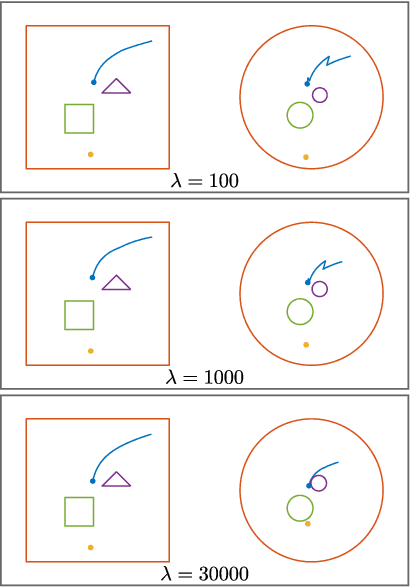
This paper presents a robot control algorithm suitable for safe reactive navigation tasks in cluttered environments. The proposed approach consists of transforming the robot workspace into the \emph{ball world}, an artificial representation where all obstacle regions are closed balls. Starting from a polyhedral representation of obstacles in the environment, obtained using exteroceptive sensor readings, a computationally efficient mapping to ball-shaped obstacles is constructed using quasi-conformal mappings and M\"obius transformations. The geometry of the ball world is amenable to provably safe navigation tasks achieved via control barrier functions employed to ensure collision-free robot motions with guarantees both on safety and on the absence of deadlocks. The performance of the proposed navigation algorithm is showcased and analyzed via extensive simulations and experiments performed using different types of robotic systems, including manipulators and mobile robots.
Automatic Landmark Detection and Registration of Brain Cortical Surfaces via Quasi-Conformal Geometry and Convolutional Neural Networks
Aug 15, 2022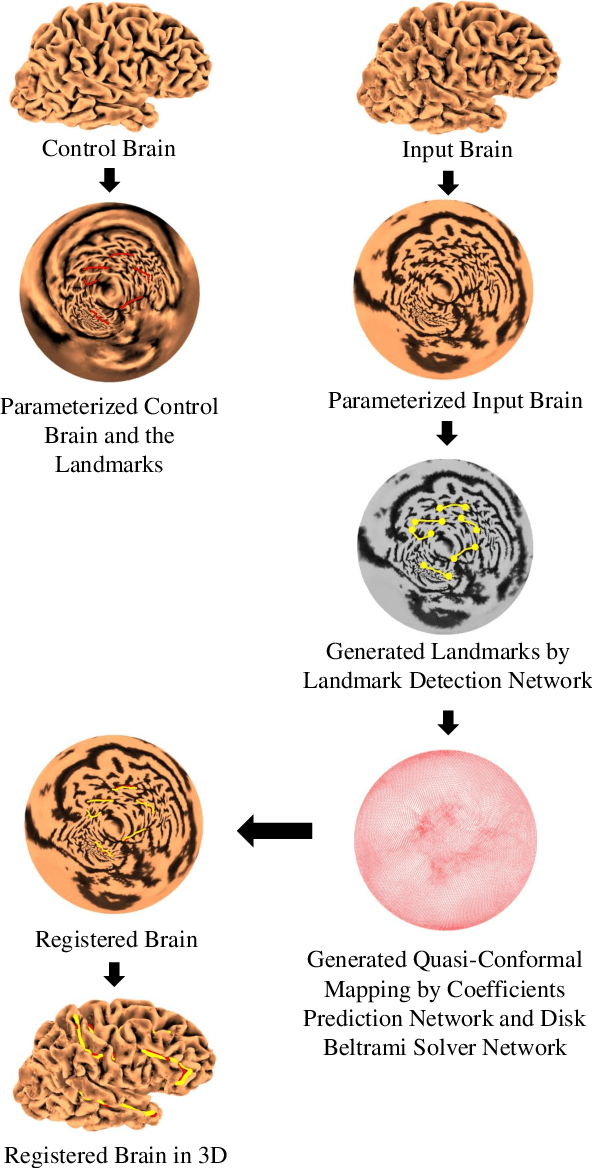

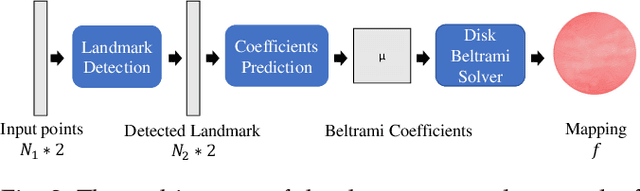

In medical imaging, surface registration is extensively used for performing systematic comparisons between anatomical structures, with a prime example being the highly convoluted brain cortical surfaces. To obtain a meaningful registration, a common approach is to identify prominent features on the surfaces and establish a low-distortion mapping between them with the feature correspondence encoded as landmark constraints. Prior registration works have primarily focused on using manually labeled landmarks and solving highly nonlinear optimization problems, which are time-consuming and hence hinder practical applications. In this work, we propose a novel framework for the automatic landmark detection and registration of brain cortical surfaces using quasi-conformal geometry and convolutional neural networks. We first develop a landmark detection network (LD-Net) that allows for the automatic extraction of landmark curves given two prescribed starting and ending points based on the surface geometry. We then utilize the detected landmarks and quasi-conformal theory for achieving the surface registration. Specifically, we develop a coefficient prediction network (CP-Net) for predicting the Beltrami coefficients associated with the desired landmark-based registration and a mapping network called the disk Beltrami solver network (DBS-Net) for generating quasi-conformal mappings from the predicted Beltrami coefficients, with the bijectivity guaranteed by quasi-conformal theory. Experimental results are presented to demonstrate the effectiveness of our proposed framework. Altogether, our work paves a new way for surface-based morphometry and medical shape analysis.
Modular representation and control of floppy networks
Jan 28, 2022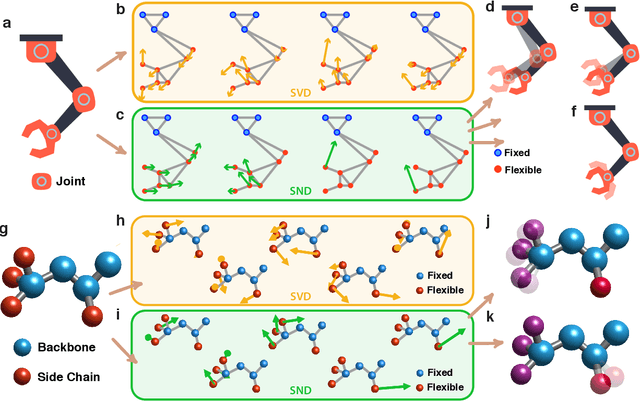
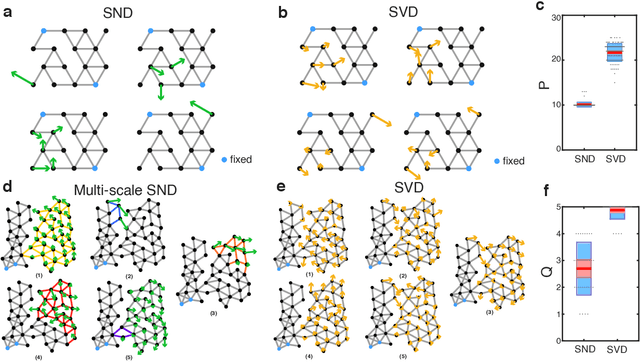
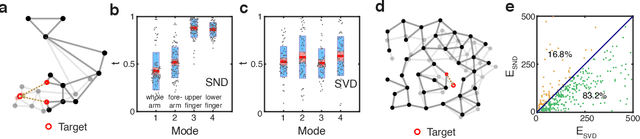
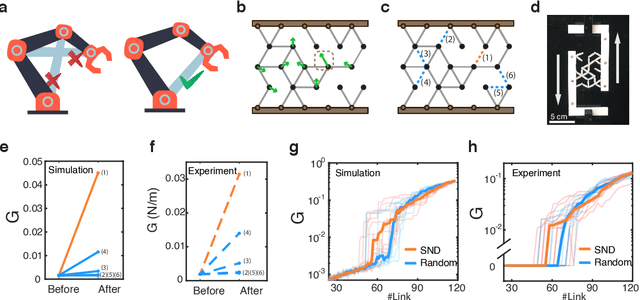
Geometric graph models of systems as diverse as proteins, robots, and mechanical structures from DNA assemblies to architected materials point towards a unified way to represent and control them in space and time. While much work has been done in the context of characterizing the behavior of these networks close to critical points associated with bond and rigidity percolation, isostaticity, etc., much less is known about floppy, under-constrained networks that are far more common in nature and technology. Here we combine geometric rigidity and algebraic sparsity to provide a framework for identifying the zero-energy floppy modes via a representation that illuminates the underlying hierarchy and modularity of the network, and thence the control of its nestedness and locality. Our framework allows us to demonstrate a range of applications of this approach that include robotic reaching tasks with motion primitives, and predicting the linear and nonlinear response of elastic networks based solely on infinitesimal rigidity and sparsity, which we test using physical experiments. Our approach is thus likely to be of use broadly in dissecting the geometrical properties of floppy networks using algebraic sparsity to optimize their function and performance.
Adaptive area-preserving parameterization of open and closed anatomical surfaces
Nov 08, 2021
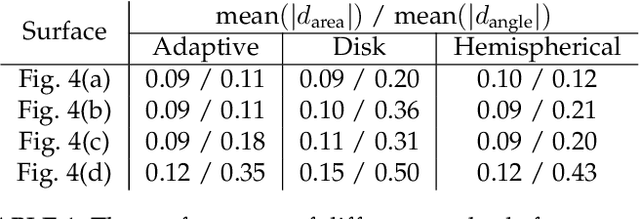
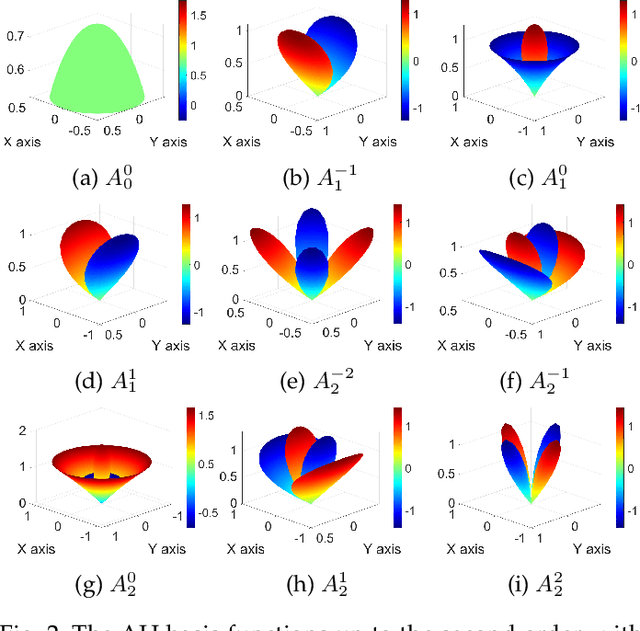
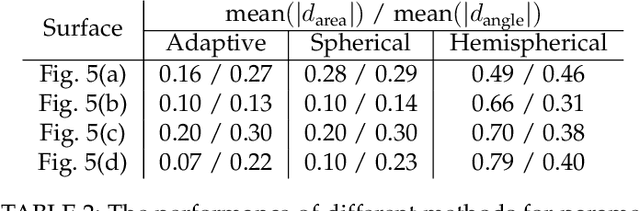
The parameterization of open and closed anatomical surfaces is of fundamental importance in many biomedical applications. Spherical harmonics, a set of basis functions defined on the unit sphere, are widely used for anatomical shape description. However, establishing a one-to-one correspondence between the object surface and the entire unit sphere may induce a large geometric distortion in case the shape of the surface is too different from a perfect sphere. In this work, we propose adaptive area-preserving parameterization methods for simply-connected open and closed surfaces with the target of the parameterization being a spherical cap. Our methods optimize the shape of the parameter domain along with the mapping from the object surface to the parameter domain. The object surface will be globally mapped to an optimal spherical cap region of the unit sphere in an area-preserving manner while also exhibiting low conformal distortion. We further develop a set of spherical harmonics-like basis functions defined over the adaptive spherical cap domain, which we call the adaptive harmonics. Experimental results show that the proposed parameterization methods outperform the existing methods for both open and closed anatomical surfaces in terms of area and angle distortion. Surface description of the object surfaces can be effectively achieved using a novel combination of the adaptive parameterization and the adaptive harmonics. Our work provides a novel way of mapping anatomical surfaces with improved accuracy and greater flexibility. More broadly, the idea of using an adaptive parameter domain allows easy handling of a wide range of biomedical shapes.