 Add to Chrome
 Add to Firefox
 Add to Edge
Learning the Geometry of Data: A Mathematical Review of Shape Space Analysis
Jun 15, 2026
A central objective of machine learning is to identify structure and patterns in data. Advances in data acquisition have increasingly produced datasets whose observations possess rich geometric form, giving rise to shape spaces that encode variability in object geometry. Such datasets arise across a wide range of disciplines, including biology, medicine, anthropology, and computer vision, where subtle geometric differences often carry important scientific information. Traditional machine learning methods, however, are frequently ill-equipped to account for the nonlinear geometric structure underlying these data. This survey synthesizes a rapidly growing body of work on shape space analysis, which provides a mathematical and computational framework for the study of geometric data. Drawing on ideas from differential geometry, statistics, and machine learning, we organize the literature around a common analytical pipeline: shape representation and parameterization, the rigorous construction of robust geodesic metrics, statistical analysis on shape spaces, and geometry-aware learning methods. We discuss how these tools enable the characterization of shape variability, the comparison of geometric objects, and the analysis of structural trajectories across populations and time. To illustrate the breadth of the field, we highlight applications spanning multiple scales of biological organization, including studies of subcellular morphology and primate tooth evolution. Across these and many other domains, researchers face common challenges arising from complex, nonlinear, and often unaligned geometric variation. The review concludes by identifying key theoretical and computational challenges, as well as emerging opportunities driven by increasingly large and diverse geometric datasets.

Score matching for sub-Riemannian bridge sampling
Apr 23, 2024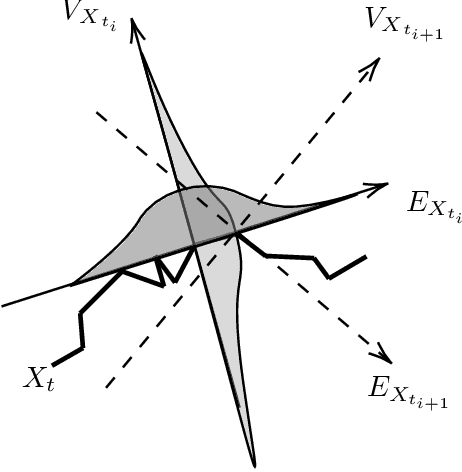
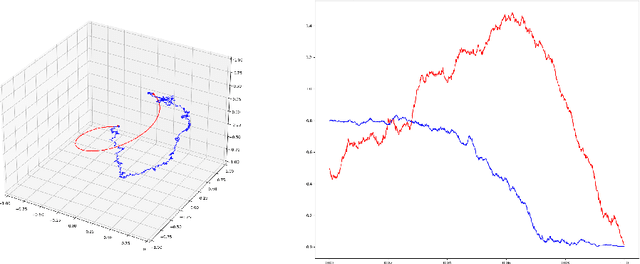

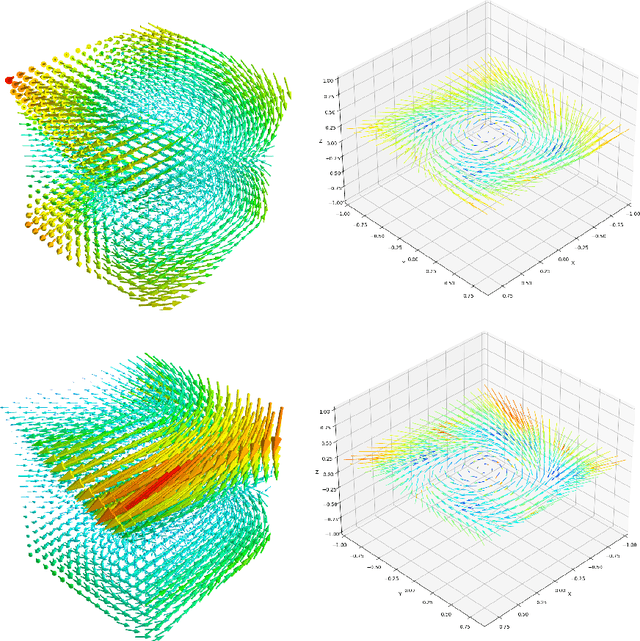
Simulation of conditioned diffusion processes is an essential tool in inference for stochastic processes, data imputation, generative modelling, and geometric statistics. Whilst simulating diffusion bridge processes is already difficult on Euclidean spaces, when considering diffusion processes on Riemannian manifolds the geometry brings in further complications. In even higher generality, advancing from Riemannian to sub-Riemannian geometries introduces hypoellipticity, and the possibility of finding appropriate explicit approximations for the score of the diffusion process is removed. We handle these challenges and construct a method for bridge simulation on sub-Riemannian manifolds by demonstrating how recent progress in machine learning can be modified to allow for training of score approximators on sub-Riemannian manifolds. Since gradients dependent on the horizontal distribution, we generalise the usual notion of denoising loss to work with non-holonomic frames using a stochastic Taylor expansion, and we demonstrate the resulting scheme both explicitly on the Heisenberg group and more generally using adapted coordinates. We perform numerical experiments exemplifying samples from the bridge process on the Heisenberg group and the concentration of this process for small time.