 Add to Chrome
 Add to Firefox
 Add to Edge
Engineering Reliable Autonomous Systems: Challenges and Solutions
Jun 24, 2026
Engineering reliable autonomous systems is an important and growing topic in computer science. As autonomous systems become more prevalent, easy-to-use techniques for building them reliably are increasingly important. This workshop report captures and expands on the discussions at the Lorentz Center Workshop "Engineering Reliable Autonomous Systems" (ERAS), held from 10 to 14 June 2024. The workshop was co-organised by the organisers of the Workshop on Formal Methods for Autonomous Systems (FMAS) and the Workshop on Agents and Robots for reliable Engineered Autonomy (AREA). It brought together members of the FMAS and AREA communities, industry practitioners, and representatives from sectors where autonomous systems pose distinctive engineering challenges. The workshop focused on three main research topics: techniques for verification and validation of autonomous systems; engineering real-world autonomous systems; and software architectures for safe autonomous systems. Its main outcome is a catalogue of challenges in these areas and, most importantly, a pathway to solutions. Some challenges can already be tackled by techniques that are well known in academia but have not yet become regularly used in practice. Other challenges remain unresolved and require further research. This roadmap is intended to support future research and industrial collaboration.

Proceedings of the Second Workshop on Agents and Robots for reliable Engineered Autonomy
Jul 19, 2022This volume contains the proceedings of the Second Workshop on Agents and Robots for reliable Engineered Autonomy (AREA 2022), co-located with the 31st International Joint Conference on Artificial Intelligence and the 25th European Conference on Artificial Intelligence (IJCAI-ECAI 2022). The AREA workshop brings together researchers from autonomous agents, software engineering and robotic communities, as combining knowledge coming from these research areas may lead to innovative approaches that solve complex problems related with the verification and validation of autonomous robotic systems.
Towards Integrating Formal Verification of Autonomous Robots with Battery Prognostics and Health Management
Aug 22, 2019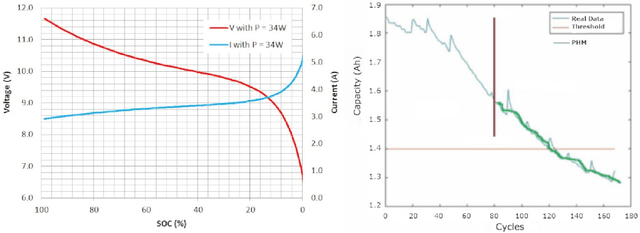
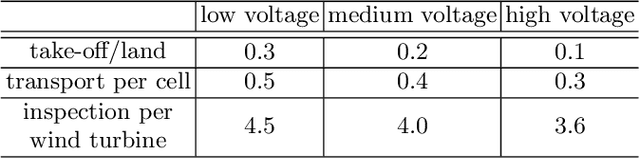
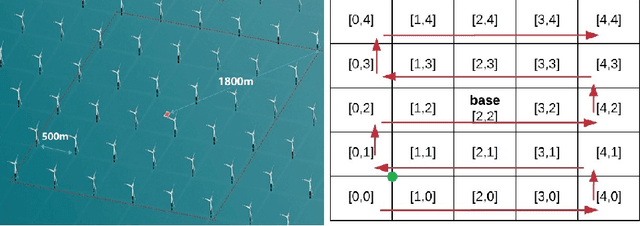
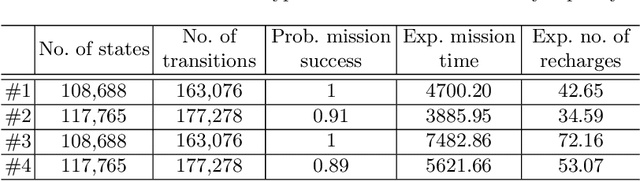
The battery is a key component of autonomous robots. Its performance limits the robot's safety and reliability. Unlike liquid-fuel, a battery, as a chemical device, exhibits complicated features, including (i) capacity fade over successive recharges and (ii) increasing discharge rate as the state of charge (SOC) goes down for a given power demand. Existing formal verification studies of autonomous robots, when considering energy constraints, formalise the energy component in a generic manner such that the battery features are overlooked. In this paper, we model an unmanned aerial vehicle (UAV) inspection mission on a wind farm and via probabilistic model checking in PRISM show (i) how the battery features may affect the verification results significantly in practical cases; and (ii) how the battery features, together with dynamic environments and battery safety strategies, jointly affect the verification results. Potential solutions to explicitly integrate battery prognostics and health management (PHM) with formal verification of autonomous robots are also discussed to motivate future work.
Dichotomies in Ontology-Mediated Querying with the Guarded Fragment
Apr 18, 2018


We study the complexity of ontology-mediated querying when ontologies are formulated in the guarded fragment of first-order logic (GF). Our general aim is to classify the data complexity on the level of ontologies where query evaluation w.r.t. an ontology O is considered to be in PTime if all (unions of conjunctive) queries can be evaluated in PTime w.r.t. O and coNP-hard if at least one query is coNP-hard w.r.t. O. We identify several large and relevant fragments of GF that enjoy a dichotomy between PTime and coNP, some of them additionally admitting a form of counting. In fact, almost all ontologies in the BioPortal repository fall into these fragments or can easily be rewritten to do so. We then establish a variation of Ladner's Theorem on the existence of NP-intermediate problems and use this result to show that for other fragments, there is provably no such dichotomy. Again for other fragments (such as full GF), establishing a dichotomy implies the Feder-Vardi conjecture on the complexity of constraint satisfaction problems. We also link these results to Datalog-rewritability and study the decidability of whether a given ontology enjoys PTime query evaluation, presenting both positive and negative results.