 Add to Chrome
 Add to Firefox
 Add to Edge
UniProbe: A Learnable Token-Level Hallucination Detector for Large VLMs using Multi-Structural Internal Representations
Aug 11, 2026
Large Vision-Language Models (LVLMs) achieve impressive visual reasoning and dialogue capabilities, yet frequently hallucinate content unsupported by the visual input. Effective mitigation requires token-level localization, enabling targeted intervention without discarding the entire response. Existing detectors require expensive full-model fine-tuning, rely on external verifiers that ignore the model's generation process, or reduce internal signals to isolated features and hand-crafted statistics, discarding spatial, sequential, and relational structure. We introduce \textbf{UniProbe}, a lightweight, unified, learnable detector that models a frozen LVLM's heterogeneous computational trace from a single forward pass. UniProbe constructs a directed graph over image patches, query tokens, and generated tokens, with attention weights encoding their relations. It processes this trace with alternating structure-aware modules: a GNN for relational evidence, a ViT for 2-D visual geometry, and a GRU for response order. Interleaving them allows spatial, relational, and sequential evidence to interact throughout the detector. We further develop a streaming variant for hallucination-aware decoding, which detects and resamples hallucinated tokens during generation, and a self-adaptation strategy aligning the detector with the LVLM's own generations. Across diverse LVLM backbones, UniProbe achieves state-of-the-art token-level and object-hallucination detection. During decoding, it reduces object hallucinations by up to 55\% at $1.06\times$ the latency of standard generation.

Diverse Sampling in Diffusion Models with Marginal Preserving Particle Guidance
May 07, 2026We present EDDY (Exact-marginal Diversification via Divergence-free dYnamics), a guidance mechanism for diffusion and flow matching models that promotes diversity among samples generated while maintaining quality. EDDY exploits symmetries of the Fokker-Planck equation, using drift perturbations that change particle trajectories while preserving the evolving marginal distribution. We instantiate this principle through kernel-based anti-symmetric pairwise matrix fields, constructed from the repulsive directions. The resulting divergence-free dynamics promote diversity at the joint particle level while preserving each particle's marginal distribution without any additional training. As computing the guidance can be computationally expensive in cases such as text-to-image generation with perceptual embeddings, we propose practical approximations as an effective and efficient solution. Experiments on synthetic distributions and text-to-image generation show that EDDY improves diversity while maintaining strong distributional fidelity compared to common baselines.
PromptEvolver: Prompt Inversion through Evolutionary Optimization in Natural-Language Space
Apr 03, 2026Text-to-image generation has progressed rapidly, but faithfully generating complex scenes requires extensive trial-and-error to find the exact prompt. In the prompt inversion task, the goal is to recover a textual prompt that can faithfully reconstruct a given target image. Currently, existing methods frequently yield suboptimal reconstructions and produce unnatural, hard-to-interpret prompts that hinder transparency and controllability. In this work, we present PromptEvolver, a prompt inversion approach that generates natural-language prompts while achieving high-fidelity reconstructions of the target image. Our method uses a genetic algorithm to optimize the prompt, leveraging a strong vision-language model to guide the evolution process. Importantly, it works on black-box generation models by requiring only image outputs. Finally, we evaluate PromptEvolver across multiple prompt inversion benchmarks and show that it consistently outperforms competing methods.
SSNAPS: Audio-Visual Separation of Speech and Background Noise with Diffusion Inverse Sampling
Feb 01, 2026This paper addresses the challenge of audio-visual single-microphone speech separation and enhancement in the presence of real-world environmental noise. Our approach is based on generative inverse sampling, where we model clean speech and ambient noise with dedicated diffusion priors and jointly leverage them to recover all underlying sources. To achieve this, we reformulate a recent inverse sampler to match our setting. We evaluate on mixtures of 1, 2, and 3 speakers with noise and show that, despite being entirely unsupervised, our method consistently outperforms leading supervised baselines in \ac{WER} across all conditions. We further extend our framework to handle off-screen speaker separation. Moreover, the high fidelity of the separated noise component makes it suitable for downstream acoustic scene detection. Demo page: https://ssnapsicml.github.io/ssnapsicml2026/
LR-DWM: Efficient Watermarking for Diffusion Language Models
Jan 18, 2026Watermarking (WM) is a critical mechanism for detecting and attributing AI-generated content. Current WM methods for Large Language Models (LLMs) are predominantly tailored for autoregressive (AR) models: They rely on tokens being generated sequentially, and embed stable signals within the generated sequence based on the previously sampled text. Diffusion Language Models (DLMs) generate text via non-sequential iterative denoising, which requires significant modification to use WM methods designed for AR models. Recent work proposed to watermark DLMs by inverting the process when needed, but suffers significant computational or memory overhead. We introduce Left-Right Diffusion Watermarking (LR-DWM), a scheme that biases the generated token based on both left and right neighbors, when they are available. LR-DWM incurs minimal runtime and memory overhead, remaining close to the non-watermarked baseline DLM while enabling reliable statistical detection under standard evaluation settings. Our results demonstrate that DLMs can be watermarked efficiently, achieving high detectability with negligible computational and memory overhead.
Questioning the Stability of Visual Question Answering
Nov 14, 2025Visual Language Models (VLMs) have achieved remarkable progress, yet their reliability under small, meaning-preserving input changes remains poorly understood. We present the first large-scale, systematic study of VLM robustness to benign visual and textual perturbations: pixel-level shifts, light geometric transformations, padded rescaling, paraphrasing, and multilingual rewrites that do not alter the underlying semantics of an image-question pair. Across a broad set of models and datasets, we find that modern VLMs are highly sensitive to such minor perturbations: a substantial fraction of samples change their predicted answer under at least one visual or textual modification. We characterize how this instability varies across perturbation types, question categories, and models, revealing that even state-of-the-art systems (e.g., GPT-4o, Gemini 2.0 Flash) frequently fail under shifts as small as a few pixels or harmless rephrasings. We further show that sample-level stability serves as a strong indicator of correctness: stable samples are consistently far more likely to be answered correctly. Leveraging this, we demonstrate that the stability patterns of small, accessible open-source models can be used to predict the correctness of much larger closed-source models with high precision. Our findings expose a fundamental fragility in current VLMs and highlight the need for robustness evaluations that go beyond adversarial perturbations, focusing instead on invariances that models should reliably uphold.
Few-Shot Speech Deepfake Detection Adaptation with Gaussian Processes
May 29, 2025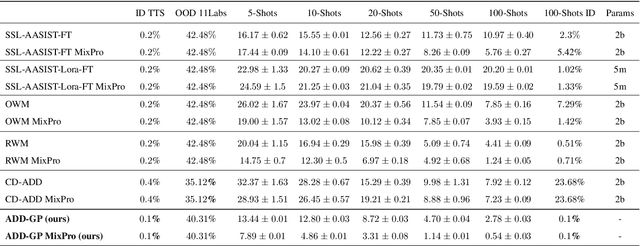
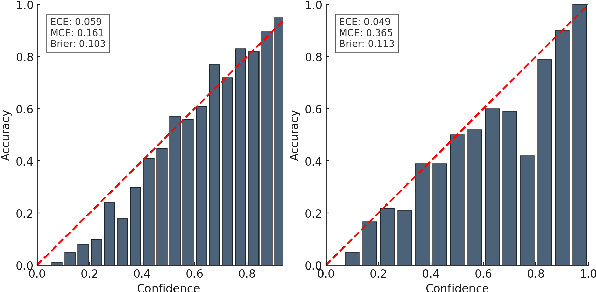
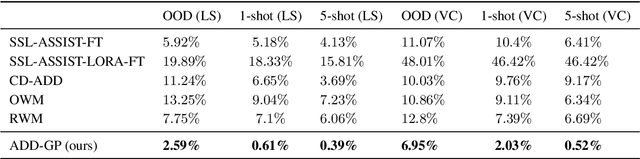
Recent advancements in Text-to-Speech (TTS) models, particularly in voice cloning, have intensified the demand for adaptable and efficient deepfake detection methods. As TTS systems continue to evolve, detection models must be able to efficiently adapt to previously unseen generation models with minimal data. This paper introduces ADD-GP, a few-shot adaptive framework based on a Gaussian Process (GP) classifier for Audio Deepfake Detection (ADD). We show how the combination of a powerful deep embedding model with the Gaussian processes flexibility can achieve strong performance and adaptability. Additionally, we show this approach can also be used for personalized detection, with greater robustness to new TTS models and one-shot adaptability. To support our evaluation, a benchmark dataset is constructed for this task using new state-of-the-art voice cloning models.
Go Beyond Your Means: Unlearning with Per-Sample Gradient Orthogonalization
Mar 04, 2025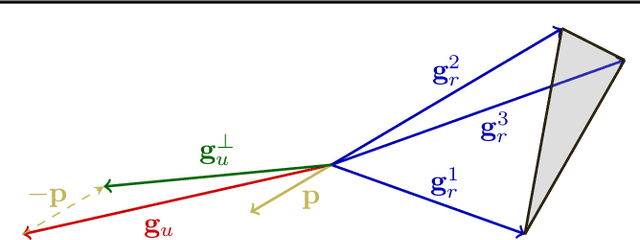
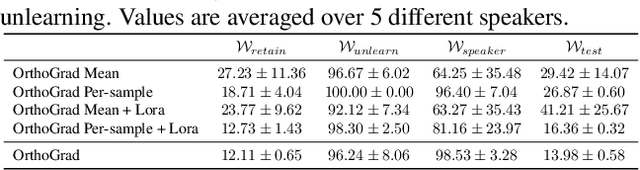
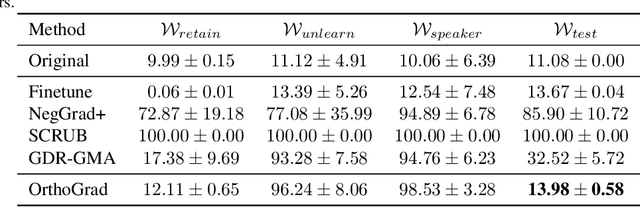
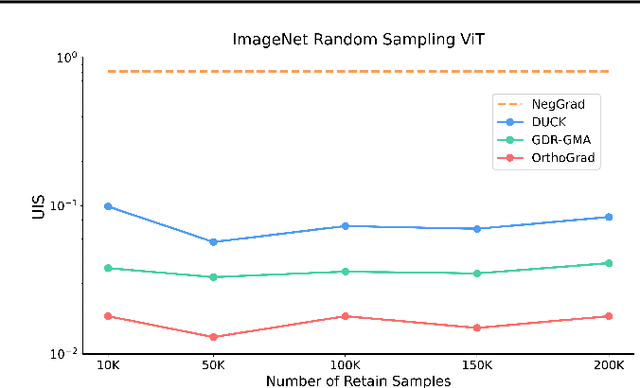
Machine unlearning aims to remove the influence of problematic training data after a model has been trained. The primary challenge in machine unlearning is ensuring that the process effectively removes specified data without compromising the model's overall performance on the remaining dataset. Many existing machine unlearning methods address this challenge by carefully balancing gradient ascent on the unlearn data with the gradient descent on a retain set representing the training data. Here, we propose OrthoGrad, a novel approach that mitigates interference between the unlearn set and the retain set rather than competing ascent and descent processes. Our method projects the gradient of the unlearn set onto the subspace orthogonal to all gradients in the retain batch, effectively avoiding any gradient interference. We demonstrate the effectiveness of OrthoGrad on multiple machine unlearning benchmarks, including automatic speech recognition, outperforming competing methods.
Adversarial Robustness in Parameter-Space Classifiers
Feb 27, 2025Implicit Neural Representations (INRs) have been recently garnering increasing interest in various research fields, mainly due to their ability to represent large, complex data in a compact and continuous manner. Past work further showed that numerous popular downstream tasks can be performed directly in the INR parameter-space. Doing so can substantially reduce the computational resources required to process the represented data in their native domain. A major difficulty in using modern machine-learning approaches, is their high susceptibility to adversarial attacks, which have been shown to greatly limit the reliability and applicability of such methods in a wide range of settings. In this work, we show that parameter-space models trained for classification are inherently robust to adversarial attacks -- without the need of any robust training. To support our claims, we develop a novel suite of adversarial attacks targeting parameter-space classifiers, and furthermore analyze practical considerations of attacking parameter-space classifiers. Code for reproducing all experiments and implementation of all proposed methods will be released upon publication.
Inverse Problem Sampling in Latent Space Using Sequential Monte Carlo
Feb 09, 2025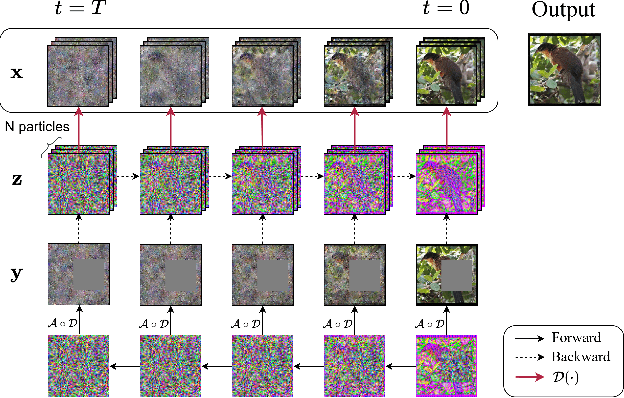
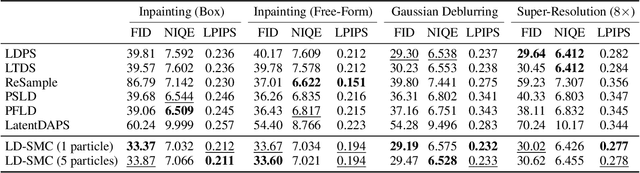
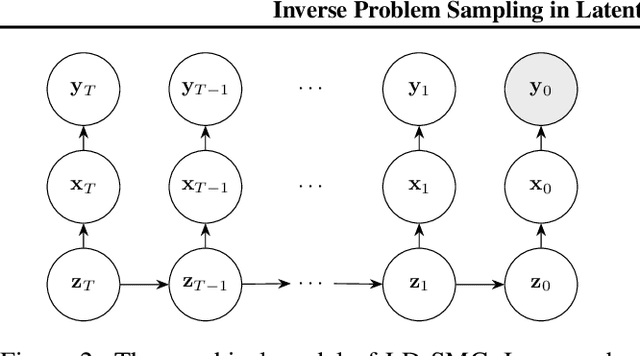
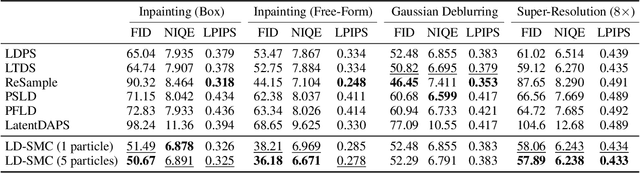
In image processing, solving inverse problems is the task of finding plausible reconstructions of an image that was corrupted by some (usually known) degradation model. Commonly, this process is done using a generative image model that can guide the reconstruction towards solutions that appear natural. The success of diffusion models over the last few years has made them a leading candidate for this task. However, the sequential nature of diffusion models makes this conditional sampling process challenging. Furthermore, since diffusion models are often defined in the latent space of an autoencoder, the encoder-decoder transformations introduce additional difficulties. Here, we suggest a novel sampling method based on sequential Monte Carlo (SMC) in the latent space of diffusion models. We use the forward process of the diffusion model to add additional auxiliary observations and then perform an SMC sampling as part of the backward process. Empirical evaluations on ImageNet and FFHQ show the benefits of our approach over competing methods on various inverse problem tasks.