 Add to Chrome
 Add to Firefox
 Add to Edge
Longitudinal Bayesian Learning of Continuous Disease Position across the Alzheimer's Disease Continuum
Aug 19, 2026
Alzheimer's disease (AD) progresses as a continuous biological process, whereas most existing neuroimaging-based artificial intelligence methods remain limited to discrete diagnosis or clinical score prediction from cross-sectional imaging. In this work, we propose Disease Continuum Positioning (DCP), a longitudinal Bayesian Learning framework that continuously estimates disease severity from longitudinal diffusion tensor imaging (DTI). Specifically, DCP models disease severity as a low-dimensional probabilistic latent variable by jointly integrating longitudinal observations with weak clinical supervision, from which the proposed Disease Continuum Score (DCS) is derived to quantify an individual's position along the Alzheimer's disease continuum together with its associated uncertainty. Extensive experiments on the Alzheimer's Disease Neuroimaging Initiative (ADNI) cohort demonstrate that DCP consistently outperforms representative disease progression methods. More importantly, comprehensive validation analyses show that DCS accurately characterizes disease severity, exhibits strong clinical relevance, preserves longitudinal disease evolution, and predicts future disease conversion. These results suggest that DCS provides a quantitative imaging-derived representation for continuous assessment of Alzheimer's disease progression beyond conventional diagnostic labels and clinical scores.

IntelliBeeHive: An Automated Honey Bee, Pollen, and Varroa Destructor Monitoring System
Sep 16, 2023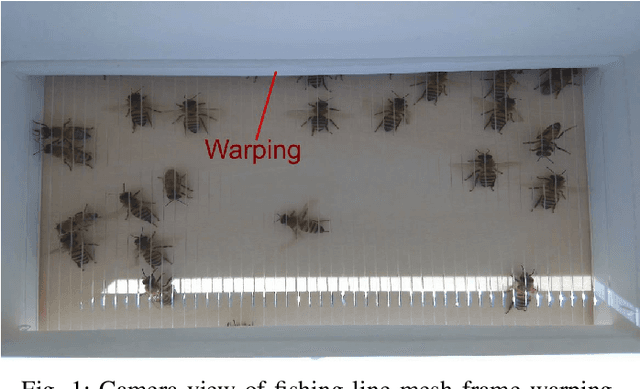
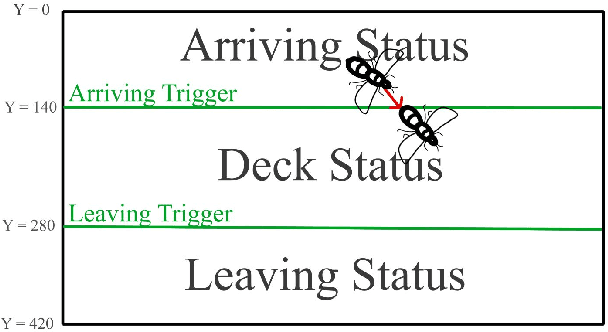
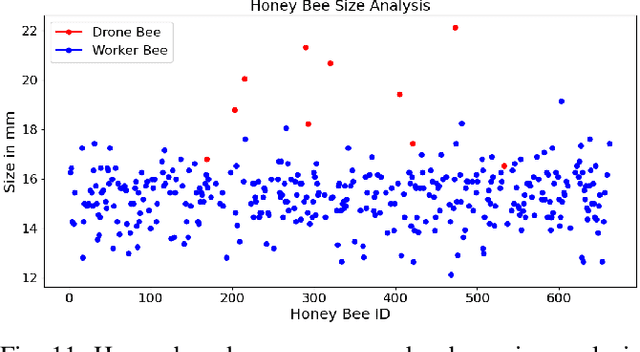
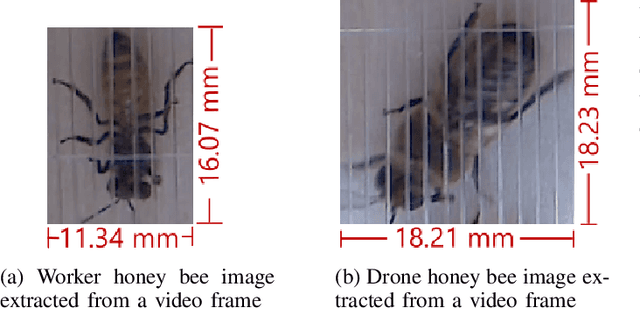
Utilizing computer vision and the latest technological advancements, in this study, we developed a honey bee monitoring system that aims to enhance our understanding of Colony Collapse Disorder, honey bee behavior, population decline, and overall hive health. The system is positioned at the hive entrance providing real-time data, enabling beekeepers to closely monitor the hive's activity and health through an account-based website. Using machine learning, our monitoring system can accurately track honey bees, monitor pollen-gathering activity, and detect Varroa mites, all without causing any disruption to the honey bees. Moreover, we have ensured that the development of this monitoring system utilizes cost-effective technology, making it accessible to apiaries of various scales, including hobbyists, commercial beekeeping businesses, and researchers. The inference models used to detect honey bees, pollen, and mites are based on the YOLOv7-tiny architecture trained with our own data. The F1-score for honey bee model recognition is 0.95 and the precision and recall value is 0.981. For our pollen and mite object detection model F1-score is 0.95 and the precision and recall value is 0.821 for pollen and 0.996 for "mite". The overall performance of our IntelliBeeHive system demonstrates its effectiveness in monitoring the honey bee's activity, achieving an accuracy of 96.28 % in tracking and our pollen model achieved a F1-score of 0.831.