 Add to Chrome
 Add to Firefox
 Add to Edge
AAAI-26 Dual Submissions: Novel Challenges
Jul 07, 2026
Dual submissions, in which identical or substantially similar papers are simultaneously submitted to one or more archival venues, without cross-citation or disclosure, are a growing problem for the AAAI Conference and other scientific publication venues. These submissions increase the burden on the peer-review system and pollute the scientific record. As part of the AAAI-26 review process, we (conference organizers) compared AAAI main-track submissions to nine other archival venues with overlapping review periods. We also searched for dual submissions within the AAAI-26 main track. We employed title+abstract similarity assessment to prioritize highly similar paper pairs for subsequent triage by an LLM-based overlap assessment tool, followed by manual review of the highest severity pairs. Manual review of such pairs led to the desk-rejection of 141 AAAI-26 main-track submissions. We seek to alert future organizers, and the broader artificial intelligence research community, to the enormous growth in dual submissions. The incidence of exact duplicate submissions, which are easy to detect, has been eclipsed by the number of papers that use different words to describe the same contribution, which are extremely time-consuming to detect. The growth in this phenomenon is likely facilitated by increasing access to generative AI tools. We include several recommendations for addressing this challenge, including (1) updating the AAAI Multiple Submission Policy and educating the community about acceptable practice, (2) having dual-submission checking tools in place before submissions close, (3) working across venues to converge on consistent policies and penalties to aid in reducing the incidence of dual submission, and (4) creating a community-driven adversarial challenge to accelerate the development of robust detection tools.

Deep Convolution for Irregularly Sampled Temporal Point Clouds
May 01, 2021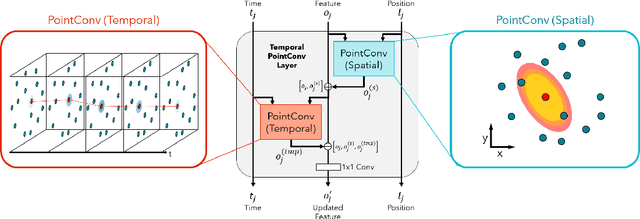

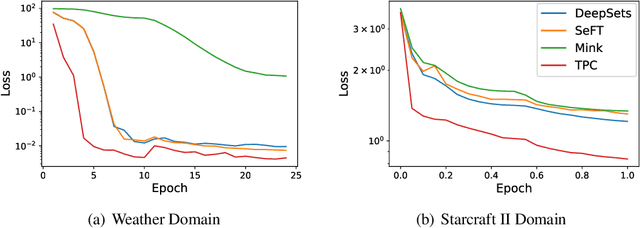

We consider the problem of modeling the dynamics of continuous spatial-temporal processes represented by irregular samples through both space and time. Such processes occur in sensor networks, citizen science, multi-robot systems, and many others. We propose a new deep model that is able to directly learn and predict over this irregularly sampled data, without voxelization, by leveraging a recent convolutional architecture for static point clouds. The model also easily incorporates the notion of multiple entities in the process. In particular, the model can flexibly answer prediction queries about arbitrary space-time points for different entities regardless of the distribution of the training or test-time data. We present experiments on real-world weather station data and battles between large armies in StarCraft II. The results demonstrate the model's flexibility in answering a variety of query types and demonstrate improved performance and efficiency compared to state-of-the-art baselines.