 Add to Chrome
 Add to Firefox
 Add to Edge
Human-in-the-Loop and AI: Crowdsourcing Metadata Vocabulary for Materials Science
Dec 10, 2025
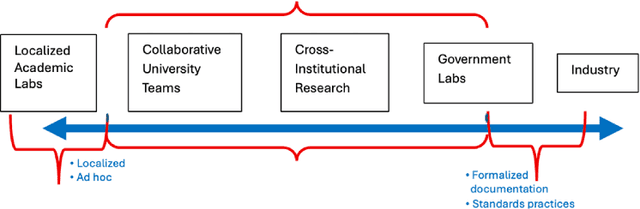
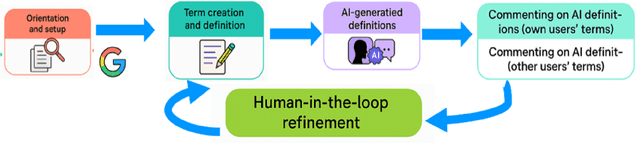
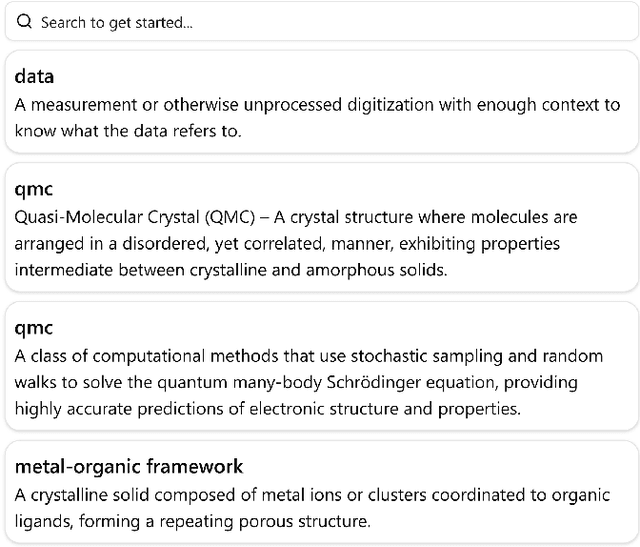
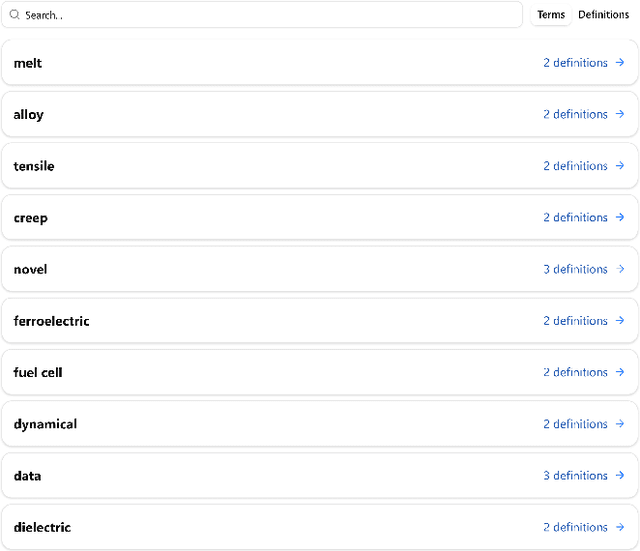
Metadata vocabularies are essential for advancing FAIR and FARR data principles, but their development constrained by limited human resources and inconsistent standardization practices. This paper introduces MatSci-YAMZ, a platform that integrates artificial intelligence (AI) and human-in-the-loop (HILT), including crowdsourcing, to support metadata vocabulary development. The paper reports on a proof-of-concept use case evaluating the AI-HILT model in materials science, a highly interdisciplinary domain Six (6) participants affiliated with the NSF Institute for Data-Driven Dynamical Design (ID4) engaged with the MatSci-YAMZ plaform over several weeks, contributing term definitions and providing examples to prompt the AI-definitions refinement. Nineteen (19) AI-generated definitions were successfully created, with iterative feedback loops demonstrating the feasibility of AI-HILT refinement. Findings confirm the feasibility AI-HILT model highlighting 1) a successful proof of concept, 2) alignment with FAIR and open-science principles, 3) a research protocol to guide future studies, and 4) the potential for scalability across domains. Overall, MatSci-YAMZ's underlying model has the capacity to enhance semantic transparency and reduce time required for consensus building and metadata vocabulary development.

Building Machine Learning Challenges for Anomaly Detection in Science
Mar 03, 2025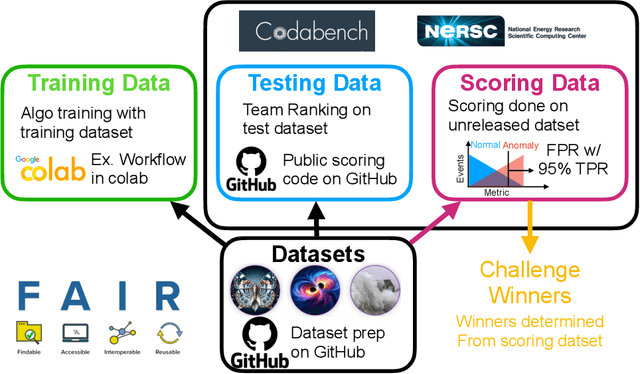
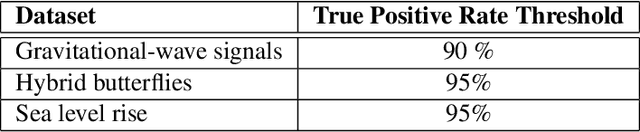
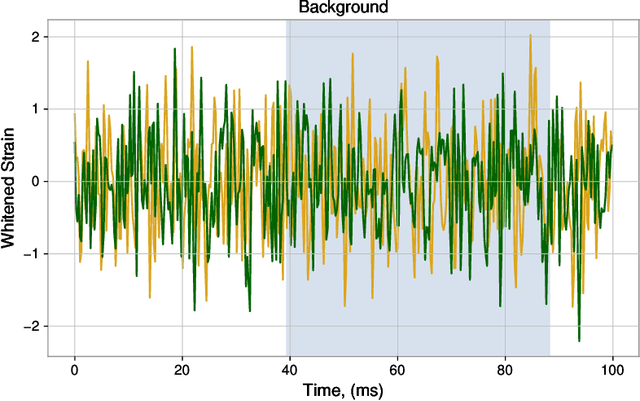
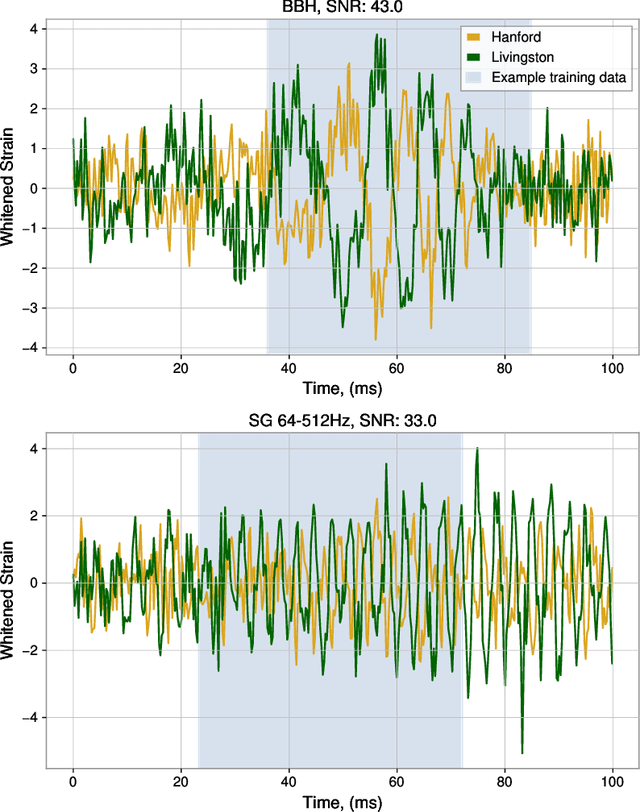
Scientific discoveries are often made by finding a pattern or object that was not predicted by the known rules of science. Oftentimes, these anomalous events or objects that do not conform to the norms are an indication that the rules of science governing the data are incomplete, and something new needs to be present to explain these unexpected outliers. The challenge of finding anomalies can be confounding since it requires codifying a complete knowledge of the known scientific behaviors and then projecting these known behaviors on the data to look for deviations. When utilizing machine learning, this presents a particular challenge since we require that the model not only understands scientific data perfectly but also recognizes when the data is inconsistent and out of the scope of its trained behavior. In this paper, we present three datasets aimed at developing machine learning-based anomaly detection for disparate scientific domains covering astrophysics, genomics, and polar science. We present the different datasets along with a scheme to make machine learning challenges around the three datasets findable, accessible, interoperable, and reusable (FAIR). Furthermore, we present an approach that generalizes to future machine learning challenges, enabling the possibility of large, more compute-intensive challenges that can ultimately lead to scientific discovery.