 Add to Chrome
 Add to Firefox
 Add to Edge
Towards Pedagogically Aligned LLM Tutors for Math Mistake Remediation
Jun 19, 2026
Large language models have strong potential for use in intelligent tutoring systems, but they often fail to follow effective pedagogical strategies, such as guiding students without revealing final answers. We study the application of a two-stage alignment pipeline for math mistake remediation, combining supervised fine-tuning on tutoring dialogs with Direct Preference Optimization on synthetic preference pairs. We construct a dataset that integrates existing tutoring corpora with synthetic data generated along pedagogical dimensions, such as scaffolding and factuality, and study different input configurations that incorporate solution correctness and gold answers. Experiments show that this approach improves both factual accuracy and pedagogical quality over base models and existing tutoring models. Human evaluation further indicates that our best model is competitive with a strong proprietary baseline, while providing additional benefits in terms of openness, transparency, and reproducibility. Our results highlight the effectiveness of preference-based pedagogical alignment, while also revealing challenges in reliably evaluating tutoring quality.

ComplexityMT: Benchmarking the Interaction Between Text Complexity and Machine Translation
Jun 03, 2026When a text is translated, does the translation retain the complexity of the original? We introduce ComplexityMT, a new challenge for assessing how text complexity and machine translation interact with and influence each other, using the Common European Framework of Reference for Languages (CEFR) levels as the measure of text complexity. Across six languages, including Arabic, Dutch, English, French, Hindi, and Russian, we evaluate three open-weight models, one closed model, and a commercial machine translation system on two tasks: i) correlation of CEFR with translation difficulty, and ii) shifts in CEFR levels of the source texts. Our experiments show that higher CEFR levels make texts more difficult to translate, and that machine translation shifts the CEFR level of the target text compared to the original source, for most languages. These findings provide new insights for researchers and practitioners working on multilingual pedagogical content generation and machine translation difficulty estimation.
Teaching Through Analogies: A Modular Pipeline for Educational Analogy Generation
May 22, 2026Analogies help learners understand unfamiliar concepts by relating them to known concepts. Despite recent advances, large language models (LLMs) continue to struggle to generate analogies of comparable quality to those produced by humans. We present a modular pipeline for educational analogy generation, decomposing the task into four stages: source finding, sub-concept generation, explanation generation, and evaluation. Grounded in Structure Mapping Theory, the pipeline enables systematic, stage-by-stage analysis of how model choice and input configuration affect analogy quality. We evaluate 12 state-of-the-art LLMs across six model families on two datasets with structured sub-concept annotations (SCAR and ParallelPARC), alongside seven embedding models for closed-setting retrieval. Our results show that sub-concepts substantially improve explanation quality and closed setting retrieval precision but provide limited benefit in open-ended source generation. We further introduce an LLM-as-a-judge evaluation methodology and validate its scoring against human annotations from seven annotators, finding that Claude Sonnet 4.6 aligns more reliably with human rankings than with fine-grained absolute scores. Taken together, our findings reveal cross-stage interactions that isolated studies cannot capture, and highlight sub-concept grounding as a key driver of analogy quality generation.
Towards Reward Modeling for AI Tutors in Math Mistake Remediation
Mar 25, 2026Evaluating the pedagogical quality of AI tutors remains challenging: standard NLG metrics do not determine whether responses identify mistakes, scaffold reasoning, or avoid revealing the answers. For the task of mistake remediation, we derive a hierarchy of pedagogical aspects from human pairwise preferences on MRBench, and synthesize minimally contrastive response pairs that differ along key aspects (e.g., mistake identification and location, targetedness, scaffolding, actionability, clarity, and coherence). We develop and release Bradley-Terry preference models trained on weighted-sum rankings that we automatically create from MRBench, synthetic pairs, and data combinations. Using only synthetic data, our best model reaches 0.69 pairwise accuracy on a human preference test, and combining weighted-sum data with targeted synthetic groups improves accuracy to 0.74, outperforming larger general-purpose reward models while using only a 0.5B-parameter backbone.
Pedagogy-driven Evaluation of Generative AI-powered Intelligent Tutoring Systems
Oct 26, 2025The interdisciplinary research domain of Artificial Intelligence in Education (AIED) has a long history of developing Intelligent Tutoring Systems (ITSs) by integrating insights from technological advancements, educational theories, and cognitive psychology. The remarkable success of generative AI (GenAI) models has accelerated the development of large language model (LLM)-powered ITSs, which have potential to imitate human-like, pedagogically rich, and cognitively demanding tutoring. However, the progress and impact of these systems remain largely untraceable due to the absence of reliable, universally accepted, and pedagogy-driven evaluation frameworks and benchmarks. Most existing educational dialogue-based ITS evaluations rely on subjective protocols and non-standardized benchmarks, leading to inconsistencies and limited generalizability. In this work, we take a step back from mainstream ITS development and provide comprehensive state-of-the-art evaluation practices, highlighting associated challenges through real-world case studies from careful and caring AIED research. Finally, building on insights from previous interdisciplinary AIED research, we propose three practical, feasible, and theoretically grounded research directions, rooted in learning science principles and aimed at establishing fair, unified, and scalable evaluation methodologies for ITSs.
* AIED 2025 (BlueSky)
Opportunities and Challenges of LLMs in Education: An NLP Perspective
Jul 30, 2025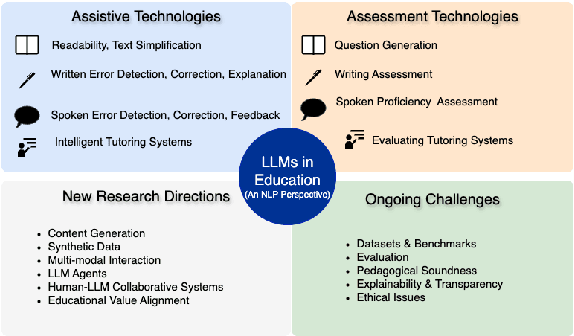

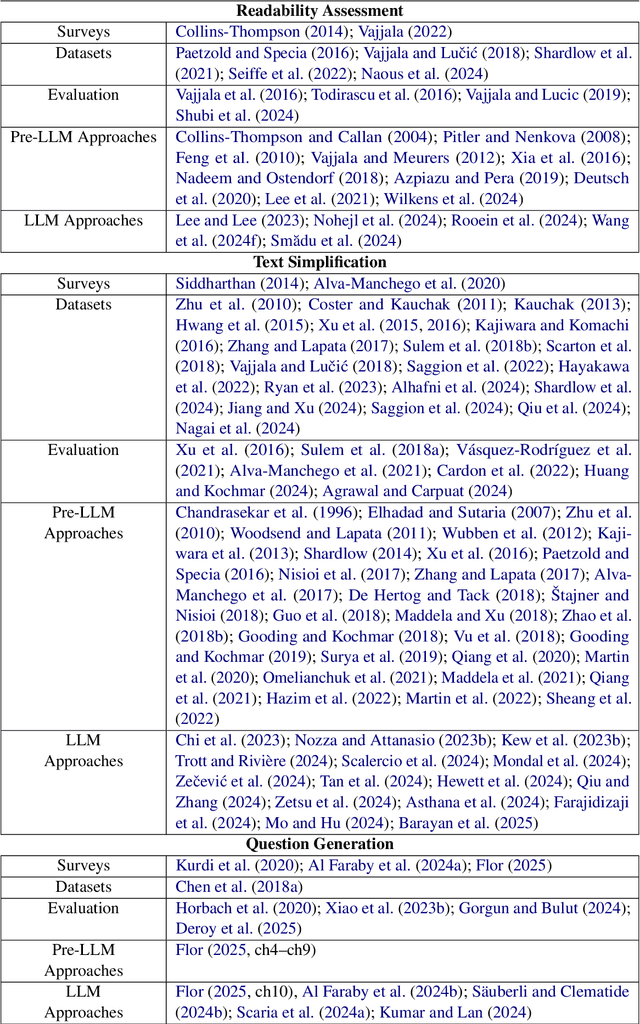
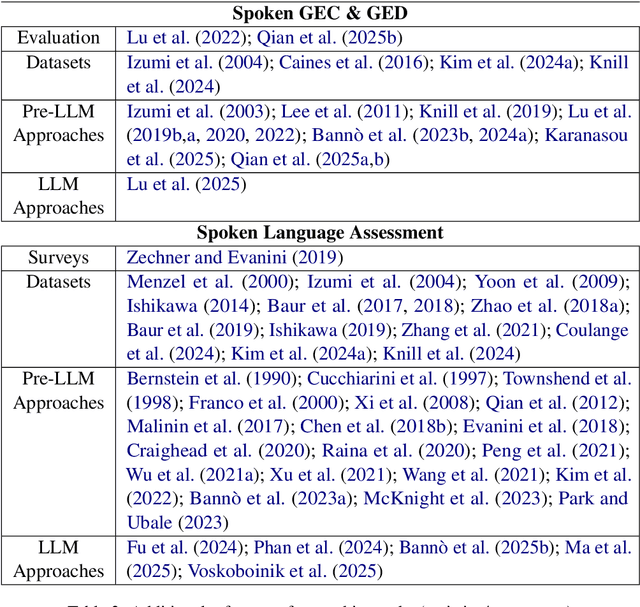
Interest in the role of large language models (LLMs) in education is increasing, considering the new opportunities they offer for teaching, learning, and assessment. In this paper, we examine the impact of LLMs on educational NLP in the context of two main application scenarios: {\em assistance} and {\em assessment}, grounding them along the four dimensions -- reading, writing, speaking, and tutoring. We then present the new directions enabled by LLMs, and the key challenges to address. We envision that this holistic overview would be useful for NLP researchers and practitioners interested in exploring the role of LLMs in developing language-focused and NLP-enabled educational applications of the future.
Intent Matters: Enhancing AI Tutoring with Fine-Grained Pedagogical Intent Annotation
Jun 09, 2025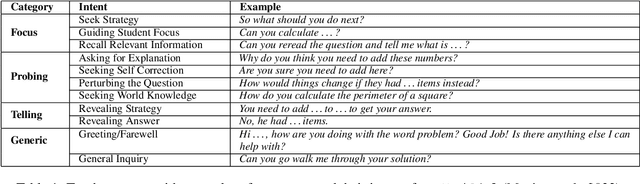
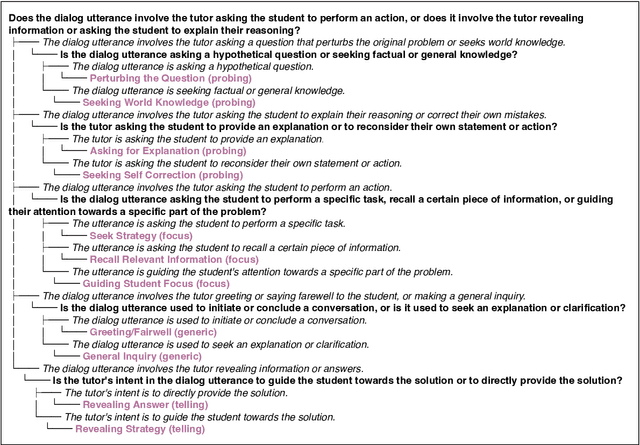
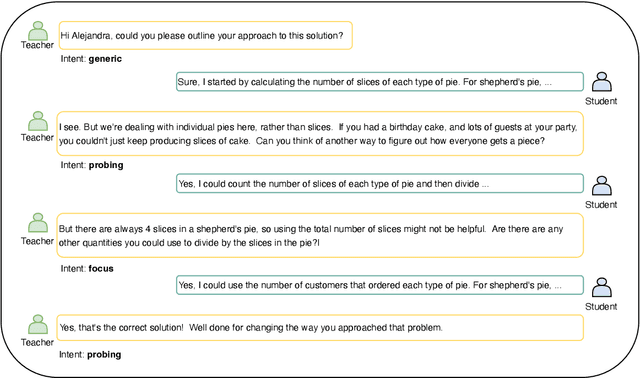
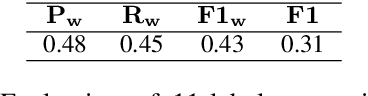
Large language models (LLMs) hold great promise for educational applications, particularly in intelligent tutoring systems. However, effective tutoring requires alignment with pedagogical strategies - something current LLMs lack without task-specific adaptation. In this work, we explore whether fine-grained annotation of teacher intents can improve the quality of LLM-generated tutoring responses. We focus on MathDial, a dialog dataset for math instruction, and apply an automated annotation framework to re-annotate a portion of the dataset using a detailed taxonomy of eleven pedagogical intents. We then fine-tune an LLM using these new annotations and compare its performance to models trained on the original four-category taxonomy. Both automatic and qualitative evaluations show that the fine-grained model produces more pedagogically aligned and effective responses. Our findings highlight the value of intent specificity for controlled text generation in educational settings, and we release our annotated data and code to facilitate further research.
Simulating LLM-to-LLM Tutoring for Multilingual Math Feedback
Jun 05, 2025Large language models (LLMs) have demonstrated the ability to generate formative feedback and instructional hints in English, making them increasingly relevant for AI-assisted education. However, their ability to provide effective instructional support across different languages, especially for mathematically grounded reasoning tasks, remains largely unexamined. In this work, we present the first large-scale simulation of multilingual tutor-student interactions using LLMs. A stronger model plays the role of the tutor, generating feedback in the form of hints, while a weaker model simulates the student. We explore 352 experimental settings across 11 typologically diverse languages, four state-of-the-art LLMs, and multiple prompting strategies to assess whether language-specific feedback leads to measurable learning gains. Our study examines how student input language, teacher feedback language, model choice, and language resource level jointly influence performance. Results show that multilingual hints can significantly improve learning outcomes, particularly in low-resource languages when feedback is aligned with the student's native language. These findings offer practical insights for developing multilingual, LLM-based educational tools that are both effective and inclusive.
A Fully Automated Pipeline for Conversational Discourse Annotation: Tree Scheme Generation and Labeling with Large Language Models
Apr 11, 2025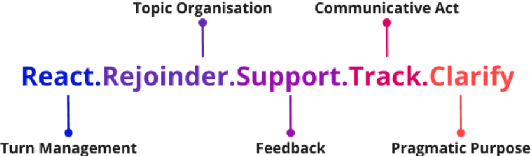
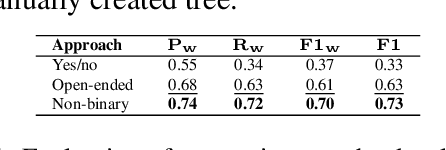
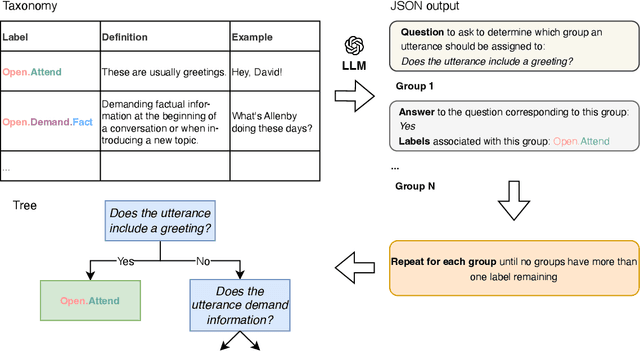
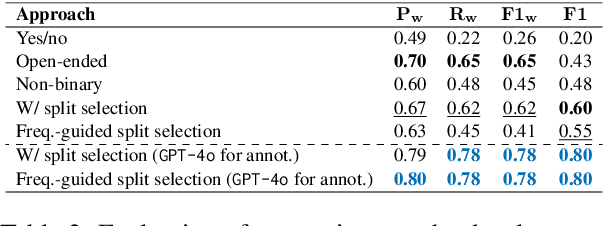
Recent advances in Large Language Models (LLMs) have shown promise in automating discourse annotation for conversations. While manually designing tree annotation schemes significantly improves annotation quality for humans and models, their creation remains time-consuming and requires expert knowledge. We propose a fully automated pipeline that uses LLMs to construct such schemes and perform annotation. We evaluate our approach on speech functions (SFs) and the Switchboard-DAMSL (SWBD-DAMSL) taxonomies. Our experiments compare various design choices, and we show that frequency-guided decision trees, paired with an advanced LLM for annotation, can outperform previously manually designed trees and even match or surpass human annotators while significantly reducing the time required for annotation. We release all code and resultant schemes and annotations to facilitate future research on discourse annotation.
Llama-3.1-Sherkala-8B-Chat: An Open Large Language Model for Kazakh
Mar 03, 2025Llama-3.1-Sherkala-8B-Chat, or Sherkala-Chat (8B) for short, is a state-of-the-art instruction-tuned open generative large language model (LLM) designed for Kazakh. Sherkala-Chat (8B) aims to enhance the inclusivity of LLM advancements for Kazakh speakers. Adapted from the LLaMA-3.1-8B model, Sherkala-Chat (8B) is trained on 45.3B tokens across Kazakh, English, Russian, and Turkish. With 8 billion parameters, it demonstrates strong knowledge and reasoning abilities in Kazakh, significantly outperforming existing open Kazakh and multilingual models of similar scale while achieving competitive performance in English. We release Sherkala-Chat (8B) as an open-weight instruction-tuned model and provide a detailed overview of its training, fine-tuning, safety alignment, and evaluation, aiming to advance research and support diverse real-world applications.