 Add to Chrome
 Add to Firefox
 Add to Edge
Detecting Ladder Logic Bombs in IEC 61131-3 PLC Programs using ESBMC-PLC+: A Formal Verification Approach with Trigger Synthesis
Jul 09, 2026
A Ladder Logic Bomb (LLB) is malicious control logic in a Programmable Logic Controller (PLC) program that lies dormant until a trigger activates a payload to manipulate actuators, forge sensor readings, or deny operator control. We observe that real malicious logic hides inside function-block bodies, which existing ladder-diagram verifiers drop from their intermediate representation (IR), making bombs invisible to provers. We present ESBMC-LLB, which uses ESBMC-PLC+ as its verification engine and adds a modeling layer that exposes function-block logic and recasts bomb detection as a formal verification problem: a scan-watchdog exposes non-termination payloads, and output wiring exposes actuator-forgery payloads as safety violations. k-induction gives an unbounded proof of bomb-absence across all scans, and the bounded model checker returns a counterexample that is the trigger - guarantees that signature, anomaly, and CFG-triage detectors lack. On the public Iacobelli 2024 dataset, ESBMC-LLB detects all 30 bombs and recovers every trigger; it also detects adaptive triggers (computed, opaque-arithmetic, multi-scan) that evade CFG-triage. We also report the first semantic model-checker evaluation on PLC-Defuser's SWaT corpus: our analog extension makes the full corpus parseable; on v1.0.0, it detects 149/150 bombs (99%) with zero false positives, recovering each trigger; on a later version with nonlinear non-termination bombs, detection drops to 49% as the SMT solver times out. We conclude that semantic model checking and CFG-triage are complementary - the former gives unbounded proofs, adaptive-trigger robustness, and handles Boolean/integer and linear analog logic; the latter leads to nonlinear analog non-termination, and we delineate where each wins.

ESBMC-PLC+: A Unified IEC 61131-3 Formal Verification Framework as a PLCverif Successor
Jun 24, 2026PLCverif is the most mature open-source platform for PLC formal verification, developed at CERN and in production use since 2019. Yet it has two fundamental limitations: no support for Ladder Diagram (LD) programs, the dominant PLC notation, and reliance on CBMC as its primary backend, which restricts verification to bounded proofs. The PLCverif authors themselves identified ESBMC as the appropriate backend improvement. Prior work established ESBMC-PLC (a textual LD frontend with k-induction) and ESBMC-GraphPLC (graphical PLCopen XML support); together, they cover LD with unbounded proofs but not Structured Text (ST), and graphical LD with timer/counter function blocks remains unverifiable. This paper presents ESBMC-PLC+, a unified framework that closes both gaps: (1) an ST/SCL frontend via the MATIEC IEC 61131-3 compiler, routing C-compiled ST to ESBMC with nondeterministic input modeling and YAML property injection; (2) function block state semantics for graphical LD, extending the DFS resolver to model TON/TOF/TP timers, CTU/CTD counters, and R_TRIG/F_TRIG edge triggers as persistent scan-cycle state variables in the GOTO IR. ESBMC-PLC+ is the first open-source PLC verification framework to support all three major IEC 61131-3 input formats via a single ESBMC backend, enabling k-induction-unbounded safety proofs. A feature comparison with PLCverif and experimental evaluation on 8 benchmark programs, including programs with up to 8 integer timers, shows that ESBMC-PLC+ matches PLCverif's input coverage while providing stronger guarantees. Against nuXmv's BDD backend, ESBMC-PLC+ is 400-2,000x faster on timer programs and completes proofs where nuXmv BDD times out at 120s.
ESBMC-GraphPLC: Formal Verification of Graphical PLCopen XML Ladder Diagram Programs Using SMT-Based Model Checking
Jun 18, 2026PLCopen XML defines two encoding formats for IEC 61131-3 Ladder Diagram programs: a textual encoding using <rung> elements, and a graphical encoding that represents rung logic as a directed graph of localId/refLocalId connections. ESBMC-PLC supported the textual format but parsed graphical exports from CONTROLLINO, Beremiz, and OpenPLC Editor into an empty GOTO intermediate representation, causing vacuous verification success. This paper presents ESBMC-GraphPLC, which closes this gap with a DFS-based graphical LD resolver. The resolver traverses the connection graph from leftPowerRail to each coil, extracts rung paths as Boolean contact conjunctions, and applies a three-tier I/O inference scheme. Ordering coils by rightPowerRail connectionPointIn sequence ensures SET coils process before RESET coils, matching IEC scan-cycle semantics. The graphical-to-IR conversion leaves the ESBMC backend unchanged. Validation on 3 graphical LD programs from CONTROLLINO/OpenPLC Editor shows all produce full GOTO IR with nondeterministic inputs and rung logic, versus the empty IR previously. All 3 verify SAFE at k=2 under 70ms. The 11 textual LD benchmarks are fully preserved, with no regression. Two Beremiz examples with no LD content or unsupported timer semantics are reported as discovered limitations. Artifact at Zenodo (DantasCordeiro2026graphical, doi:10.5281/zenodo.20699856).
ESBMC-PLC: Formal Verification of IEC 61131-3 Ladder Diagram Programs Using SMT-Based Model Checking
Jun 13, 2026PLCs execute safety-critical programs across industrial sectors. The dominant PLC notation, ladder diagram (LD) per IEC 61131-3, remains absent from formal verification: SMT-based model checkers cannot process LD's rung-and-coil graphics. This paper presents ESBMC-PLC, the first open-source formal verifier with native LD support (PLCopen XML format), implemented as a new ESBMC frontend. ESBMC-PLC translates LD rungs to GOTO IR, models the PLC scan cycle as a while(true) loop with nondeterministic inputs, and checks safety properties via SMT-based bounded model checking or k-induction. A five-property YAML language (mutual_exclusion, invariant, absence, response, reachability) avoids temporal logic. A survey of 22 studies (2020-2026) identifies four research gaps; ESBMC-PLC closes two of them. Evaluation on 13 benchmarks (6 domains, 3 sources - including deployed CONTROLLINO PLCs and MathWorks Simulink PLC Coder) shows correct classification across 61 properties: all 9 author-constructed programs (Categories A/B) as expected, all 4 vendor programs (Category C) correctly unlabeled, with 8 bugs found (actionable counterexamples), 7 unbounded k-induction proofs, all runs under 60ms on Apple Silicon. Feature comparison with PLCverif shows that ESBMC-PLC is the only open-source tool that combines native LD, k-induction, and SMT bit-vector semantics.
Interventional Probing in High Dimensions: An NLI Case Study
Apr 20, 2023Probing strategies have been shown to detect the presence of various linguistic features in large language models; in particular, semantic features intermediate to the "natural logic" fragment of the Natural Language Inference task (NLI). In the case of natural logic, the relation between the intermediate features and the entailment label is explicitly known: as such, this provides a ripe setting for interventional studies on the NLI models' representations, allowing for stronger causal conjectures and a deeper critical analysis of interventional probing methods. In this work, we carry out new and existing representation-level interventions to investigate the effect of these semantic features on NLI classification: we perform amnesic probing (which removes features as directed by learned linear probes) and introduce the mnestic probing variation (which forgets all dimensions except the probe-selected ones). Furthermore, we delve into the limitations of these methods and outline some pitfalls have been obscuring the effectivity of interventional probing studies.
AIREPAIR: A Repair Platform for Neural Networks
Nov 24, 2022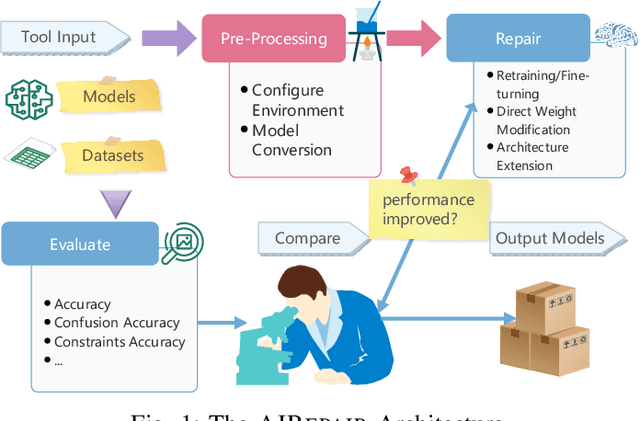
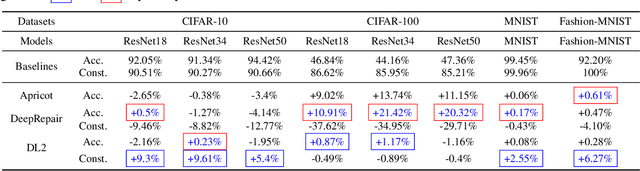
We present AIREPAIR, a platform for repairing neural networks. It features the integration of existing network repair tools. Based on AIREPAIR, one can run different repair methods on the same model, thus enabling the fair comparison of different repair techniques. We evaluate AIREPAIR with three state-of-the-art repair tools on popular deep-learning datasets and models. Our evaluation confirms the utility of AIREPAIR, by comparing and analyzing the results from different repair techniques. A demonstration is available at https://youtu.be/UkKw5neeWhw.
Systematicity, Compositionality and Transitivity of Deep NLP Models: a Metamorphic Testing Perspective
Apr 26, 2022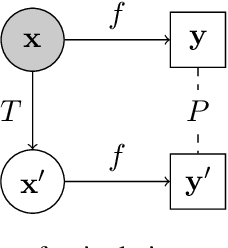
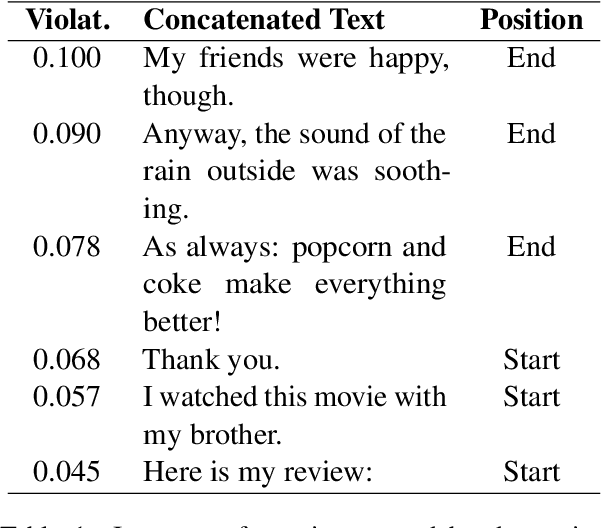
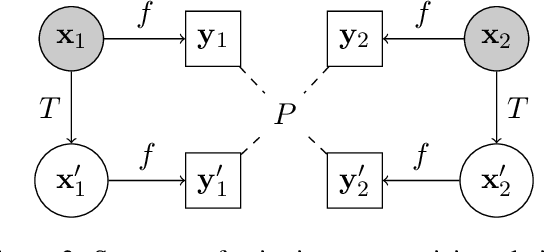
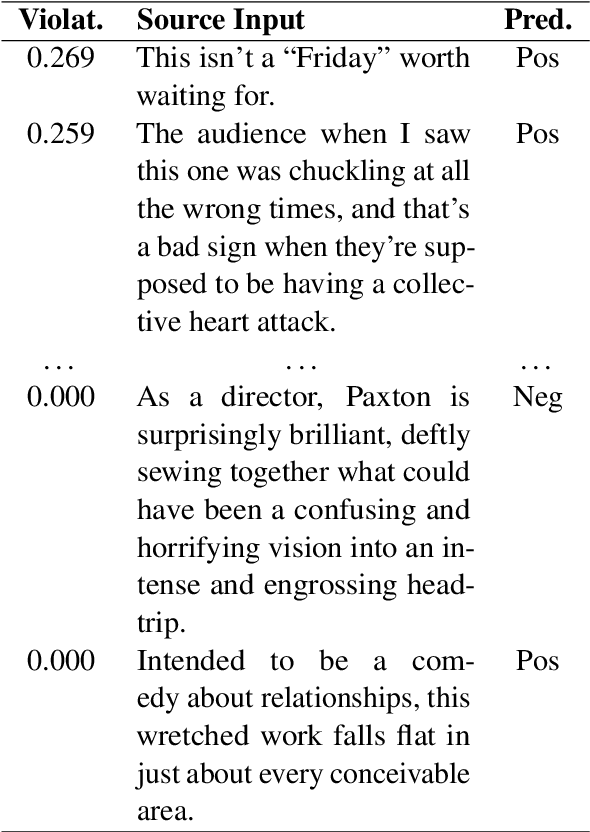
Metamorphic testing has recently been used to check the safety of neural NLP models. Its main advantage is that it does not rely on a ground truth to generate test cases. However, existing studies are mostly concerned with robustness-like metamorphic relations, limiting the scope of linguistic properties they can test. We propose three new classes of metamorphic relations, which address the properties of systematicity, compositionality and transitivity. Unlike robustness, our relations are defined over multiple source inputs, thus increasing the number of test cases that we can produce by a polynomial factor. With them, we test the internal consistency of state-of-the-art NLP models, and show that they do not always behave according to their expected linguistic properties. Lastly, we introduce a novel graphical notation that efficiently summarises the inner structure of metamorphic relations.
Privacy-Friendly Peer-to-Peer Energy Trading: A Game Theoretical Approach
Jan 05, 2022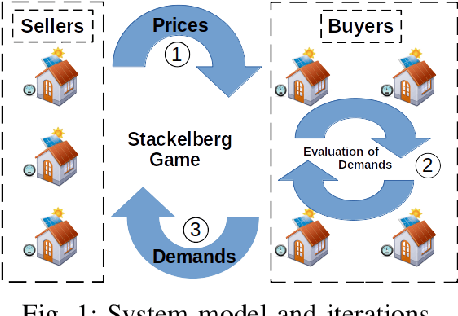
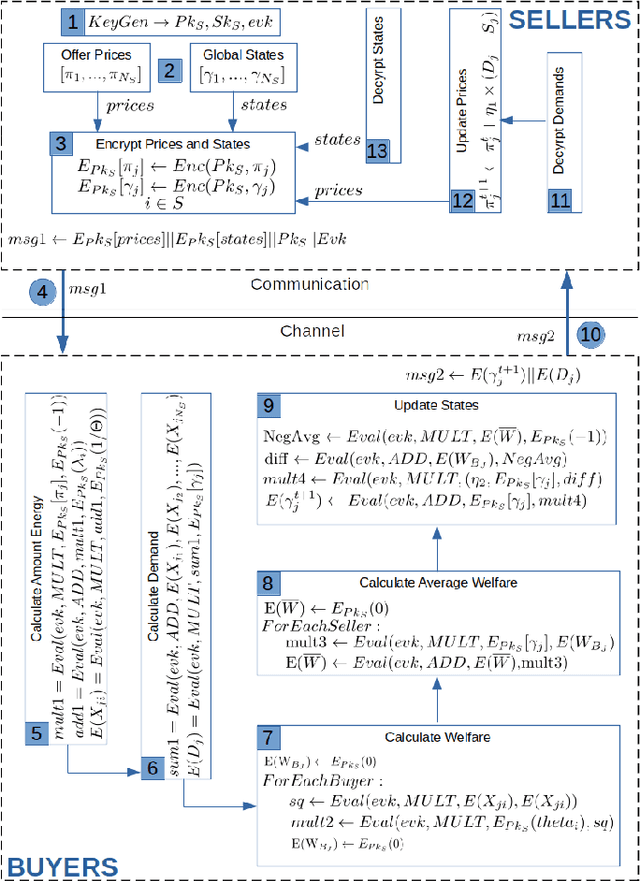
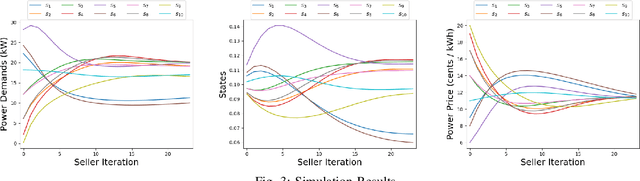
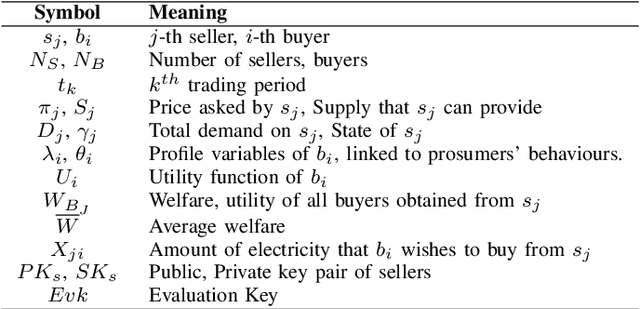
In this paper, we propose a decentralized, privacy-friendly energy trading platform (PFET) based on game theoretical approach - specifically Stackelberg competition. Unlike existing trading schemes, PFET provides a competitive market in which prices and demands are determined based on competition, and computations are performed in a decentralized manner which does not rely on trusted third parties. It uses homomorphic encryption cryptosystem to encrypt sensitive information of buyers and sellers such as sellers$'$ prices and buyers$'$ demands. Buyers calculate total demand on particular seller using an encrypted data and sensitive buyer profile data is hidden from sellers. Hence, privacy of both sellers and buyers is preserved. Through privacy analysis and performance evaluation, we show that PFET preserves users$'$ privacy in an efficient manner.
QNNVerifier: A Tool for Verifying Neural Networks using SMT-Based Model Checking
Nov 25, 2021
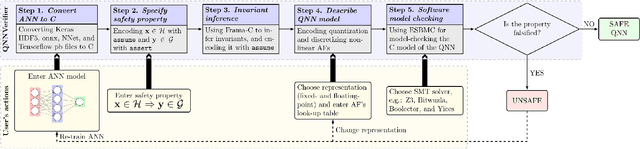
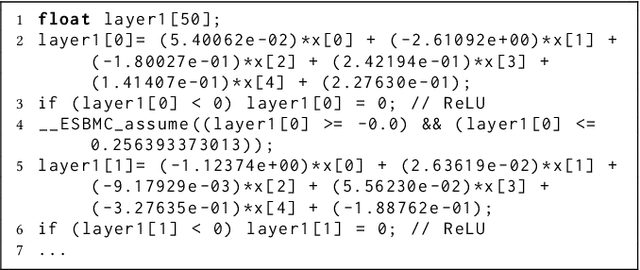

QNNVerifier is the first open-source tool for verifying implementations of neural networks that takes into account the finite word-length (i.e. quantization) of their operands. The novel support for quantization is achieved by employing state-of-the-art software model checking (SMC) techniques. It translates the implementation of neural networks to a decidable fragment of first-order logic based on satisfiability modulo theories (SMT). The effects of fixed- and floating-point operations are represented through direct implementations given a hardware-determined precision. Furthermore, QNNVerifier allows to specify bespoke safety properties and verify the resulting model with different verification strategies (incremental and k-induction) and SMT solvers. Finally, QNNVerifier is the first tool that combines invariant inference via interval analysis and discretization of non-linear activation functions to speed up the verification of neural networks by orders of magnitude. A video presentation of QNNVerifier is available at https://youtu.be/7jMgOL41zTY
Verifying Quantized Neural Networks using SMT-Based Model Checking
Jun 10, 2021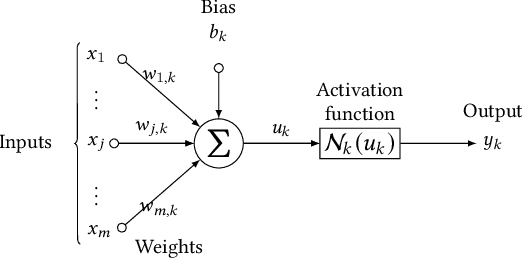
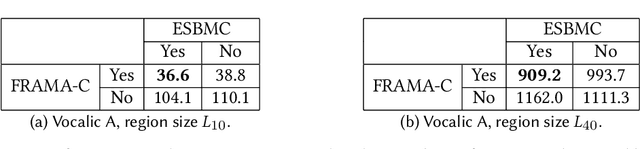
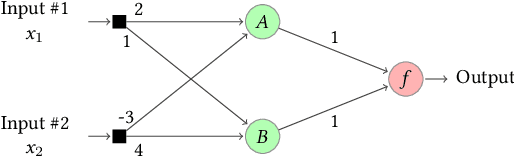
Artificial Neural Networks (ANNs) are being deployed on an increasing number of safety-critical applications, including autonomous cars and medical diagnosis. However, concerns about their reliability have been raised due to their black-box nature and apparent fragility to adversarial attacks. Here, we develop and evaluate a symbolic verification framework using incremental model checking (IMC) and satisfiability modulo theories (SMT) to check for vulnerabilities in ANNs. More specifically, we propose several ANN-related optimizations for IMC, including invariant inference via interval analysis and the discretization of non-linear activation functions. With this, we can provide guarantees on the safe behavior of ANNs implemented both in floating-point and fixed-point (quantized) arithmetic. In this regard, our verification approach was able to verify and produce adversarial examples for 52 test cases spanning image classification and general machine learning applications. For small- to medium-sized ANN, our approach completes most of its verification runs in minutes. Moreover, in contrast to most state-of-the-art methods, our approach is not restricted to specific choices of activation functions or non-quantized representations.