 Add to Chrome
 Add to Firefox
 Add to Edge
Adaptive Multi-Round Allocation with Stochastic Arrivals
May 12, 2026
We study a sequential resource allocation problem motivated by adaptive network recruitment, in which a limited budget of identical resources must be allocated over multiple rounds to individuals with stochastic referral capacity. Successful referrals endogenously generate future decision opportunities while allocating additional resources to an individual exhibits diminishing returns. We first show that the single-round allocation problem admits an exact greedy solution based on marginal survival probabilities. In the multi-round setting, the resulting Bellman recursion is intractable due to the stochastic, high-dimensional evolution of the frontier. To address this, we introduce a population-level surrogate value function that depends only on the remaining budget and frontier size. This surrogate enables an exact dynamic program via truncated probability generating functions, yielding a planning algorithm with polynomial complexity in the total budget. We further analyze robustness under model misspecification, proving a multi-round error bound that decomposes into a tight single-round frontier error and a population-level transition error. Finally, we evaluate our method on real-world inspired recruitment scenarios.

Learning Unanimously Acceptable Lotteries via Queries
Apr 19, 2026Many high-stakes AI deployments proceed only if every stakeholder deems the system acceptable relative to their own minimum standard. With randomization over a finite menu of options, this becomes a feasibility question: does there exist a lottery over options that clears all stakeholders' acceptability bars? We study a query model where the algorithm proposes lotteries and receives only binary accept/reject feedback. We give deterministic and randomized algorithms that either find a unanimously acceptable lottery or certify infeasibility; adaptivity can avoid eliciting many stakeholders' constraints, and randomization further reduces the expected elicitation cost relative to full elicitation. We complement these upper bounds with worst-case lower bounds (in particular, linear dependence on the number of stakeholders and logarithmic dependence on precision are unavoidable). Finally, we develop learning-augmented algorithms that exploit natural forms of advice (e.g., likely binding stakeholders or a promising lottery), improving query complexity when predictions are accurate while preserving worst-case guarantees.
Incentive-Aware AI Safety via Strategic Resource Allocation: A Stackelberg Security Games Perspective
Feb 06, 2026As AI systems grow more capable and autonomous, ensuring their safety and reliability requires not only model-level alignment but also strategic oversight of the humans and institutions involved in their development and deployment. Existing safety frameworks largely treat alignment as a static optimization problem (e.g., tuning models to desired behavior) while overlooking the dynamic, adversarial incentives that shape how data are collected, how models are evaluated, and how they are ultimately deployed. We propose a new perspective on AI safety grounded in Stackelberg Security Games (SSGs): a class of game-theoretic models designed for adversarial resource allocation under uncertainty. By viewing AI oversight as a strategic interaction between defenders (auditors, evaluators, and deployers) and attackers (malicious actors, misaligned contributors, or worst-case failure modes), SSGs provide a unifying framework for reasoning about incentive design, limited oversight capacity, and adversarial uncertainty across the AI lifecycle. We illustrate how this framework can inform (1) training-time auditing against data/feedback poisoning, (2) pre-deployment evaluation under constrained reviewer resources, and (3) robust multi-model deployment in adversarial environments. This synthesis bridges algorithmic alignment and institutional oversight design, highlighting how game-theoretic deterrence can make AI oversight proactive, risk-aware, and resilient to manipulation.
Policy-Embedded Graph Expansion: Networked HIV Testing with Diffusion-Driven Network Samples
Jan 20, 2026HIV is a retrovirus that attacks the human immune system and can lead to death without proper treatment. In collaboration with the WHO and Wits University, we study how to improve the efficiency of HIV testing with the goal of eventual deployment, directly supporting progress toward UN Sustainable Development Goal 3.3. While prior work has demonstrated the promise of intelligent algorithms for sequential, network-based HIV testing, existing approaches rely on assumptions that are impractical in our real-world implementations. Here, we study sequential testing on incrementally revealed disease networks and introduce Policy-Embedded Graph Expansion (PEGE), a novel framework that directly embeds a generative distribution over graph expansions into the decision-making policy rather than attempting explicit topological reconstruction. We further propose Dynamics-Driven Branching (DDB), a diffusion-based graph expansion model that supports decision making in PEGE and is designed for data-limited settings where forest structures arise naturally, as in our real-world referral process. Experiments on real HIV transmission networks show that the combined approach (PEGE + DDB) consistently outperforms existing baselines (e.g., 13% improvement in discounted reward and 9% more HIV detections with 25% of the population tested) and explore key tradeoffs that drive decision quality.
Product distribution learning with imperfect advice
Nov 13, 2025Given i.i.d.~samples from an unknown distribution $P$, the goal of distribution learning is to recover the parameters of a distribution that is close to $P$. When $P$ belongs to the class of product distributions on the Boolean hypercube $\{0,1\}^d$, it is known that $Ω(d/\varepsilon^2)$ samples are necessary to learn $P$ within total variation (TV) distance $\varepsilon$. We revisit this problem when the learner is also given as advice the parameters of a product distribution $Q$. We show that there is an efficient algorithm to learn $P$ within TV distance $\varepsilon$ that has sample complexity $\tilde{O}(d^{1-η}/\varepsilon^2)$, if $\|\mathbf{p} - \mathbf{q}\|_1 < \varepsilon d^{0.5 - Ω(η)}$. Here, $\mathbf{p}$ and $\mathbf{q}$ are the mean vectors of $P$ and $Q$ respectively, and no bound on $\|\mathbf{p} - \mathbf{q}\|_1$ is known to the algorithm a priori.
Adaptive Frontier Exploration on Graphs with Applications to Network-Based Disease Testing
May 27, 2025We study a sequential decision-making problem on a $n$-node graph $G$ where each node has an unknown label from a finite set $\mathbf{\Sigma}$, drawn from a joint distribution $P$ that is Markov with respect to $G$. At each step, selecting a node reveals its label and yields a label-dependent reward. The goal is to adaptively choose nodes to maximize expected accumulated discounted rewards. We impose a frontier exploration constraint, where actions are limited to neighbors of previously selected nodes, reflecting practical constraints in settings such as contact tracing and robotic exploration. We design a Gittins index-based policy that applies to general graphs and is provably optimal when $G$ is a forest. Our implementation runs in $O(n^2 \cdot |\mathbf{\Sigma}|^2)$ time while using $O(n \cdot |\mathbf{\Sigma}|^2)$ oracle calls to $P$ and $O(n^2 \cdot |\mathbf{\Sigma}|)$ space. Experiments on synthetic and real-world graphs show that our method consistently outperforms natural baselines, including in non-tree, budget-limited, and undiscounted settings. For example, in HIV testing simulations on real-world sexual interaction networks, our policy detects nearly all positive cases with only half the population tested, substantially outperforming other baselines.
Learning-Augmented Online Bipartite Fractional Matching
May 25, 2025Online bipartite matching is a fundamental problem in online optimization, extensively studied both in its integral and fractional forms due to its theoretical significance and practical applications, such as online advertising and resource allocation. Motivated by recent progress in learning-augmented algorithms, we study online bipartite fractional matching when the algorithm is given advice in the form of a suggested matching in each iteration. We develop algorithms for both the vertex-weighted and unweighted variants that provably dominate the naive "coin flip" strategy of randomly choosing between the advice-following and advice-free algorithms. Moreover, our algorithm for the vertex-weighted setting extends to the AdWords problem under the small bids assumption, yielding a significant improvement over the seminal work of Mahdian, Nazerzadeh, and Saberi (EC 2007, TALG 2012). Complementing our positive results, we establish a hardness bound on the robustness-consistency tradeoff that is attainable by any algorithm. We empirically validate our algorithms through experiments on synthetic and real-world data.
On Sequential Fault-Intolerant Process Planning
Feb 07, 2025We propose and study a planning problem we call Sequential Fault-Intolerant Process Planning (SFIPP). SFIPP captures a reward structure common in many sequential multi-stage decision problems where the planning is deemed successful only if all stages succeed. Such reward structures are different from classic additive reward structures and arise in important applications such as drug/material discovery, security, and quality-critical product design. We design provably tight online algorithms for settings in which we need to pick between different actions with unknown success chances at each stage. We do so both for the foundational case in which the behavior of actions is deterministic, and the case of probabilistic action outcomes, where we effectively balance exploration for learning and exploitation for planning through the usage of multi-armed bandit algorithms. In our empirical evaluations, we demonstrate that the specialized algorithms we develop, which leverage additional information about the structure of the SFIPP instance, outperform our more general algorithm.
A partition cover approach to tokenization
Jan 08, 2025

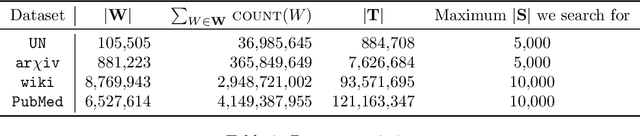
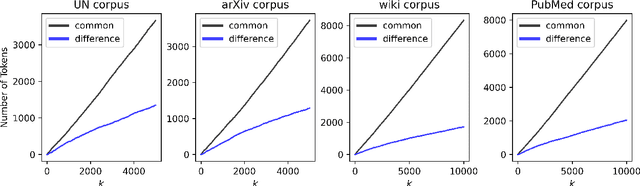
Tokenization is the process of encoding strings into tokens from a fixed vocabulary of size $k$ and is widely utilized in Natural Language Processing applications. The leading tokenization algorithm today is Byte Pair Encoding (BPE), which formulates the tokenization problem as a compression problem and tackles it by performing sequences of merges. In this work, we formulate tokenization as an optimization objective, show that it is NP-hard via a simple reduction from vertex cover, and propose a polynomial-time greedy algorithm GreedTok. Our formulation naturally relaxes to the well-studied weighted maximum coverage problem which has a simple $(1 - 1/e)$-approximation algorithm GreedWMC. Through empirical evaluations on real-world corpora, we show that GreedTok outperforms BPE, while achieving a comparable objective score as GreedWMC (which could have achieved a higher score due to relaxation).
Learning multivariate Gaussians with imperfect advice
Nov 21, 2024
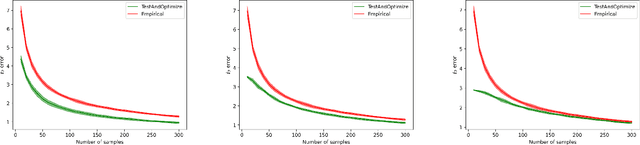
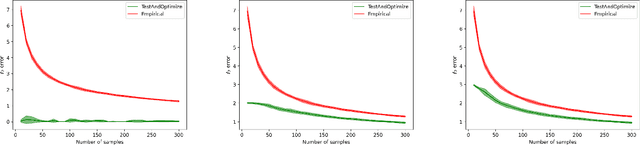
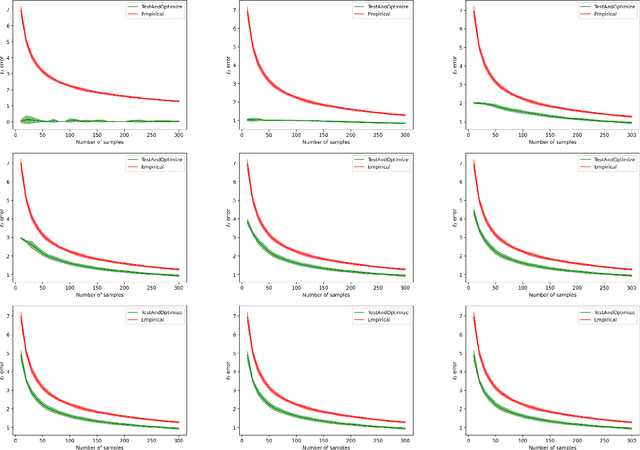
We revisit the problem of distribution learning within the framework of learning-augmented algorithms. In this setting, we explore the scenario where a probability distribution is provided as potentially inaccurate advice on the true, unknown distribution. Our objective is to develop learning algorithms whose sample complexity decreases as the quality of the advice improves, thereby surpassing standard learning lower bounds when the advice is sufficiently accurate. Specifically, we demonstrate that this outcome is achievable for the problem of learning a multivariate Gaussian distribution $N(\boldsymbol{\mu}, \boldsymbol{\Sigma})$ in the PAC learning setting. Classically, in the advice-free setting, $\tilde{\Theta}(d^2/\varepsilon^2)$ samples are sufficient and worst case necessary to learn $d$-dimensional Gaussians up to TV distance $\varepsilon$ with constant probability. When we are additionally given a parameter $\tilde{\boldsymbol{\Sigma}}$ as advice, we show that $\tilde{O}(d^{2-\beta}/\varepsilon^2)$ samples suffices whenever $\| \tilde{\boldsymbol{\Sigma}}^{-1/2} \boldsymbol{\Sigma} \tilde{\boldsymbol{\Sigma}}^{-1/2} - \boldsymbol{I_d} \|_1 \leq \varepsilon d^{1-\beta}$ (where $\|\cdot\|_1$ denotes the entrywise $\ell_1$ norm) for any $\beta > 0$, yielding a polynomial improvement over the advice-free setting.