 Add to Chrome
 Add to Firefox
 Add to Edge
Rethinking LoRA Memory Through the Lens of KV Cache Compression
Jun 04, 2026
Parametric retrieval augmentation encodes document information into lightweight, document-specific modules such as LoRA adapters, reducing the need to include all evidence as input context. However, it remains unclear how this parameter-side memory interacts with context-side memory stored in the KV cache. We study this interaction in document-level question answering by progressively evicting document key-value states and measuring when a document LoRA contributes beyond the retained context. We find that document LoRA adds little when the KV cache is largely intact, but becomes increasingly useful under aggressive compression, recovering 13-21 ROUGE-L points when no document context remains. The gain is largest when the base model encodes the document, and the adapter is applied only during answer generation, suggesting that document LoRA is better understood as decoding-time parametric memory than as a document encoder. Finally, QA-style supervision produces substantially stronger adapters than raw-context next-token-prediction. These results position document LoRA as a complementary memory channel whose value emerges precisely when context-side evidence is scarce.

Process Supervision of Confidence Margin for Calibrated LLM Reasoning
Apr 25, 2026Scaling test-time computation with reinforcement learning (RL) has emerged as a reliable path to improve large language models (LLM) reasoning ability. Yet, outcome-based reward often incentivizes models to be overconfident, leading to hallucinations, unreliable confidence-based control, and unnecessary compute allocation. We introduce Reinforcement Learning with Confidence Margin (\textbf{RLCM}), a calibration-aware RL framework that jointly optimizes correctness and confidence reliability via a margin-enhanced process reward over intermediate-budget completions. Rather than aligning confidence to correctness likelihoods, RLCM encourages to widen the confidence margin between correct and incorrect steps within a single reasoning trajectory. Across mathematical, code, logic and science benchmarks, our method substantially improves calibration while maintaining or improving accuracy. We further show that, with calibrated confidence signals, the resulting models enable more efficient conformal risk control and effective confidence-weighted aggregation.
A Brief Comparison of Training-Free Multi-Vector Sequence Compression Methods
Mar 23, 2026While multi-vector retrieval models outperform single-vector models of comparable size in retrieval quality, their practicality is limited by substantially larger index sizes, driven by the additional sequence-length dimension in their document embeddings. Because document embedding size dictates both memory overhead and query latency, compression is essential for deployment. In this work, we present an evaluation of training-free methods targeting the token sequence length, a dimension unique to multi-vector retrieval. Our findings suggest that token merging is strictly superior to token pruning for reducing index size while maintaining retrieval effectiveness.
Multi-Vector Index Compression in Any Modality
Feb 24, 2026We study efficient multi-vector retrieval for late interaction in any modality. Late interaction has emerged as a dominant paradigm for information retrieval in text, images, visual documents, and videos, but its computation and storage costs grow linearly with document length, making it costly for image-, video-, and audio-rich corpora. To address this limitation, we explore query-agnostic methods for compressing multi-vector document representations under a constant vector budget. We introduce four approaches for index compression: sequence resizing, memory tokens, hierarchical pooling, and a novel attention-guided clustering (AGC). AGC uses an attention-guided mechanism to identify the most semantically salient regions of a document as cluster centroids and to weight token aggregation. Evaluating these methods on retrieval tasks spanning text (BEIR), visual-document (ViDoRe), and video (MSR-VTT, MultiVENT 2.0), we show that attention-guided clustering consistently outperforms other parameterized compression methods (sequence resizing and memory tokens), provides greater flexibility in index size than non-parametric hierarchical clustering, and achieves competitive or improved performance compared to a full, uncompressed index. The source code is available at: github.com/hanxiangqin/omni-col-press.
More Than Efficiency: Embedding Compression Improves Domain Adaptation in Dense Retrieval
Jan 20, 2026Dense retrievers powered by pretrained embeddings are widely used for document retrieval but struggle in specialized domains due to the mismatches between the training and target domain distributions. Domain adaptation typically requires costly annotation and retraining of query-document pairs. In this work, we revisit an overlooked alternative: applying PCA to domain embeddings to derive lower-dimensional representations that preserve domain-relevant features while discarding non-discriminative components. Though traditionally used for efficiency, we demonstrate that this simple embedding compression can effectively improve retrieval performance. Evaluated across 9 retrievers and 14 MTEB datasets, PCA applied solely to query embeddings improves NDCG@10 in 75.4% of model-dataset pairs, offering a simple and lightweight method for domain adaptation.
GRPO-LEAD: A Difficulty-Aware Reinforcement Learning Approach for Concise Mathematical Reasoning in Language Models
Apr 13, 2025Recent advances in R1-like reasoning models leveraging Group Relative Policy Optimization (GRPO) have significantly improved the performance of language models on mathematical reasoning tasks. However, current GRPO implementations encounter critical challenges, including reward sparsity due to binary accuracy metrics, limited incentives for conciseness, and insufficient focus on complex reasoning tasks. To address these issues, we propose GRPO-LEAD, a suite of novel enhancements tailored for mathematical reasoning. Specifically, GRPO-LEAD introduces (1) a length-dependent accuracy reward to encourage concise and precise solutions, (2) an explicit penalty mechanism for incorrect answers to sharpen decision boundaries, and (3) a difficulty-aware advantage reweighting strategy that amplifies learning signals for challenging problems. Furthermore, we systematically examine the impact of model scale and supervised fine-tuning (SFT) strategies, demonstrating that larger-scale base models and carefully curated datasets significantly enhance reinforcement learning effectiveness. Extensive empirical evaluations and ablation studies confirm that GRPO-LEAD substantially mitigates previous shortcomings, resulting in language models that produce more concise, accurate, and robust reasoning across diverse mathematical tasks.
TAU: Modeling Temporal Consistency Through Temporal Attentive U-Net for PPG Peak Detection
Mar 13, 2025Photoplethysmography (PPG) sensors have been widely used in consumer wearable devices to monitor heart rates (HR) and heart rate variability (HRV). Despite the prevalence, PPG signals can be contaminated by motion artifacts induced from daily activities. Existing approaches mainly use the amplitude information to perform PPG peak detection. However, these approaches cannot accurately identify peaks, since motion artifacts may bring random and significant amplitude variations. To improve the performance of PPG peak detection, the time information can be used. Specifically, heart rates exhibit temporal consistency that consecutive heartbeat intervals in a normal person can have limited variations. To leverage the temporal consistency, we propose the Temporal Attentive U-Net, i.e., TAU, to accurately detect peaks from PPG signals. In TAU, we design a time module that encodes temporal consistency in temporal embeddings. We integrate the amplitude information with temporal embeddings using the attention mechanism to estimate peak labels. Our experimental results show that TAU outperforms eleven baselines on heart rate estimation by more than 22.4%. Our TAU model achieves the best performance across various Signal-to-Noise Ratio (SNR) levels. Moreover, we achieve Pearson correlation coefficients higher than 0.9 (p < 0.01) on estimating HRV features from low-noise-level PPG signals.
Position Information Emerges in Causal Transformers Without Positional Encodings via Similarity of Nearby Embeddings
Dec 30, 2024



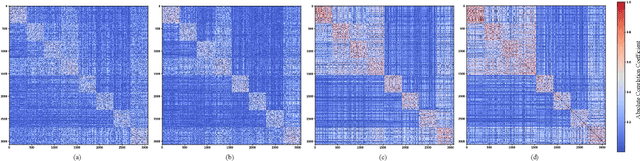
Transformers with causal attention can solve tasks that require positional information without using positional encodings. In this work, we propose and investigate a new hypothesis about how positional information can be stored without using explicit positional encoding. We observe that nearby embeddings are more similar to each other than faraway embeddings, allowing the transformer to potentially reconstruct the positions of tokens. We show that this pattern can occur in both the trained and the randomly initialized Transformer models with causal attention and no positional encodings over a common range of hyperparameters.
Breaking Symmetry When Training Transformers
Feb 06, 2024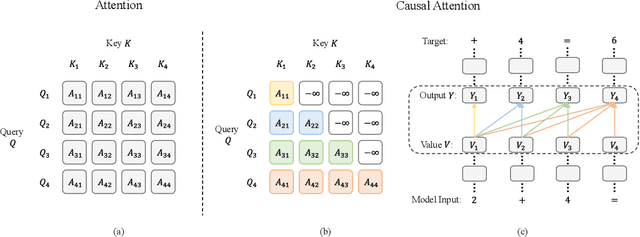

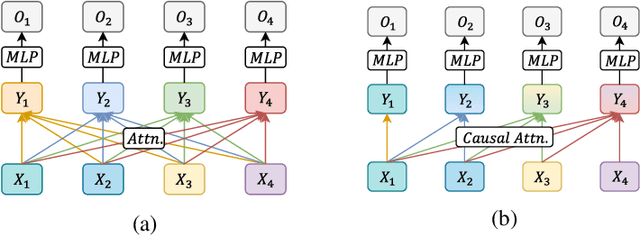
As we show in this paper, the prediction for output token $n+1$ of Transformer architectures without one of the mechanisms of positional encodings and causal attention is invariant to permutations of input tokens $1, 2, ..., n-1$. Usually, both mechanisms are employed and the symmetry with respect to the input tokens is broken. Recently, it has been shown that one can train Transformers without positional encodings. This must be enabled by the causal attention mechanism. In this paper, we elaborate on the argument that the causal connection mechanism must be responsible for the fact that Transformers are able to model input sequences where the order is important. Vertical "slices" of Transformers are all encouraged to represent the same location $k$ in the input sequence. We hypothesize that residual connections contribute to this phenomenon, and demonstrate evidence for this.