 Add to Chrome
 Add to Firefox
 Add to Edge
Auto-FL-Research: Agentic Search for Federated Learning Algorithms
Jul 01, 2026
Federated learning (FL) research often depends on many small but consequential algorithmic choices: optimizer variants, server aggregation rules, local training schedules, normalization, regularization, and model architecture. These choices are expensive to explore manually and difficult to compare fairly when candidate changes can also alter the FL training or evaluation path. In this work, we present Auto-FL-Research (AFR), a constrained coding-agent workflow for FL algorithmic recipe search. Agents may propose and implement candidate training algorithms, including server aggregation rules, client update schedules, local objectives, and registered model variants, while task profiles fix the mutation surface, compute budget, communication contract, and final model evaluation. Each campaign records candidate scores, runtime, edited files, artifacts, and failure status. We evaluate AFR on five healthcare cross-silo FLamby tasks and on grouped-client profiles for the five fixed LEAF datasets plus the LEAF synthetic task. Five-seed repeat evaluations support gains on four FLamby tasks and five of six LEAF profiles, while also exposing seed-sensitive and search-selected failure cases. Same-budget controls show that several gains correspond to FL-recipe changes, whereas other improvements are recovered by fixed-surface scalar controls or fail under repeat or held-out evaluation. These mixed outcomes are part of the contribution: they show how agent-generated candidates can be separated into repeated FL mechanisms, fixed-surface tuning effects, and selected single-run artifacts.

Privacy-Preserving Federated Fraud Detection in Payment Transactions with NVIDIA FLARE
Mar 13, 2026Fraud-related financial losses continue to rise, while regulatory, privacy, and data-sovereignty constraints increasingly limit the feasibility of centralized fraud detection systems. Federated Learning (FL) has emerged as a promising paradigm for enabling collaborative model training across institutions without sharing raw transaction data. Yet, its practical effectiveness under realistic, non-IID financial data distributions remains insufficiently validated. In this work, we present a multi-institution, industry-oriented proof-of-concept study evaluating federated anomaly detection for payment transactions using the NVIDIA FLARE framework. We simulate a realistic federation of heterogeneous financial institutions, each observing distinct fraud typologies and operating under strict data isolation. Using a deep neural network trained via federated averaging (FedAvg), we demonstrate that federated models achieve a mean F1-score of 0.903 - substantially outperforming locally trained models (0.643) and closely approaching centralized training performance (0.925), while preserving full data sovereignty. We further analyze convergence behavior, showing that strong performance is achieved within 10 federated communication rounds, highlighting the operational viability of FL in latency- and cost-sensitive financial environments. To support deployment in regulated settings, we evaluate model interpretability using Shapley-based feature attribution and confirm that federated models rely on semantically coherent, domain-relevant decision signals. Finally, we incorporate sample-level differential privacy via DP-SGD and demonstrate favorable privacy-utility trade-offs...
C-FedRAG: A Confidential Federated Retrieval-Augmented Generation System
Dec 17, 2024
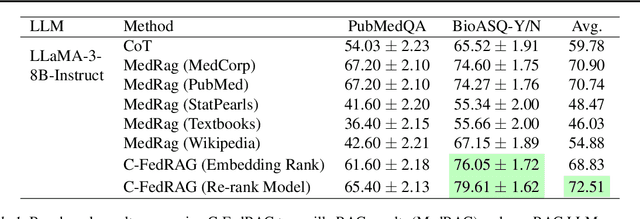

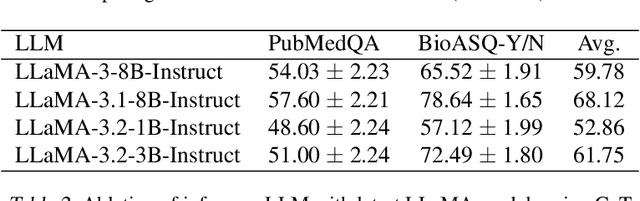
Organizations seeking to utilize Large Language Models (LLMs) for knowledge querying and analysis often encounter challenges in maintaining an LLM fine-tuned on targeted, up-to-date information that keeps answers relevant and grounded. Retrieval Augmented Generation (RAG) has quickly become a feasible solution for organizations looking to overcome the challenges of maintaining proprietary models and to help reduce LLM hallucinations in their query responses. However, RAG comes with its own issues regarding scaling data pipelines across tiered-access and disparate data sources. In many scenarios, it is necessary to query beyond a single data silo to provide richer and more relevant context for an LLM. Analyzing data sources within and across organizational trust boundaries is often limited by complex data-sharing policies that prohibit centralized data storage, therefore, inhibit the fast and effective setup and scaling of RAG solutions. In this paper, we introduce Confidential Computing (CC) techniques as a solution for secure Federated Retrieval Augmented Generation (FedRAG). Our proposed Confidential FedRAG system (C-FedRAG) enables secure connection and scaling of a RAG workflows across a decentralized network of data providers by ensuring context confidentiality. We also demonstrate how to implement a C-FedRAG system using the NVIDIA FLARE SDK and assess its performance using the MedRAG toolkit and MIRAGE benchmarking dataset.
Empowering Federated Learning for Massive Models with NVIDIA FLARE
Feb 12, 2024
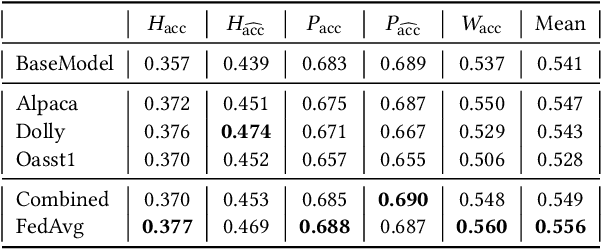
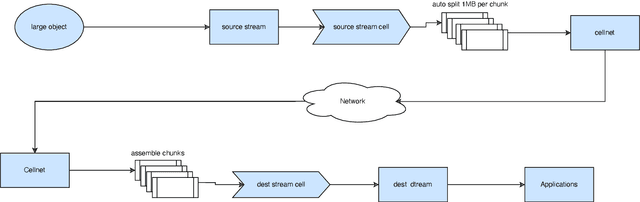

In the ever-evolving landscape of artificial intelligence (AI) and large language models (LLMs), handling and leveraging data effectively has become a critical challenge. Most state-of-the-art machine learning algorithms are data-centric. However, as the lifeblood of model performance, necessary data cannot always be centralized due to various factors such as privacy, regulation, geopolitics, copyright issues, and the sheer effort required to move vast datasets. In this paper, we explore how federated learning enabled by NVIDIA FLARE can address these challenges with easy and scalable integration capabilities, enabling parameter-efficient and full supervised fine-tuning of LLMs for natural language processing and biopharmaceutical applications to enhance their accuracy and robustness.
NVIDIA FLARE: Federated Learning from Simulation to Real-World
Oct 24, 2022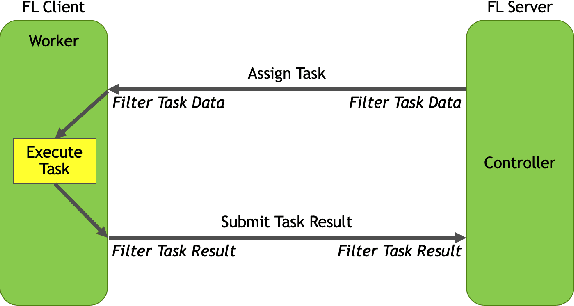
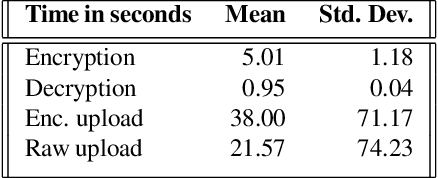

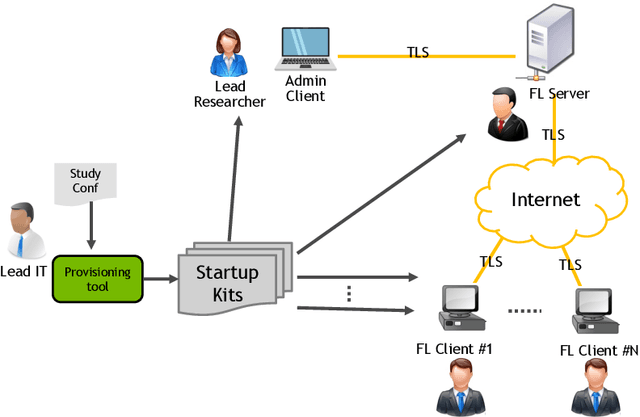
Federated learning (FL) enables building robust and generalizable AI models by leveraging diverse datasets from multiple collaborators without centralizing the data. We created NVIDIA FLARE as an open-source software development kit (SDK) to make it easier for data scientists to use FL in their research and real-world applications. The SDK includes solutions for state-of-the-art FL algorithms and federated machine learning approaches, which facilitate building workflows for distributed learning across enterprises and enable platform developers to create a secure, privacy-preserving offering for multiparty collaboration utilizing homomorphic encryption or differential privacy. The SDK is a lightweight, flexible, and scalable Python package, and allows researchers to bring their data science workflows implemented in any training libraries (PyTorch, TensorFlow, XGBoost, or even NumPy) and apply them in real-world FL settings. This paper introduces the key design principles of FLARE and illustrates some use cases (e.g., COVID analysis) with customizable FL workflows that implement different privacy-preserving algorithms. Code is available at https://github.com/NVIDIA/NVFlare.