 Add to Chrome
 Add to Firefox
 Add to Edge
CARE: An Explainable Computational Framework for Assessing Client-Perceived Therapeutic Alliance Using Large Language Models
Feb 24, 2026
Client perceptions of the therapeutic alliance are critical for counseling effectiveness. Accurately capturing these perceptions remains challenging, as traditional post-session questionnaires are burdensome and often delayed, while existing computational approaches produce coarse scores, lack interpretable rationales, and fail to model holistic session context. We present CARE, an LLM-based framework to automatically predict multi-dimensional alliance scores and generate interpretable rationales from counseling transcripts. Built on the CounselingWAI dataset and enriched with 9,516 expert-curated rationales, CARE is fine-tuned using rationale-augmented supervision with the LLaMA-3.1-8B-Instruct backbone. Experiments show that CARE outperforms leading LLMs and substantially reduces the gap between counselor evaluations and client-perceived alliance, achieving over 70% higher Pearson correlation with client ratings. Rationale-augmented supervision further improves predictive accuracy. CARE also produces high-quality, contextually grounded rationales, validated by both automatic and human evaluations. Applied to real-world Chinese online counseling sessions, CARE uncovers common alliance-building challenges, illustrates how interaction patterns shape alliance development, and provides actionable insights, demonstrating its potential as an AI-assisted tool for supporting mental health care.

Applications of BERT Based Sequence Tagging Models on Chinese Medical Text Attributes Extraction
Aug 22, 2020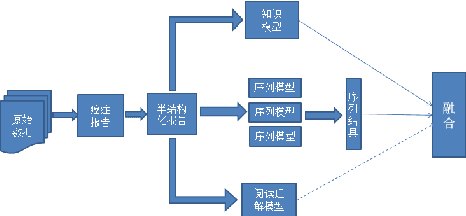
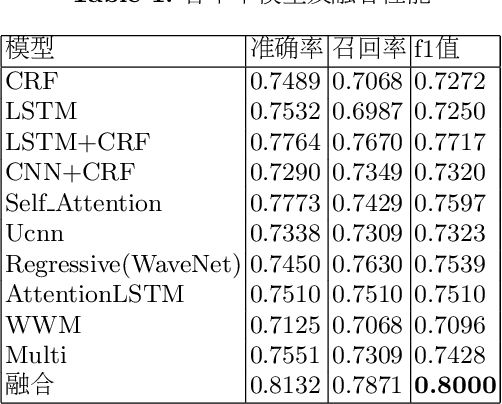
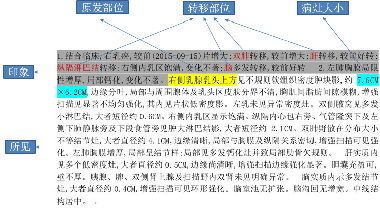
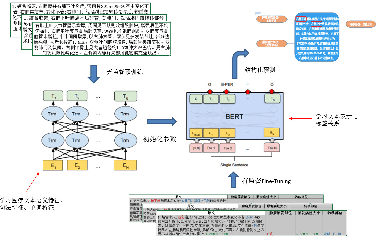
We convert the Chinese medical text attributes extraction task into a sequence tagging or machine reading comprehension task. Based on BERT pre-trained models, we have not only tried the widely used LSTM-CRF sequence tagging model, but also other sequence models, such as CNN, UCNN, WaveNet, SelfAttention, etc, which reaches similar performance as LSTM+CRF. This sheds a light on the traditional sequence tagging models. Since the aspect of emphasis for different sequence tagging models varies substantially, ensembling these models adds diversity to the final system. By doing so, our system achieves good performance on the task of Chinese medical text attributes extraction (subtask 2 of CCKS 2019 task 1).