 Add to Chrome
 Add to Firefox
 Add to Edge
GuidedVLA: Specifying Task-Relevant Factors via Plug-and-Play Action Attention Specialization
May 12, 2026
Vision-Language-Action (VLA) models aim for general robot learning by aligning action as a modality within powerful Vision-Language Models (VLMs). Existing VLAs rely on end-to-end supervision to implicitly enable the action decoding process to learn task-relevant features. However, without explicit guidance, these models often overfit to spurious correlations, such as visual shortcuts or environmental noise, limiting their generalization. In this paper, we introduce GuidedVLA, a framework designed to manually guide the action generation to focus on task-relevant factors. Our core insight is to treat the action decoder not as a monolithic learner, but as an assembly of functional components. Individual attention heads are supervised by manually defined auxiliary signals to capture distinct factors. As an initial study, we instantiate this paradigm with three specialized heads: object grounding, spatial geometry, and temporal skill logic. Across simulation and real-robot experiments, GuidedVLA improves success rates in both in-domain and out-of-domain settings compared to strong VLA baselines. Finally, we show that the quality of these specialized factors correlates positively with task performance and that our mechanism yields decoupled, high-quality features. Our results suggest that explicitly guiding action-decoder learning is a promising direction for building more robust and general VLA models.

Arena Model: Inference About Competitions
Nov 25, 2018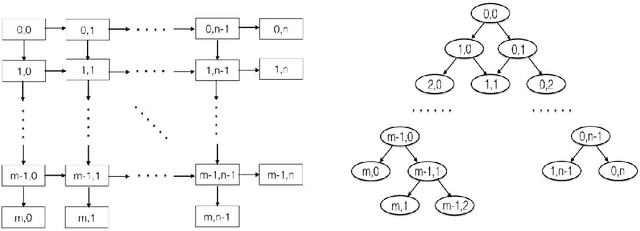
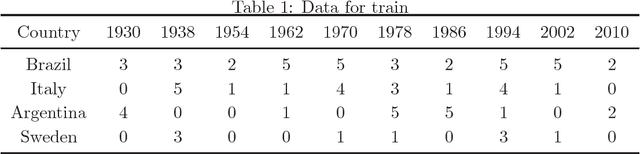
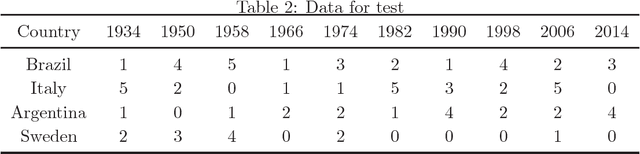
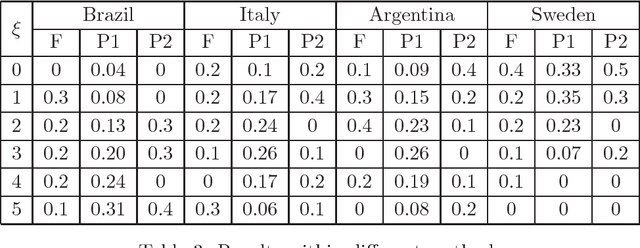
The authors propose a parametric model called the arena model for prediction in paired competitions, i.e. paired comparisons with eliminations and bifurcations. The arena model has a number of appealing advantages. First, it predicts the results of competitions without rating many individuals. Second, it takes full advantage of the structure of competitions. Third, the model provides an easy method to quantify the uncertainty in competitions. Fourth, some of our methods can be directly generalized for comparisons among three or more individuals. Furthermore, the authors identify an invariant Bayes estimator with regard to the prior distribution and prove the consistency of the estimations of uncertainty. Currently, the arena model is not effective in tracking the change of strengths of individuals, but its basic framework provides a solid foundation for future study of such cases.