 Add to Chrome
 Add to Firefox
 Add to Edge
IB-RL: Isolated Bilateral Reinforcement Learning for Strategic Dialogue Agents
Aug 07, 2026
Reinforcement learning (RL) has achieved strong results in improving large language models (LLMs) on tasks with stationary, verifiable rewards, such as mathematical reasoning and code execution. In these settings, the environment follows fixed rules and does not adapt strategically to the agent. Strategic dialogue differs in this respect: the environment is another agent that adapts to the policy, and success depends on the interaction between the two sides. Despite this interactive nature, current RL approaches typically train a target agent against a fixed counterpart or simulator. We find that this training paradigm encourages the policy to exploit counterpart-specific regularities rather than learn strategies that generalize across counterparts. We call this problem the static-counterpart mismatch, which we quantify directly in our experiments. To address it, we propose Isolated Bilateral Reinforcement Learning (IB-RL), in which the two roles coevolve through joint rollouts while each role optimizes its own reward through fully independent advantages, action masks, and update paths. We evaluate frozen policies against fully independent held-out counterparts in both domains. On Vehicle TeleSales, IB-RL achieves 89.6% Success@1, compared to 84.6% for the best unilateral RL baseline. On Deal-or-NoDeal, it reaches 98.4% agreement against DeepSeek V4 Pro, compared to 86.4% for the best unilateral baseline. These results indicate that jointly training both roles with strict peragent isolation produces policies that generalize more effectively to unseen counterparts.

Explaining the Attention Mechanism of End-to-End Speech Recognition Using Decision Trees
Oct 08, 2021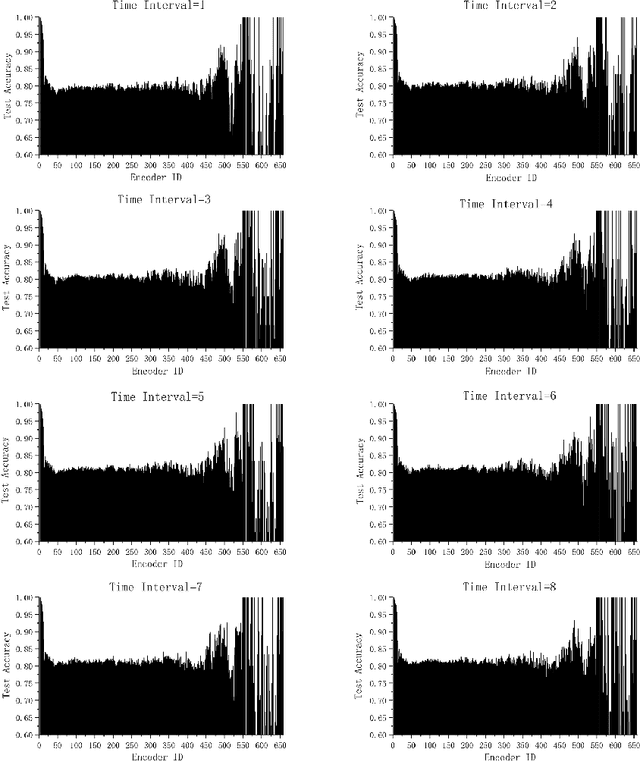
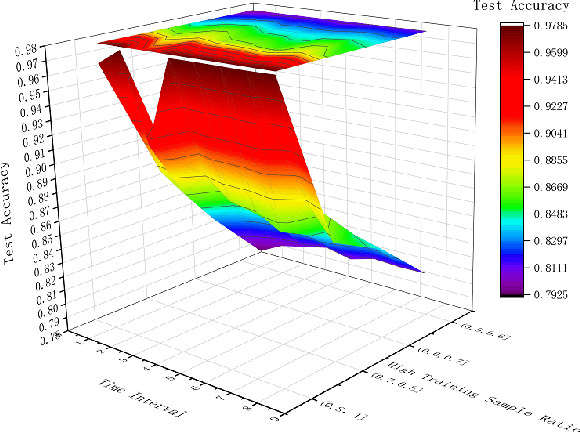
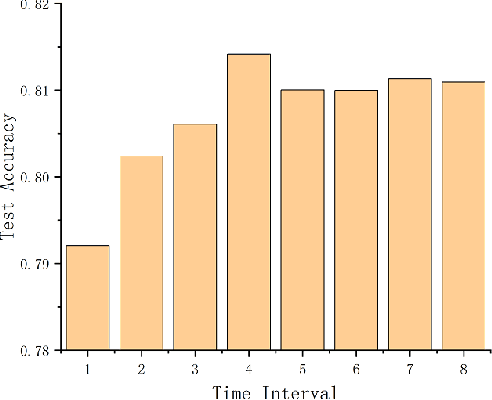
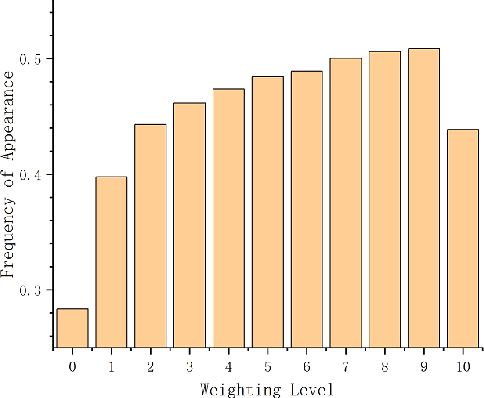
The attention mechanism has largely improved the performance of end-to-end speech recognition systems. However, the underlying behaviours of attention is not yet clearer. In this study, we use decision trees to explain how the attention mechanism impact itself in speech recognition. The results indicate that attention levels are largely impacted by their previous states rather than the encoder and decoder patterns. Additionally, the default attention mechanism seems to put more weights on closer states, but behaves poorly on modelling long-term dependencies of attention states.
SINGA-Easy: An Easy-to-Use Framework for MultiModal Analysis
Aug 03, 2021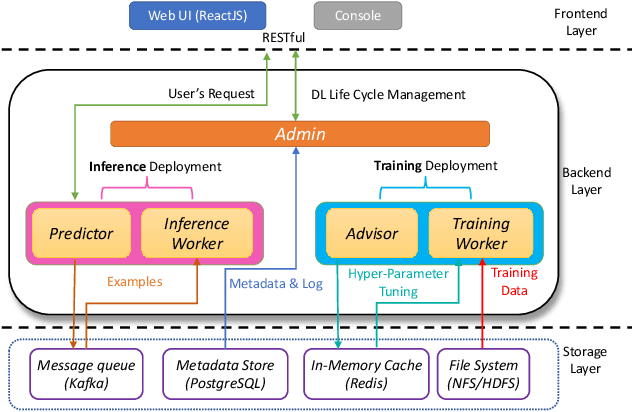
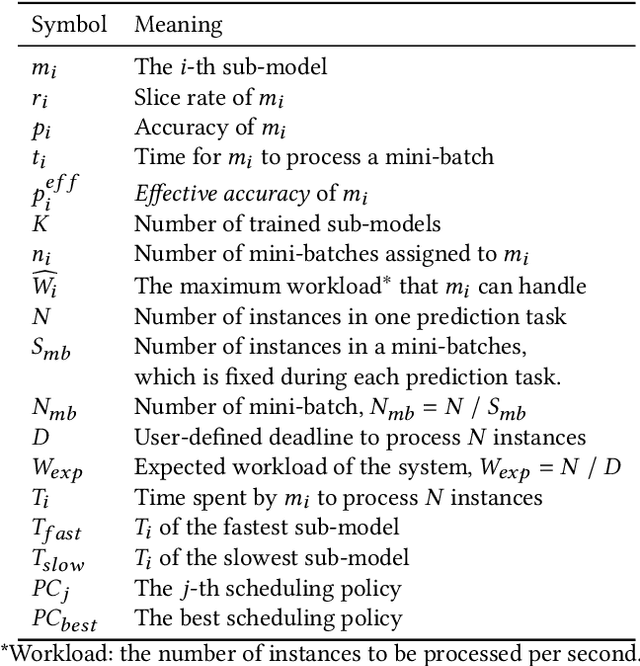
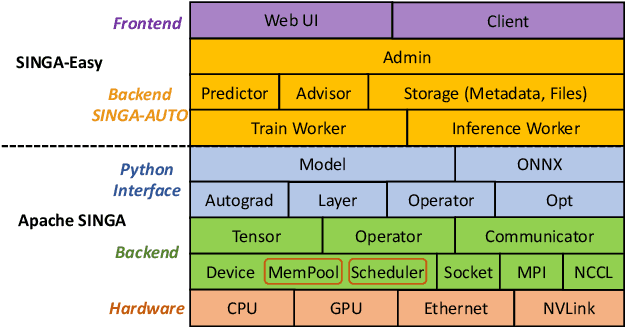
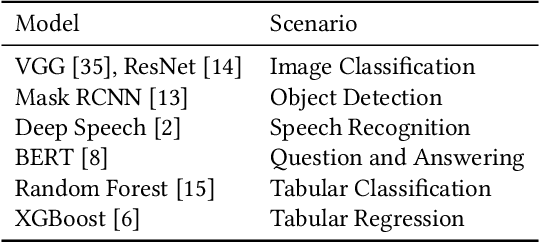
Deep learning has achieved great success in a wide spectrum of multimedia applications such as image classification, natural language processing and multimodal data analysis. Recent years have seen the development of many deep learning frameworks that provide a high-level programming interface for users to design models, conduct training and deploy inference. However, it remains challenging to build an efficient end-to-end multimedia application with most existing frameworks. Specifically, in terms of usability, it is demanding for non-experts to implement deep learning models, obtain the right settings for the entire machine learning pipeline, manage models and datasets, and exploit external data sources all together. Further, in terms of adaptability, elastic computation solutions are much needed as the actual serving workload fluctuates constantly, and scaling the hardware resources to handle the fluctuating workload is typically infeasible. To address these challenges, we introduce SINGA-Easy, a new deep learning framework that provides distributed hyper-parameter tuning at the training stage, dynamic computational cost control at the inference stage, and intuitive user interactions with multimedia contents facilitated by model explanation. Our experiments on the training and deployment of multi-modality data analysis applications show that the framework is both usable and adaptable to dynamic inference loads. We implement SINGA-Easy on top of Apache SINGA and demonstrate our system with the entire machine learning life cycle.