 Add to Chrome
 Add to Firefox
 Add to Edge
Super-Resolution of Brain MRI Images using Overcomplete Dictionaries and Nonlocal Similarity
Feb 13, 2019
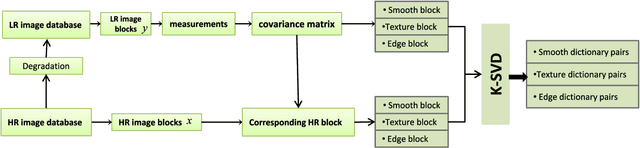
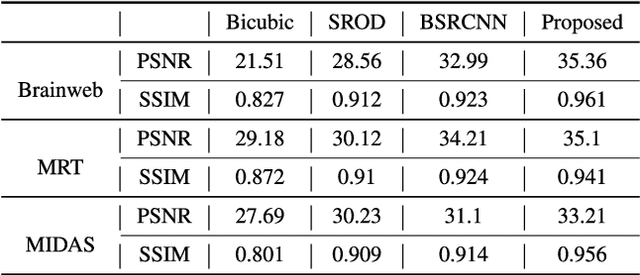
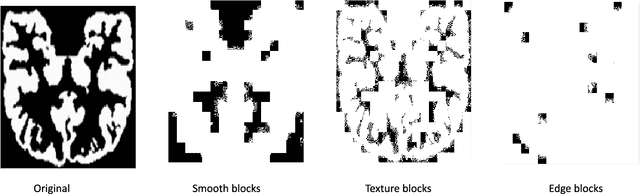
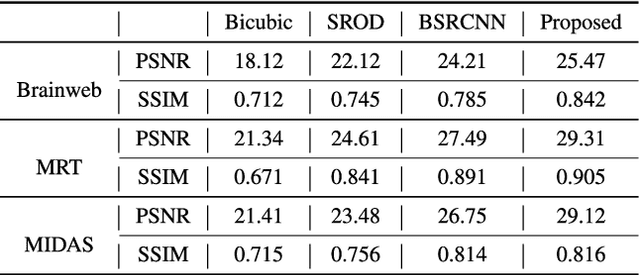
Recently, the Magnetic Resonance Imaging (MRI) images have limited and unsatisfactory resolutions due to various constraints such as physical, technological and economic considerations. Super-resolution techniques can obtain high-resolution MRI images. The traditional methods obtained the resolution enhancement of brain MRI by interpolations, affecting the accuracy of the following diagnose process. The requirement for brain image quality is fast increasing. In this paper, we propose an image super-resolution (SR) method based on overcomplete dictionaries and inherent similarity of an image to recover the high-resolution (HR) image from a single low-resolution (LR) image. We explore the nonlocal similarity of the image to tentatively search for similar blocks in the whole image and present a joint reconstruction method based on compressive sensing (CS) and similarity constraints. The sparsity and self-similarity of the image blocks are taken as the constraints. The proposed method is summarized in the following steps. First, a dictionary classification method based on the measurement domain is presented. The image blocks are classified into smooth, texture and edge parts by analyzing their features in the measurement domain. Then, the corresponding dictionaries are trained using the classified image blocks. Equally important, in the reconstruction part, we use the CS reconstruction method to recover the HR brain MRI image, considering both nonlocal similarity and the sparsity of an image as the constraints. This method performs better both visually and quantitatively than some existing methods.

Structured Bayesian Compression for Deep models in mobile enabled devices for connected healthcare
Feb 13, 2019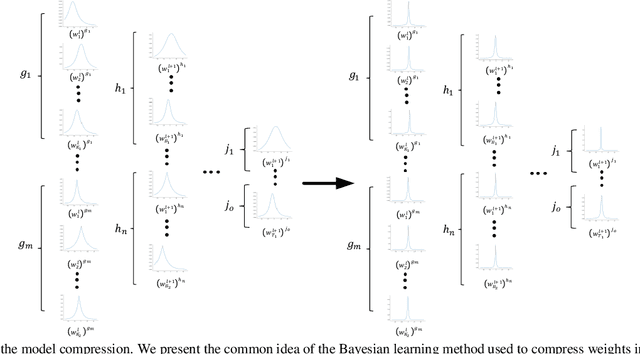
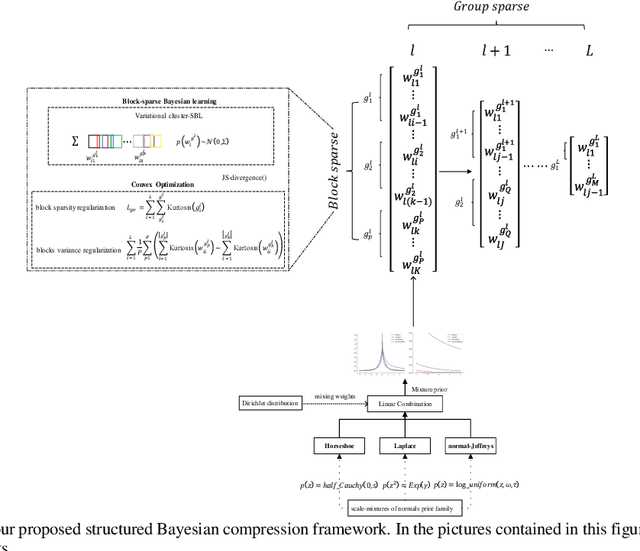
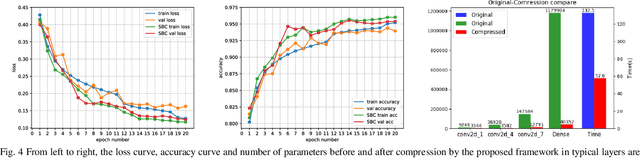
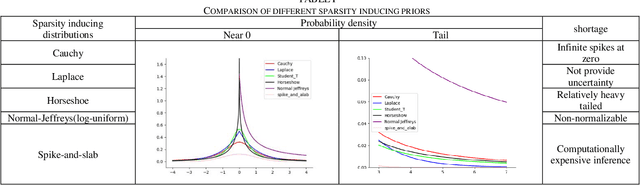
Deep Models, typically Deep neural networks, have millions of parameters, analyze medical data accurately, yet in a time-consuming method. However, energy cost effectiveness and computational efficiency are important for prerequisites developing and deploying mobile-enabled devices, the mainstream trend in connected healthcare.
Social Vehicle Swarms: A Novel Perspective on Social-aware Vehicular Communication Architecture
Oct 29, 2018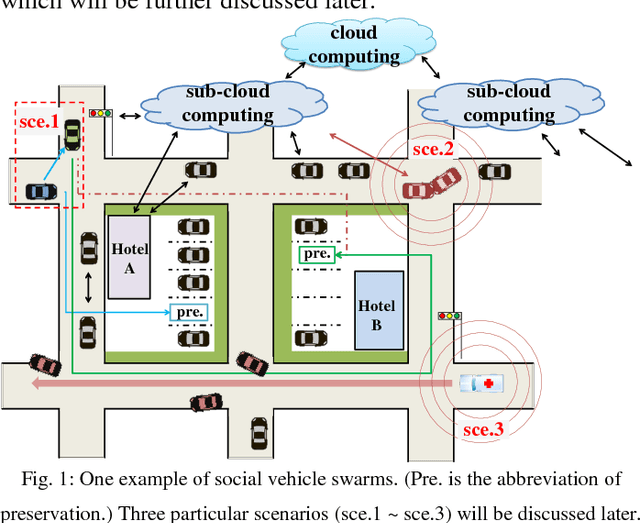
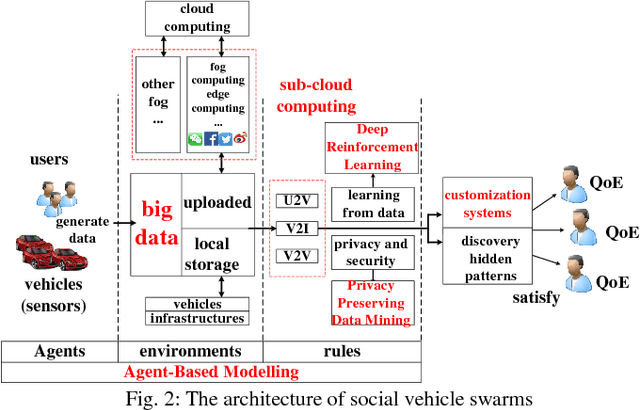
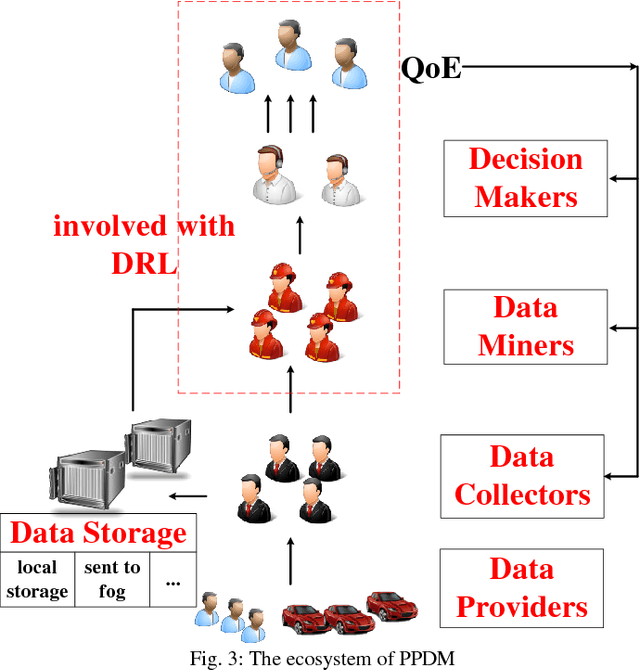
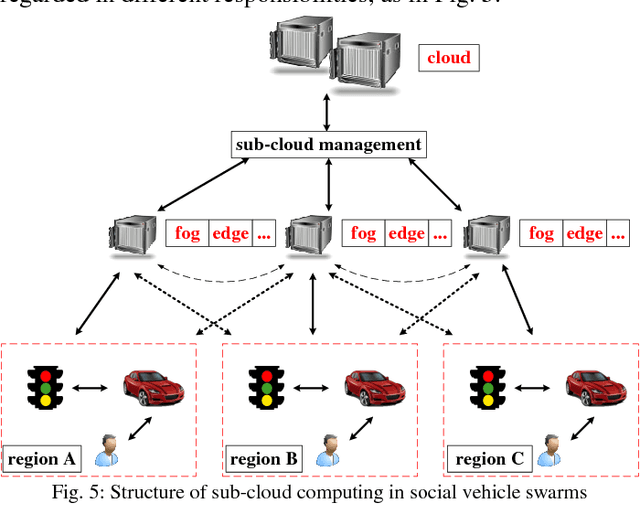
Internet of vehicles is a promising area related to D2D communication and internet of things. We present a novel perspective for vehicular communications, social vehicle swarms, to study and analyze socially aware internet of vehicles with the assistance of an agent-based model intended to reveal hidden patterns behind superficial data. After discussing its components, namely its agents, environments, and rules, we introduce supportive technology and methods, deep reinforcement learning, privacy preserving data mining and sub-cloud computing, in order to detect the most significant and interesting information for each individual effectively, which is the key desire. Finally, several relevant research topics and challenges are discussed.
Saliency deep embedding for aurora image search
May 23, 2018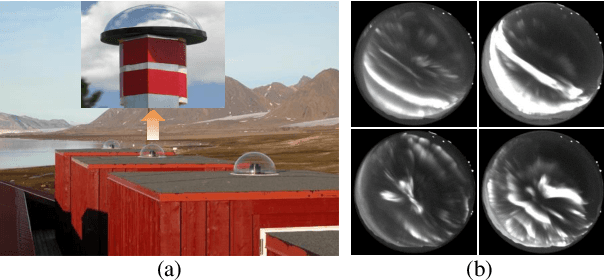
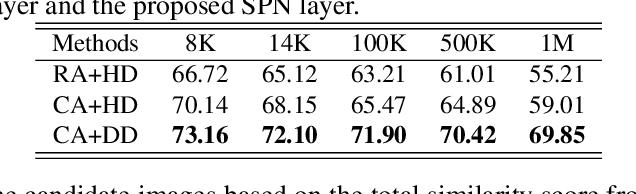
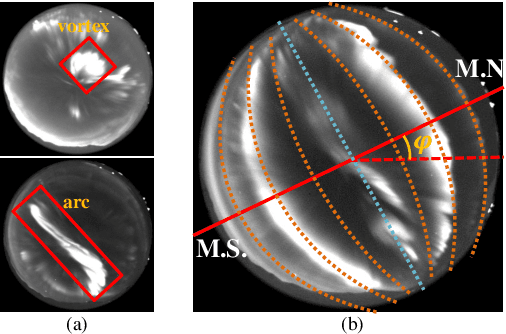
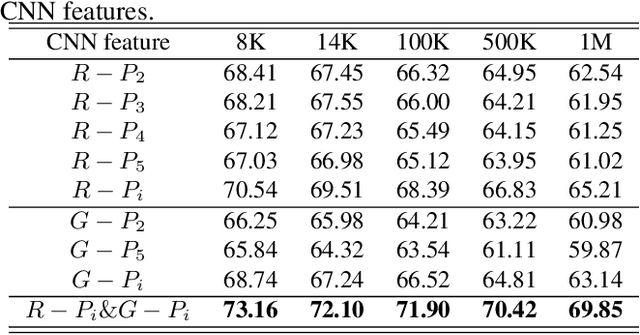
Deep neural networks have achieved remarkable success in the field of image search. However, the state-of-the-art algorithms are trained and tested for natural images captured with ordinary cameras. In this paper, we aim to explore a new search method for images captured with circular fisheye lens, especially the aurora images. To reduce the interference from uninformative regions and focus on the most interested regions, we propose a saliency proposal network (SPN) to replace the region proposal network (RPN) in the recent Mask R-CNN. In our SPN, the centers of the anchors are not distributed in a rectangular meshing manner, but exhibit spherical distortion. Additionally, the directions of the anchors are along the deformation lines perpendicular to the magnetic meridian, which perfectly accords with the imaging principle of circular fisheye lens. Extensive experiments are performed on the big aurora data, demonstrating the superiority of our method in both search accuracy and efficiency.
FPAN: Fine-grained and Progressive Attention Localization Network for Data Retrieval
Apr 05, 2018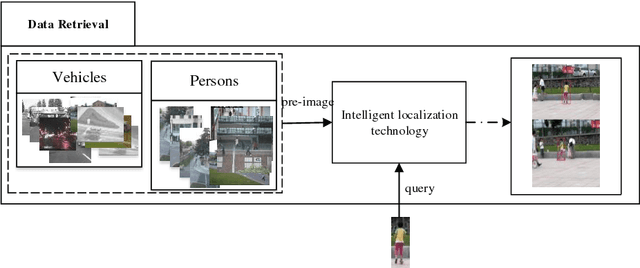
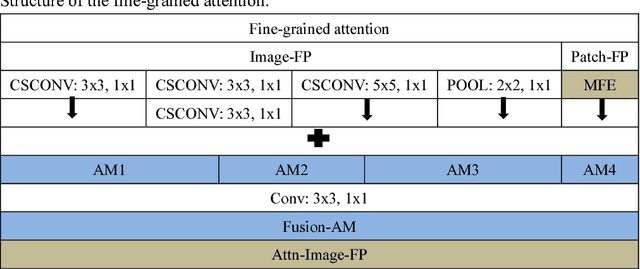
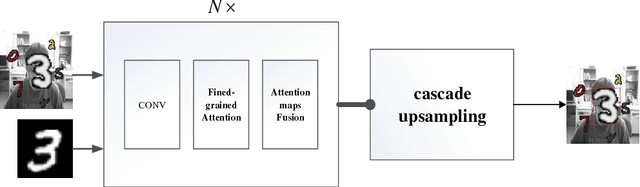
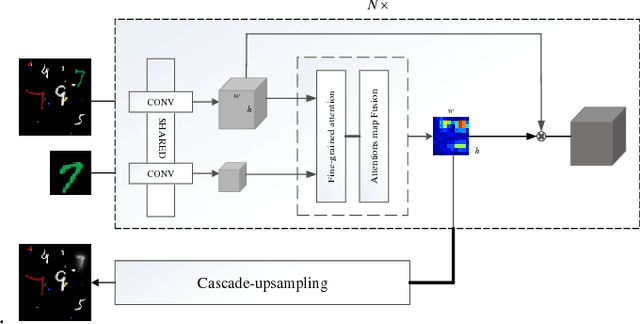
The Localization of the target object for data retrieval is a key issue in the Intelligent and Connected Transportation Systems (ICTS). However, due to lack of intelligence in the traditional transportation system, it can take tremendous resources to manually retrieve and locate the queried objects among a large number of images. In order to solve this issue, we propose an effective method to query-based object localization that uses artificial intelligence techniques to automatically locate the queried object in the complex background. The presented method is termed as Fine-grained and Progressive Attention Localization Network (FPAN), which uses an image and a queried object as input to accurately locate the target object in the image. Specifically, the fine-grained attention module is naturally embedded into each layer of the convolution neural network (CNN), thereby gradually suppressing the regions that are irrelevant to the queried object and eventually shrinking attention to the target area. We further employ top-down attentions fusion algorithm operated by a learnable cascade up-sampling structure to establish the connection between the attention map and the exact location of the queried object in the original image. Furthermore, the FPAN is trained by multi-task learning with box segmentation loss and cosine loss. At last, we conduct comprehensive experiments on both queried-based digit localization and object tracking with synthetic and benchmark datasets, respectively. The experimental results show that our algorithm is far superior to other algorithms in the synthesis datasets and outperforms most existing trackers on the OTB and VOT datasets.
Training-Free Synthesized Face Sketch Recognition Using Image Quality Assessment Metrics
Mar 25, 2016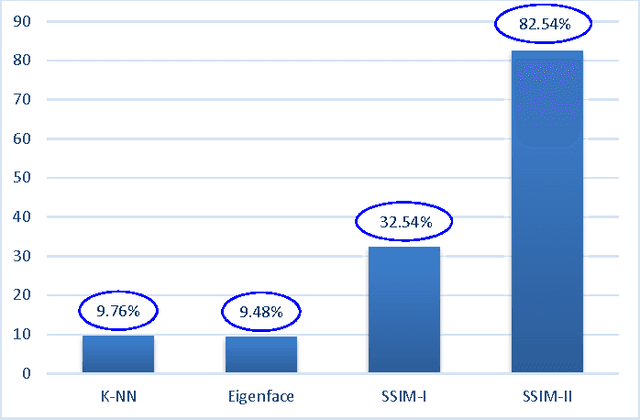
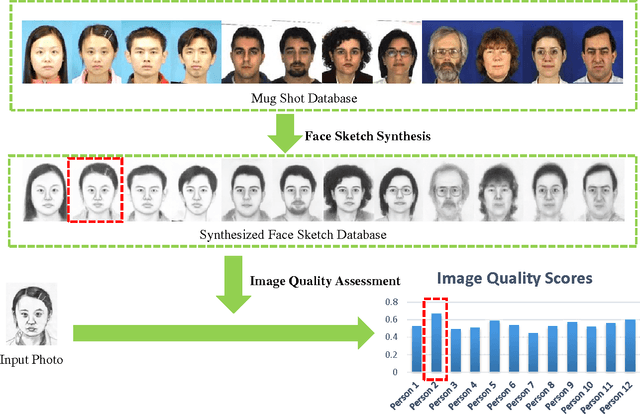
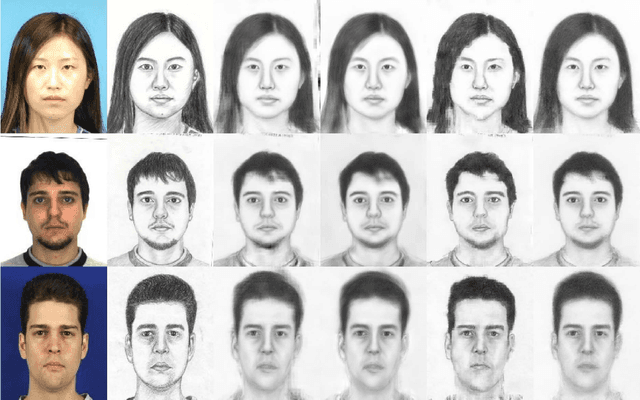
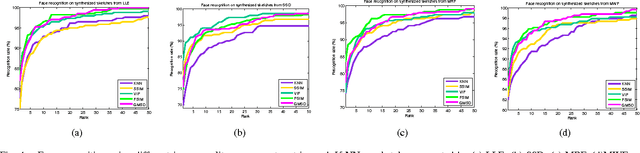
Face sketch synthesis has wide applications ranging from digital entertainments to law enforcements. Objective image quality assessment scores and face recognition accuracy are two mainly used tools to evaluate the synthesis performance. In this paper, we proposed a synthesized face sketch recognition framework based on full-reference image quality assessment metrics. Synthesized sketches generated from four state-of-the-art methods are utilized to test the performance of the proposed recognition framework. For the image quality assessment metrics, we employed the classical structured similarity index metric and other three prevalent metrics: visual information fidelity, feature similarity index metric and gradient magnitude similarity deviation. Extensive experiments compared with baseline methods illustrate the effectiveness of the proposed synthesized face sketch recognition framework. Data and implementation code in this paper are available online at www.ihitworld.com/WNN/IQA_Sketch.zip.