 Add to Chrome
 Add to Firefox
 Add to Edge
TSNN: A Non-parametric and Interpretable Framework for Traffic Time Series Forecasting
May 09, 2026
Although many complex models were proposed to analyze time series data, some studies have demonstrated remarkable performance with simpler structures. A recent study proposed a non-parametric framework for 3D point cloud classification, which has the potential to be adapted for time series forecasting and enable interpretability. Inspired by the previous works, we present TSNN, a non-parametric and interpretable framework for traffic time series forecasting. TSNN consists of multiple layers that decouple the time series by matching the entries in a memory bank, where the memory bank is constructed using a similar matching process within the training set. It leverages the periodicity in traffic data to enhance forecasting accuracy while maintaining a simple model architecture. The proposed model operates without trainable parameters, preserving its inherent interpretability. In the experiments, TSNN achieves competitive performance compared to the typical deep learning models in four real-world traffic flow datasets. We also visualize the decoupling process to show the effectiveness of the components. Finally, we demonstrate the interpretability of the model and illustrate the contribution of each time step within the memory bank.

Enhancing Trust in Clinically Significant Prostate Cancer Prediction with Multiple Magnetic Resonance Imaging Modalities
Nov 07, 2024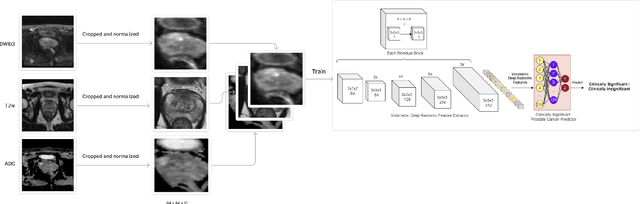
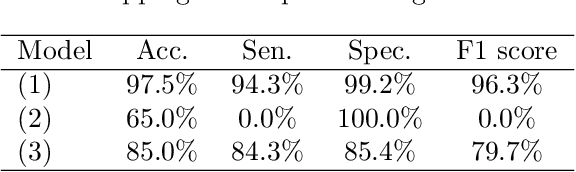
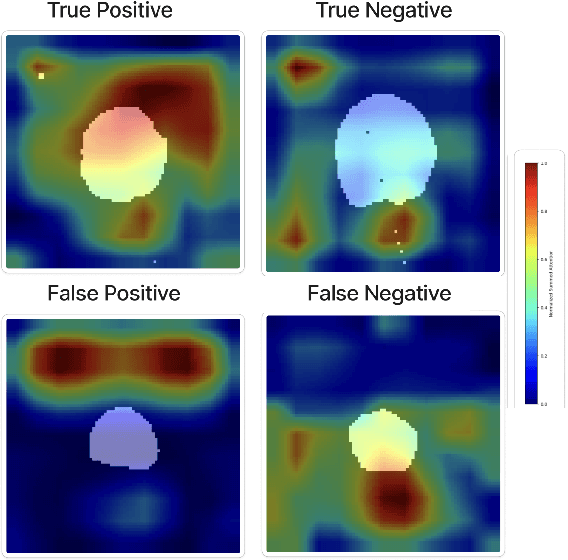
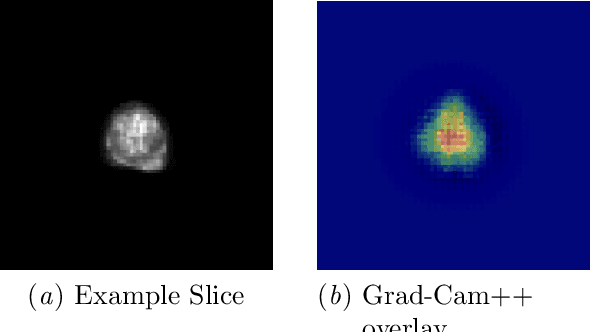
In the United States, prostate cancer is the second leading cause of deaths in males with a predicted 35,250 deaths in 2024. However, most diagnoses are non-lethal and deemed clinically insignificant which means that the patient will likely not be impacted by the cancer over their lifetime. As a result, numerous research studies have explored the accuracy of predicting clinical significance of prostate cancer based on magnetic resonance imaging (MRI) modalities and deep neural networks. Despite their high performance, these models are not trusted by most clinical scientists as they are trained solely on a single modality whereas clinical scientists often use multiple magnetic resonance imaging modalities during their diagnosis. In this paper, we investigate combining multiple MRI modalities to train a deep learning model to enhance trust in the models for clinically significant prostate cancer prediction. The promising performance and proposed training pipeline showcase the benefits of incorporating multiple MRI modalities for enhanced trust and accuracy.
Projective Transformation Rectification for Camera-captured Chest X-ray Photograph Interpretation with Synthetic Data
Oct 12, 2022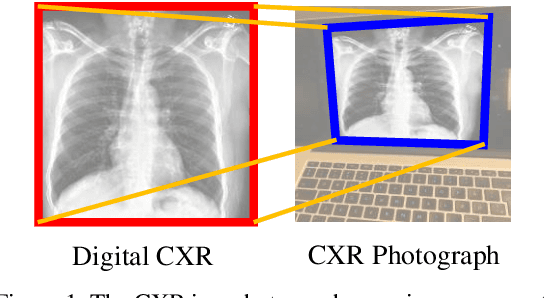
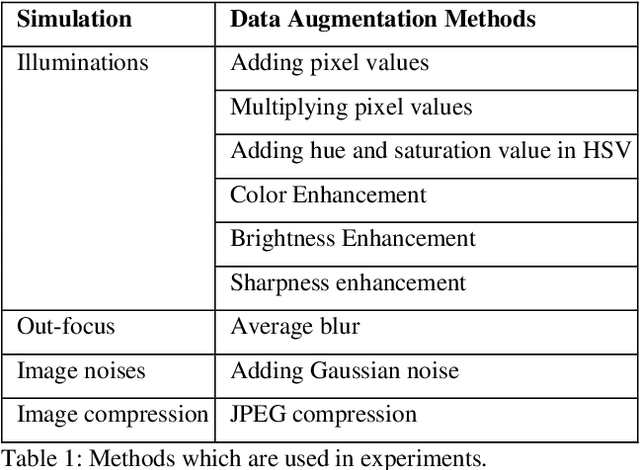
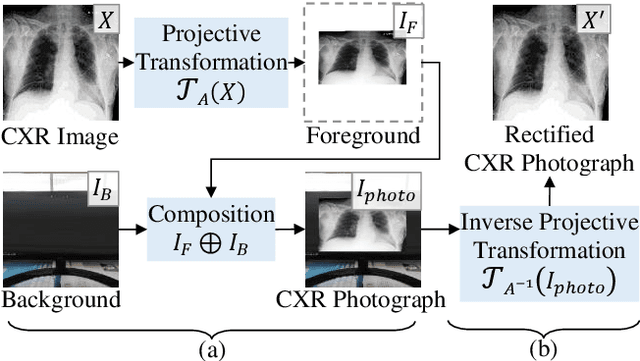
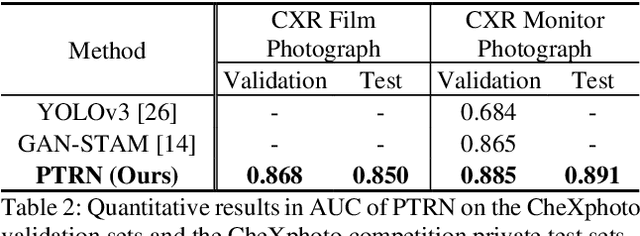
Automatic interpretation on smartphone-captured chest X-ray (CXR) photographs is challenging due to the geometric distortion (projective transformation) caused by the non-ideal camera position. In this paper, we proposed an innovative deep learning-based Projective Transformation Rectification Network (PTRN) to automatically rectify such distortions by predicting the projective transformation matrix. PTRN is trained on synthetic data to avoid the expensive collection of natural data. Therefore, we proposed an innovative synthetic data framework that accounts for the visual attributes of natural photographs including screen, background, illuminations, and visual artifacts, and generate synthetic CXR photographs and projective transformation matrices as the ground-truth labels for training PTRN. Finally, smartphone-captured CXR photographs are automatically rectified by trained PTRN and interpreted by a classifier trained on high-quality digital CXRs to produce final interpretation results. In the CheXphoto CXR photograph interpretation competition released by the Stanford University Machine Learning Group, our approach achieves a huge performance improvement and won first place (ours 0.850, second-best 0.762, in AUC). A deeper analysis demonstrates that the use of PTRN successfully achieves the performance on CXR photographs to the same level as on digital CXRs, indicating PTRN can eliminate all negative impacts of projective transformation to the interpretation performance. Additionally, there are many real-world scenarios where distorted photographs have to be used for image classification, our PTRN can be used to solve those similar problems due to its generality design.