 Add to Chrome
 Add to Firefox
 Add to Edge
Integrated Real-Time Testbed for Wideband RFID and Wireless Power Transfer
Jun 04, 2026
This contribution presents an experimental integrated real-time 8 x 8 distributed MIMO (D-MIMO) testbed for wideband backscatter communication (BSC) and wireless power transfer (WPT). The testbed operates in the 2.45 GHz band with coherent sampling at 200 MS/s, employs a backscatter link frequency of 40 kHz, and uses wideband 5G NR reference signals for excitation. We evaluate the testbed by exploiting the estimated channel state information (CSI) in two target applications: wireless power transfer towards the backscatter device (BD) and real-time positioning of a BD in an indoor environment. In conjunction with the baseband processing chain introduced, the testbed requires less than 2 ms of total airtime to excite the system and acquire the signals for subsequent synchronization and CSI estimation on uplink BSC signals. With the CSI, we demonstrate effective energy harvesting gains of up to 12 dB.

AI-enhanced Direct SLAM: A Principled Approach to Unsupervised Learning in Bayesian Inference
Mar 01, 2026In this paper, we propose an artificial intelligence (AI)-enhanced hybrid simultaneous localization and mapping (SLAM) method that performs Bayesian inference directly on raw radio-frequency (RF) signals while learning an environment model in an unsupervised manner. The approach combines a physically interpretable signal model for line-of-sight (LOS) components with an AI model that captures multipath component statistics. Building on this formulation, we develop a particle-based sumproduct algorithm (SPA) on a factor graph that jointly estimates the mobile terminal (MT) state, visibility, multipath parameters, and noise variances, and integrate it into a variational framework that maximizes the evidence lower bound (ELBO) to learn the neural network (NN) parametrization directly from measurements. We further present a highly efficient GPU-based implementation that enables parallel likelihood evaluation across particles and base stations (BSs). Simulation results in multipath environments demonstrate that the proposed method learns the generative, environment-dependent signal model in an unsupervised manner while accurately localizing the MT and effectively exploiting the learned map in obstructed-line-of-sight (OLOS) scenarios.
The IEEE Signal Processing Society's Leading Role in Developing Standards for Computational Imaging and Sensing: Part II
Oct 06, 2025In every imaging or sensing application, the physical hardware creates constraints that must be overcome or they limit system performance. Techniques that leverage additional degrees of freedom can effectively extend performance beyond the inherent physical capabilities of the hardware. An example includes synchronizing distributed sensors so as to synthesize a larger aperture for remote sensing applications. An additional example is integrating the communication and sensing functions in a wireless system through the clever design of waveforms and optimized resource management. As these technologies mature beyond the conceptual and prototype phase they will ultimately transition to the commercial market. Here, standards play a critical role in ensuring success. Standards ensure interoperability between systems manufactured by different vendors and define industry best practices for vendors and customers alike. The Signal Processing Society of the Institute for Electrical and Electronics Engineers (IEEE) plays a leading role in developing high-quality standards for computational sensing technologies through the working groups of the Synthetic Aperture Standards Committee (SASC). In this column we highlight the standards activities of the P3383 Performance Metrics for Integrated Sensing and Communication (ISAC) Systems Working Group and the P3343 Spatio-Temporal Synchronization of a Synthetic Aperture of Distributed Sensors Working Group.
Large Intelligent Surface Measurements for Joint Communication and Sensing
Apr 24, 2023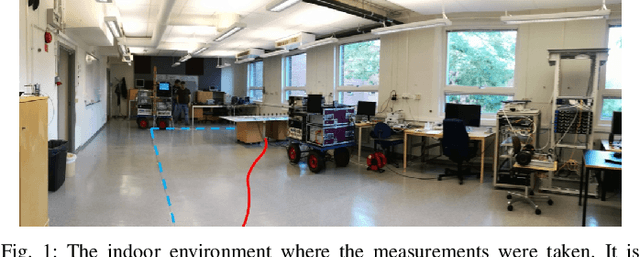
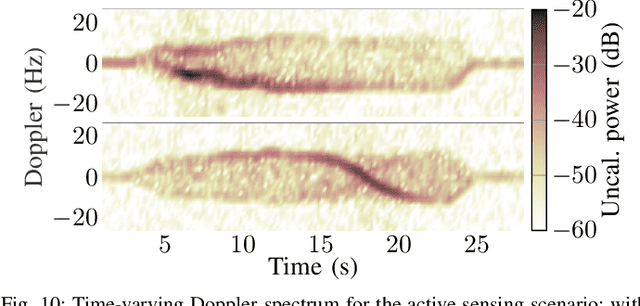
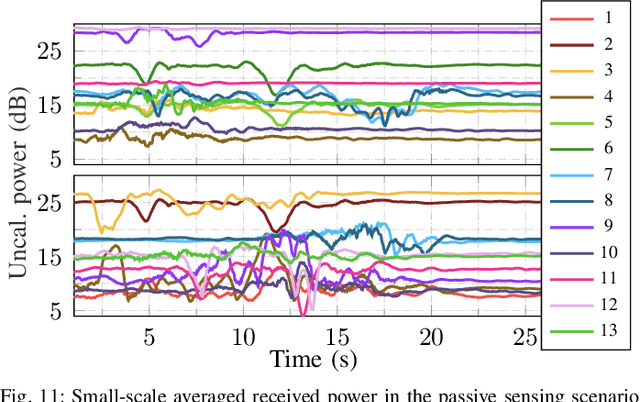
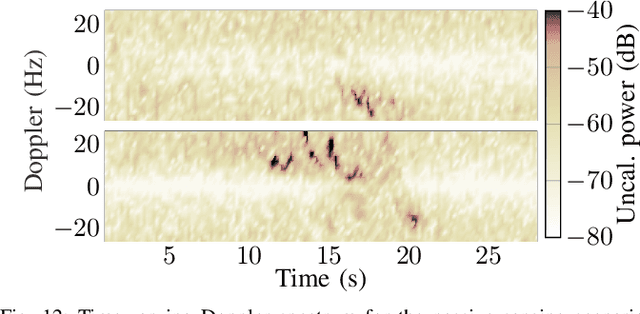
Multiple concepts for future generations of wireless communication standards utilize coherent processing of signals from many distributed antennas. Names for these concepts include distributed MIMO, cell-free massive MIMO, XL-MIMO, and large intelligent surfaces. They aim to improve communication reliability, capacity, as well as energy efficiency and provide possibilities for new applications through joint communication and sensing. One such recently proposed solution is the concept of RadioWeaves. It proposes a new radio infrastructure for distributed MIMO with distributed internal processing, storage, and compute resources integrated into the infrastructure. The large bandwidths available in the higher bands have inspired much work regarding sensing in the mmWave- and sub-THz-bands, however, sub-6 GHz cellular bands will still be the main provider of broad cellular coverage due to the more favorable propagation conditions. In this paper, we present results from a sub-6 GHz measurement campaign targeting the non-stationary spatial channel statistics for a large RadioWeave and the temporal non-stationarity in a dynamic scenario with RadioWeaves. From the results, we also predict the possibility of multi-static sensing and positioning of users in the environment.